
Homeowner guide
How to compare walk-in tub installation estimates
Compare walk-in-tub proposals by matching the exact model, site work, responsibilities, exclusions, and change process—not by comparing a headline price.
Published October 5, 2026
By the HomeFAQ Editorial Team · Reviewed for accuracy.
https://homefaq.com/walk-in-tubs/how-to-compare-walk-in-tub-installation-estimates/
Printing is unavailable. Use your browser’s Print command.
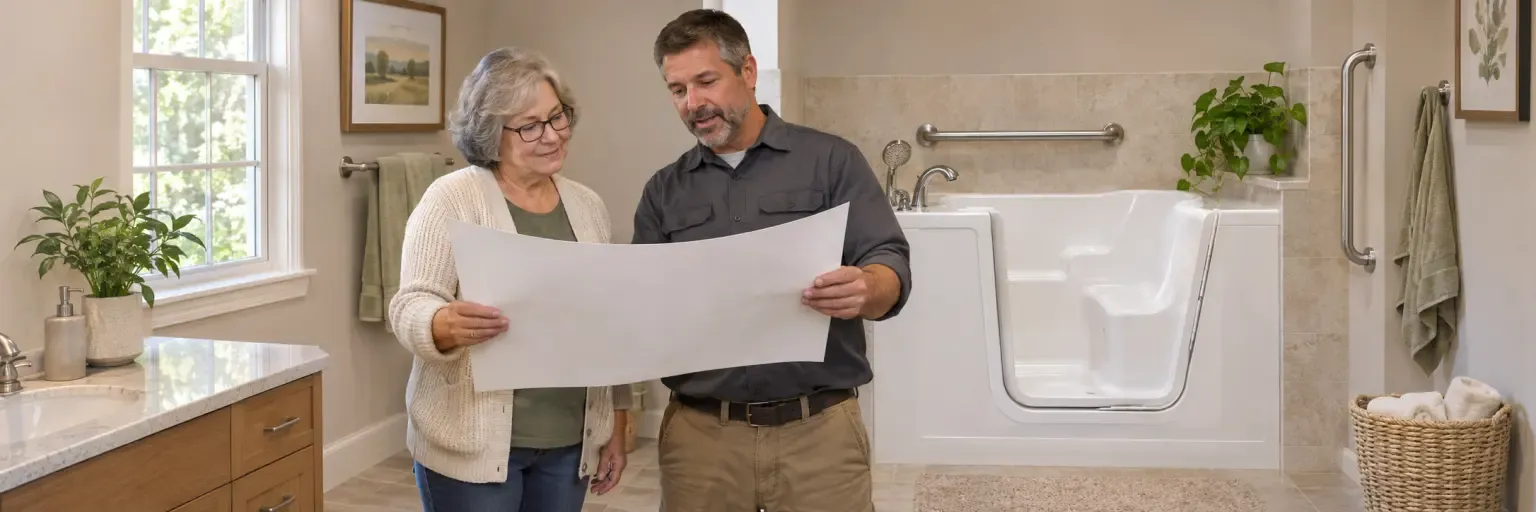
The best walk-in tub estimate is not automatically the lowest one. Choose the proposal that makes the selected model, site work, responsibilities, exclusions, and change process easiest to understand and compare. Ask every bidder to price the same written scope. If one proposal says “complete installation” while another lists demolition, plumbing, electrical work, repairs, and cleanup separately, the totals do not yet describe the same job.
This guide is for a homeowner who has selected—or is narrowing down—a walk-in tub and needs proposals that can be compared fairly. It does not tell you whether a fixture fits an individual’s medical or accessibility needs, whether a permit is required, or what work a particular home needs. Those questions require the actual product documentation and qualified local assessment.
Set the same starting point for every bidder
Give each bidder the same project record before they inspect the room. Include the exact model number or acceptable models; manufacturer specification sheets; bathroom, doorway, and delivery-path measurements; photos from safe, accessible locations; and any known prior repairs or water damage. Explain who uses the room and what must remain functional during the project, but do not assume that a product brochure proves suitability for a person.
Ask each bidder to verify the model’s exterior dimensions, door swing, drain location, water connections, electrical requirements, stated service access, and delivery route. A tub’s footprint alone does not show whether it can get through a hallway, clear a toilet or vanity, open its door, or be serviced after installation. The U.S. Access Board’s bathing-room guidance is useful context for clear floor space, controls, and seat-related design, but it does not set a universal rule for every private home.
Compare the written scope line by line
Use this checklist to mark every item included, excluded, allowance, or unknown pending inspection. An allowance is a provisional amount or scope; it is not a confirmed price.
| Scope area | What the written estimate should identify |
|---|---|
| Product and delivery | Exact model, finish, door and drain configuration, accessories, freight, delivery location, damage inspection, and who confirms the path into the bathroom. |
| Removal and disposal | Existing-fixture removal, haul-away, protection of nearby finishes, and what happens if removal exposes damage. |
| Plumbing | Supply and drain changes, shutoffs, venting questions, responsible professional, testing, visible-versus-hidden assumptions, and repair of opened surfaces. |
| Electrical | Model-specific power needs, circuit or outlet evaluation, responsible qualified professional, permits, and final testing. |
| Building and finishes | Doorway or framing work, floor or subfloor repair, wall repair, waterproofing, tile, trim, paint, ventilation-related work, and restoration limits. |
| Installation and closeout | Placement, connections, sealing, manufacturer-required testing, cleaning, demonstration, manuals, warranty contacts, and final cleanup. |
| Administration | Permit or inspection responsibility, schedule assumptions, payment milestones, exclusions, and written change-order process. |
Do not accept a comparison based on vague labels such as “plumbing as needed” or “electrical included.” Ask what the bidder observed, what work is specifically priced, who performs it, and what facts could change that scope. Electrical and plumbing changes should be evaluated and performed by qualified professionals under applicable local requirements and the manufacturer’s instructions; a sales description is not a substitute for that assessment.
Identify gaps before they change the total
Walk-in-tub work can uncover conditions that were not visible before an existing fixture is removed. That does not make an estimate untrustworthy. It makes the bidder’s discovery and approval process important. Ask whether the proposal assumes sound framing, dry wall cavities, usable subflooring, compatible drain and supply locations, adequate delivery access, and existing electrical capacity. Ask what evidence would show an assumption is wrong.
Require a written change process: the contractor documents the condition, explains options and price or schedule effects, and receives your written approval before additional work begins except where an immediate safety response is necessary. The Consumer Financial Protection Bureau recommends understanding a home-improvement contract before signing; use that review to confirm the scope, payment terms, cancellation information where applicable, and the method for approving changes.
Be especially careful with work handed off to another company. An installer may price placement while a plumber, electrician, flooring contractor, or delivery company prices separate work. That can be sensible, but the estimate should name each responsibility so you know who coordinates timing, permits, damage claims, testing, and warranty questions.
Check warranty and handoff responsibilities
Product and labor warranties are not interchangeable. Request the manufacturer warranty for the exact tub and accessories, then ask the installer to state in writing what workmanship they warrant and what maintenance is required to keep product coverage in force. Confirm who handles a future issue with the tub door, pump or controls, plumbing connections, electrical components, wall or floor repair, and any third-party accessory.
Before final payment, ask for a handoff that includes model and serial information, the owner’s manual, cleaning instructions, permit or inspection records if applicable, a final test or demonstration, and contacts for product and installation service. Keep these with the signed scope and approved changes. For routine care and warning signs after installation, see Walk-in tub safety and maintenance checklist.
Make the decision from comparable scopes
Put proposals in the same order as the table and highlight missing items rather than guessing they are covered. A higher total may include required repair or coordination; a lower total may be reasonable if it deliberately leaves out a feature or finish. The useful decision is whether each proposal delivers the same defined project and whether the bidder’s assumptions and change process are clear enough for you to manage the risk.
If you have not documented the room and route, use how to plan a walk-in tub installation. For words that often appear in a proposal or product sheet, see walk-in tub terms homeowners should know.
Questions to ask your walk-in-tub installer
- Can you identify every product, delivery, demolition, plumbing, electrical, repair, permit, cleanup, and testing item as included, excluded, allowed for, or unknown in this proposal?
- Which assumptions about the delivery route, drain, water supply, electrical capacity, walls, floor, and access must prove true for this price to hold, and how will a different condition be documented?
- If another company performs part of the work, who coordinates the schedule, permits, testing, warranty handoff, and written approval for a change?
Sources
- Consumer Financial Protection Bureau, home-improvement contract guidance — contract and scope-review context.
- U.S. Access Board, Guide to the ADA Accessibility Standards: Bathing Rooms — bathing-room planning context; local residential requirements can differ.
- U.S. Consumer Product Safety Commission, Home Electrical Safety Checklist — general consumer electrical-safety context.
Be ready for the conversation
3 questions to ask your walk-in tub professional
- 1Which mobility, bathing, space, plumbing, electrical, structural, and drainage requirements did you verify for this recommendation?
- 2Which removal, installation, waterproofing, finish, permit, cleanup, and warranty tasks are included or excluded?
- 3If the site visit finds a condition that affects safe installation, how will you document options and obtain approval before work changes?
Keep planning
Related walk in tubs guides
How to plan a walk-in tub installation
A step-by-step homeowner guide to measuring a walk-in-tub project, checking access and scope, and knowing when plumbing, electrical, permit, and installation questions need qualified local help.
Walk-in tub terms homeowners should know
Plain-English definitions for walk-in-tub product and installation terms that can affect fit, scope, maintenance, and proposal comparisons.
How much should a walk-in tub cost?
A scope-first U.S. guide to walk-in-tub product and installation planning, so homeowners can compare written proposals without mistaking an advertised tub price for a complete bathroom project.