
Homeowner guide
How much should a walk-in tub cost?
A scope-first U.S. guide to walk-in-tub product and installation planning, so homeowners can compare written proposals without mistaking an advertised tub price for a complete bathroom project.
Published October 5, 2026
By the HomeFAQ Editorial Team · Reviewed for accuracy.
https://homefaq.com/walk-in-tubs/how-much-should-a-walk-in-tub-cost/
Printing is unavailable. Use your browser’s Print command.
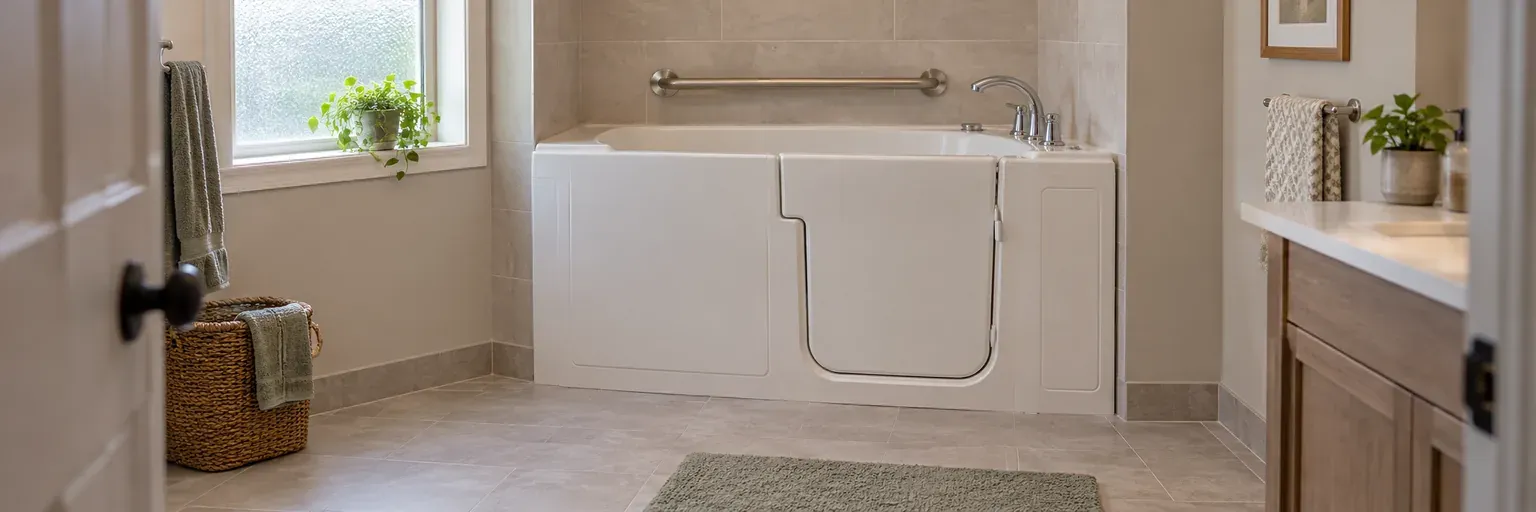
For most homeowners, the useful question is not “What does a walk-in tub cost?” but “What does the tub price include at my bathroom?” The tub itself, removal of the old fixture, plumbing and electrical changes, doorway access, wall or floor repairs, permits, and optional features can all be separate parts of the project. As of October 5, 2026, HomeFAQ does not publish one all-in U.S. walk-in-tub range because public accessibility and consumer-protection sources do not provide a current, comparable national installed-price dataset. Treat a manufacturer or retailer price as a product starting point, not a quote for your home. Get written local scopes that separate the unit from the work required to install it safely.
That distinction matters because an advertised price may cover only a tub package. A complete proposal can also need removal, disposal, drain or supply work, an electrical circuit or outlet assessment, waterproofing repairs, trim, flooring, and restoration. A planning estimate is not a medical recommendation, insurance-coverage determination, code opinion, or contractor quote.
Start with the product scope
Ask each seller or installer to identify the exact model, dimensions, door and drain configuration, included fixtures, warranty terms, and any accessories. The U.S. Access Board’s ADA standards are useful design references for many accessibility questions, but a private home is not automatically required to use every ADA commercial-facility measurement. A qualified local professional should assess the actual room, household needs, product instructions, and local requirements.
Use this product-only checklist before comparing prices:
| Item | What to confirm |
|---|---|
| Tub model | Exterior dimensions, soaking depth, door swing, drain position, and required clearances from the manufacturer. |
| Included equipment | Faucets, hand shower, grab bars, pump systems, heaters, controls, and any accessories that are included versus optional. |
| Delivery | Delivery location, stairs, threshold handling, indoor placement, inspection for damage, and who is responsible for each step. |
| Warranty | Which parts and labor are covered, how long coverage lasts, maintenance conditions, and the claim process. |
| Return or cancellation terms | Whether a special-order unit can be returned and what happens if site conditions prevent installation. |
Do not assume jets, heated surfaces, chromotherapy, quick-fill systems, a shower screen, or installation are included because they appear in an advertisement. Request the model number and an itemized product subtotal.
Why an installed national number can mislead
There is no single safe national installed price because bathrooms and scopes vary substantially. A replacement can be comparatively limited when the chosen unit fits through the home, the bathroom layout works, existing plumbing is suitable, and the required power is already available. The scope can grow when a doorway is narrow, a slab or framing needs alteration, drain or supply lines must move, an electrical professional must add or modify a circuit, finishes need repair, or local review is required.
Product manufacturers publish dimensions and installation instructions for their own units, not a universal construction price. The Consumer Financial Protection Bureau’s home-improvement guidance also warns that project costs and contracts should be understood before signing. Neither source turns an online tub price into a local installed quote. Labor availability, building age, access, finish selections, and local permit rules can change a proposal materially.
For that reason, compare proposals with the same defined unit and the same known site information. If one price is much lower, ask whether it excludes electrical work, flooring, wall repair, permits, hauling, delivery, or final cleanup rather than assuming it is the same job.
Separate the proposal into four buckets
Ask for a written estimate that places every line item in one of these buckets:
- Product and delivery: the tub, included accessories, freight, delivery, and damage inspection.
- Installation: removal, placement, connections, sealing, testing, and disposal.
- Bathroom modification: plumbing relocation, electrical work, framing, doorway changes, subfloor or wall repair, waterproofing, finish work, and restoration.
- Optional features and follow-up: upgraded fixtures, pump or heater features, permit fees, design changes, maintenance visits, or work by another trade.
This format does not guarantee that a project will proceed without additional work. It makes the assumptions visible. Ask the installer to identify what they could not verify until demolition or access opens, how a newly discovered condition will be documented, and whether your written approval is required before added work begins.
Build a quote-ready bathroom record
From a safe location, measure the bathroom floor area, door opening, hallway turns, and the existing tub’s visible dimensions. Take photos of the room, doorway, access route, visible plumbing locations, and electrical outlets. Do not remove panels, move wiring, alter plumbing, or attempt to lift a tub yourself. Share the same record with every bidder, along with the product specification and any known water damage or prior renovation records.
Ask who will verify that the unit can reach the room and fit with required working space before it is ordered. Also ask who will determine whether electrical and plumbing work requires a qualified licensed professional and whether a local permit or inspection applies. Requirements vary by jurisdiction and project scope; an online checklist cannot confirm them for a specific home.
Choose the complete written scope, not the lowest advertised price
Compare like-for-like proposals only after each one names the model, included work, exclusions, restoration, warranty, permits, and change process. A lower product price can be sensible when it intentionally leaves out a feature or finish, but it is not comparable to a proposal that includes those items. Keep estimates, product literature, change approvals, and final testing notes together.
Next, use how to plan a walk-in tub installation to prepare the measurements and questions a qualified installer needs. If the project is being considered because of a mobility, safety, or health concern, consult an appropriate qualified professional about the household’s needs; this guide does not determine whether any fixture is suitable for a person.
Questions to ask your walk-in-tub installer
- Which exact model and accessories are included, and can you show how its required dimensions and access route were verified at my home?
- Which plumbing, electrical, flooring, wall, permit, delivery, and disposal items are included, excluded, or assigned to another qualified professional?
- If removal reveals a condition that changes the scope, how will you document it, price the options, and obtain my written approval before proceeding?
Sources
- U.S. Access Board, Guide to the ADA Accessibility Standards: Bathing Rooms — accessibility design context; local residential requirements can differ.
- Consumer Financial Protection Bureau, home-improvement contract guidance — scope and contract review context.
- American Standard, Walk-In Tubs — product specifications and feature terminology for its own models; not a universal installed-price source.
Be ready for the conversation
3 questions to ask your walk-in tub professional
- 1Which mobility, bathing, space, plumbing, electrical, structural, and drainage requirements did you verify for this recommendation?
- 2Which removal, installation, waterproofing, finish, permit, cleanup, and warranty tasks are included or excluded?
- 3If the site visit finds a condition that affects safe installation, how will you document options and obtain approval before work changes?
Keep planning
Related walk in tubs guides
How to plan a walk-in tub installation
A step-by-step homeowner guide to measuring a walk-in-tub project, checking access and scope, and knowing when plumbing, electrical, permit, and installation questions need qualified local help.
How to compare walk-in tub installation estimates
Compare walk-in-tub proposals by matching the exact model, site work, responsibilities, exclusions, and change process—not by comparing a headline price.
Walk-in tub terms homeowners should know
Plain-English definitions for walk-in-tub product and installation terms that can affect fit, scope, maintenance, and proposal comparisons.