
Homeowner guide
Sprinkler repair vs. replacement: when a focused fix is enough
Use the pattern of the problem, a documented diagnosis, and the condition of the system—not one wet spot alone—to decide whether sprinkler repair or a larger replacement discussion is the better next step.
Published October 4, 2026
By the HomeFAQ Editorial Team · Reviewed for accuracy.
https://homefaq.com/irrigation-lawn-care/sprinkler-repair-vs-replacement/
Printing is unavailable. Use your browser’s Print command.
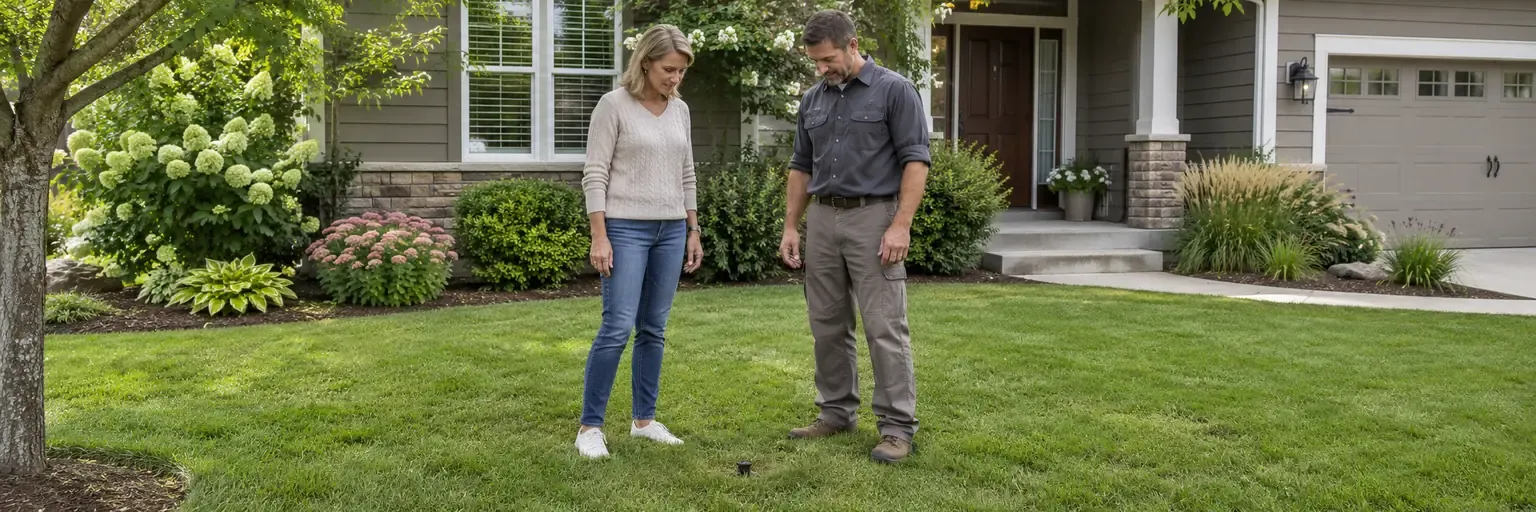
A focused sprinkler repair is usually the better fit when a qualified irrigation professional can identify one limited problem—such as a damaged head, nozzle, valve component, or controller setting—and verify that the affected zone works as intended afterward. A replacement or redesign discussion makes more sense when failures keep returning, several areas have poor coverage or drainage, buried piping or valves are broadly unreliable, or a repair would leave the underlying problem unresolved. Do not decide from one brown patch or wet area alone: similar symptoms can come from irrigation, grading, drainage, plumbing, or electrical conditions.
This guide is for a homeowner deciding whether to authorize another irrigation repair or ask for a broader plan. Start by recording what you can safely see, when it occurs, and whether it repeats in the same place. Then ask for a written diagnosis that separates the confirmed issue from conditions the professional could not inspect without further work.
Start with a safe observation, not a DIY diagnosis
From stable ground in daylight, note water spraying onto pavement, a head that is visibly broken or leaning, a zone that runs at an unexpected time, pooling, runoff, unusually dry areas, or a controller message. Take photos of the visible condition and write down the zone label if your controller has one. Do not open valve boxes, dig for pipes, alter wiring, or adjust a backflow preventer to investigate.
A zone is a group of sprinkler heads or drip emitters controlled together. A controller is the timer or control that tells zones when to run. Those terms can help you describe a symptom, but they do not identify its cause. The U.S. Environmental Protection Agency notes that irrigation controllers and sensors can support watering schedules; they do not replace a site-specific inspection when water is landing in the wrong place or a system is not operating as expected.
Stop routine watering and seek prompt qualified help if water is flowing toward the home, a leak is near electrical equipment, or you suspect an irrigation connection could affect drinking water. Keep clear of the area. An irrigation professional may need a plumber, electrician, drainage specialist, or local water provider involved depending on the water connection, protected backflow assembly, electrical supply, or site drainage.
When a focused repair is often the better fit
Repair can be a sensible choice when the problem is contained and the rest of the system is operating acceptably. For example, a professional may be able to replace a damaged head, correct a nozzle that is visibly spraying outside its intended area, repair a known valve issue, or address a controller setting after confirming that the zone and equipment are compatible.
Ask for the cause, not only the part name. “Replace a head” is incomplete if the head was damaged because it is being hit, installed at the wrong height, or receiving abnormal pressure. A useful repair scope says what was inspected, what will be repaired or adjusted, what is excluded, and how the zone will be tested at handoff. It should also distinguish a temporary symptom fix from a durable repair.
Repair is not a good fit when a provider cannot explain why the same problem keeps returning, when multiple zones have different unresolved symptoms, or when a small repair is being used to avoid evaluating a larger condition. Do not accept a workaround that bypasses a safety device, alters a protected backflow assembly, or leaves water running where it can create runoff or property damage.
When replacement or redesign deserves comparison
Replacement does not automatically mean replacing every pipe and sprinkler head. It can mean redesigning a troubled area, replacing an aging controller or valve group, reworking zones that no longer match landscaping, or addressing repeated buried-line failures after a documented investigation. The better path depends on what has failed, what is still serviceable, and whether the proposed work creates a system that can be tested and maintained.
Ask the professional to separate the scope into parts: irrigated areas and zones, heads or drip components, valves, controller and sensors, water-connection or backflow work, trenching, restoration, startup, and seasonal service. A larger proposal may reasonably exclude drainage correction, grading, tree-root work, hardscape repair, electrical work, permits, or local backflow testing. Those exclusions are not automatically a problem, but they should be clear before you compare totals.
The EPA explains that cross-connection control protects public water systems. Local water suppliers and plumbing authorities determine the applicable device, testing, and permitting requirements, so do not assume a replacement proposal includes every backflow or water-connection task. Ask who will verify the local requirements for your property.
A practical decision path
| What you can safely observe | Better next step | Why |
|---|---|---|
| One visibly damaged head or a limited spray pattern issue; no repeated history | Request a diagnosis and focused repair scope | A contained component problem may be repairable after the zone is tested. |
| A single zone runs unexpectedly or has a controller message | Ask for controller, valve, and wiring diagnosis before replacing equipment | Similar symptoms can have different causes. |
| Repeated leaks, recurring dead areas, several failing zones, or repeated repairs without a root cause | Compare a documented repair plan with a redesign or replacement scope | The pattern may indicate that isolated fixes are no longer solving the actual problem. |
| Pooling, runoff, water moving toward the house, or a leak near electrical equipment | Stop routine watering and arrange prompt qualified assessment | The issue may involve drainage, property risk, or another trade beyond ordinary irrigation repair. |
| Backflow, water-connection, permit, or electrical questions | Ask the provider to identify the responsible qualified party and local requirement | These tasks are not safe assumptions or generic DIY adjustments. |
Compare proposals on the same outcome
Whether you receive a repair recommendation or a broader replacement proposal, give each bidder the same description of the symptoms and the areas you want addressed. The Federal Trade Commission recommends getting written estimates and understanding the contract before hiring a contractor. Request a written scope that identifies the proposed work, assumptions, exclusions, equipment details where relevant, testing at completion, restoration, warranty terms, and a process for approving added work.
A lower total may reflect a smaller repair, fewer zones, omitted restoration, or work that does not address the recurring condition. It is not automatically the better choice. If a provider recommends replacement, ask what evidence makes repair a poor fit and which parts of the existing system can remain. If a provider recommends repair, ask what result would show that a broader assessment is still needed.
For help comparing a larger installation or redesign scope, read How to compare sprinkler installation estimates. If seasonal freezing is part of the problem, use How to winterize a sprinkler system safely to prepare for a qualified shutdown visit.
Questions to ask your irrigation professional
- What evidence identifies the root cause, and what will you test after this repair to show that the affected zone works as intended?
- Which existing pipes, valves, heads, controller parts, and backflow-related components are still serviceable, and why?
- If you recommend replacement or redesign, what recurring failure, coverage, drainage, or repair-history evidence makes a focused repair a poor fit?
Sources
- U.S. Environmental Protection Agency WaterSense: Irrigation Controllers — controller and sensor context.
- U.S. Environmental Protection Agency: Cross-Connection Control Manual — drinking-water cross-connection and backflow context.
- Federal Trade Commission: Hiring a Contractor — written-estimate and contract guidance.
Be ready for the conversation
3 questions to ask your irrigation professional
- 1Which observed symptom can you trace to a specific head, valve, pipe, controller, wiring issue, or drainage condition, and what testing supports that conclusion?
- 2If you recommend replacement or redesign, which zones, piping, valves, controls, water-connection, backflow, restoration, and startup tasks are included or excluded from the written scope?
- 3What recurring condition would make another focused repair a poor fit, and how will you document any underground or access-related change before extra work begins?
Keep planning
Related irrigation lawn care guides
How to compare sprinkler installation estimates
Compare irrigation proposals by design, water connection, restoration, and seasonal service—not just the total price.
How to winterize a sprinkler system safely
Use a simple seasonal checklist to prepare an irrigation system for freezing weather, while leaving backflow devices, compressed-air blowouts, and unfamiliar plumbing to qualified professionals.
How much should sprinkler installation cost?
Compare sprinkler-installation proposals by scope when a national price range would hide important site, water, and local requirements.