
Homeowner guide
How to compare sprinkler installation estimates
Compare irrigation proposals by design, water connection, restoration, and seasonal service—not just the total price.
Published October 4, 2026
By the HomeFAQ Editorial Team · Reviewed for accuracy.
https://homefaq.com/irrigation-lawn-care/how-to-compare-sprinkler-installation-estimates/
Printing is unavailable. Use your browser’s Print command.
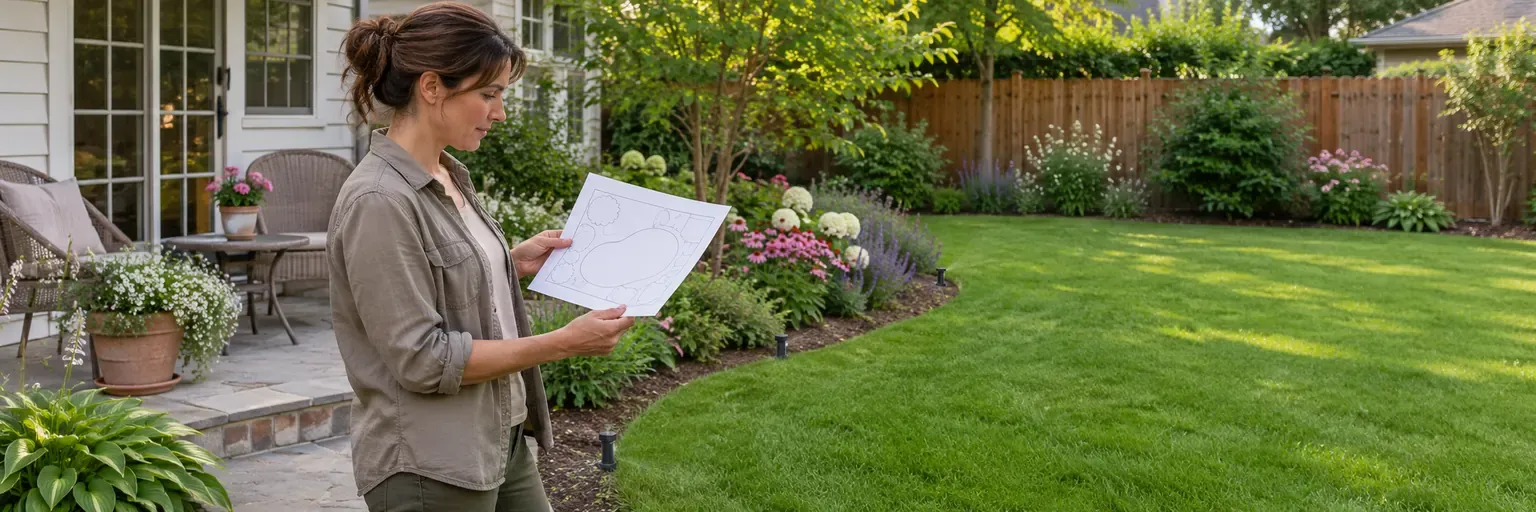
Don’t compare sprinkler installation estimates until you can tell whether they describe the same yard and the same job. For a new system, the clearest proposal is usually the better choice: it shows what areas will be watered, how water and controls reach them, and what happens to the yard after trenching. A lower total may be fair for a smaller or less complex scope, but it is not a lower price for the same job until those differences are written down.
This checklist fits a new or major-extension system where you want to compare written proposals. It does not fit an active leak, water near electrical equipment, or a suspected drinking-water cross-connection. Keep people clear of an urgent hazard and contact the appropriate qualified professional or water provider instead of collecting bids.
Start with the same written brief
Before requesting proposals, make a short brief every bidder can use. List the lawn or bed areas you want watered, visible existing equipment, slopes or pooling you notice, and paths, patios, trees, or other features that limit access. Take ground-level photos and share them with each bidder. The brief does not replace a site visit; it helps you see when a design or scope is different.
Ask each bidder to identify the boundary of the work. Does the proposal cover a new system, an extension to an existing one, or a redesign of poor coverage? Does it include a site-specific layout, or only a count of heads? A written scope should flag unknown conditions rather than hide them in an open-ended “as needed” line.
Compare the design and equipment
An irrigation zone is a group of heads or drip emitters controlled together. Ask for a plan or clear description showing what each zone serves and where valves and controls go. The U.S. Environmental Protection Agency describes controllers and sensors as tools that can support watering schedules; they are not a promise that every yard will use the same amount of water.
| Scope item | What to compare | Why it matters |
|---|---|---|
| Watered areas and zones | Map, zone count, and what each zone serves | Confirms the proposals aim for the same outcome. |
| Heads, nozzles, and drip | Type, location, and any designated drip areas | Shows how water will be applied in different parts of the yard. |
| Controller and sensors | Model or capability, wiring/power, and rain or soil-moisture sensor if proposed | Prevents an “automatic” description from hiding different equipment. |
| Startup and testing | Zone adjustment, system test, and owner orientation | Defines the expected handoff after installation. |
Clarify water connection, backflow, and permits
Every proposal should say where the irrigation system connects to water, which plumbing work is included, and whether the bidder expects meter, well, or shutoff considerations. A backflow preventer is a device intended to keep irrigation water from flowing toward drinking water. EPA explains that cross-connection control protects public water systems, while local water suppliers and plumbing authorities set device, testing, and permitting rules.
Do not treat a generic “backflow included” phrase as enough detail. Ask which device or protection approach is proposed, who will determine local requirements, who obtains a permit or schedules an inspection if required, and whether testing is a separate service. An irrigation contractor may need a plumber, electrician, or local authority involved when the water connection, protected assembly, or electrical supply falls outside the irrigation scope.
Put trenching and restoration in writing
Trenching is not just a route for pipe. It can affect turf, mulch, beds, roots, hardscape, and access to the property. Compare the planned route, whether hand digging or boring is proposed near sensitive areas, and what surface restoration is included. “Restore landscaping” is too vague unless it identifies the work: replacing sod, raking and reseeding, returning mulch, repairing irrigation damage, or restoring pavement are different tasks.
Also compare exclusions. A proposal may reasonably exclude tree-root removal, drainage or grading corrections, hardscape repair, utility relocation, or a condition discovered underground. The Federal Trade Commission recommends getting written estimates and understanding the contract before hiring a contractor. Ask for a written change-approval process that identifies the location, added scope, and price or pricing method before additional work begins.
Compare seasonal service and warranty separately
A complete proposal should say who programs and tests the system, whether a spring startup or freezing-climate winterization is included, and what owner orientation is provided. Winterization is not automatically included with installation, and a controller being turned off is not the same as a proper seasonal shutdown. Keep equipment warranties and workmanship terms separate so you know who handles a defective component versus an installation issue.
Once the scopes match, compare the total alongside exclusions, restoration, approval process, and warranty terms. If one estimate remains vague, ask for a revision rather than assuming it covers the same work. For planning context, read how much sprinkler installation should cost and use safe sprinkler winterization guidance when seasonal shutdown is relevant.
Questions to ask your irrigation professional
- Can you show which areas each zone will serve and list the heads, nozzles, drip components, controller, and sensors included?
- What water-connection, backflow, permit, inspection, or electrical work is included, and which party handles each local requirement?
- If trenching reveals an obstacle or damages a surface, what documentation and written approval will you provide before changing the scope?
Sources
- U.S. Environmental Protection Agency WaterSense: Irrigation Controllers — controller and sensor context.
- U.S. Environmental Protection Agency: Cross-Connection Control Manual — drinking-water cross-connection and backflow context.
- Federal Trade Commission: Hiring a Contractor — written-estimate and contract guidance.
Be ready for the conversation
3 questions to ask your irrigation professional
- 1What visible conditions and site information do you need before you can design a safe irrigation scope?
- 2Which water, backflow, electrical, landscape, and drainage tasks are within your scope?
- 3Which local requirements or site conditions need confirmation before the work is finalized?
Keep planning
Related irrigation lawn care guides
How much should sprinkler installation cost?
Compare sprinkler-installation proposals by scope when a national price range would hide important site, water, and local requirements.
How to winterize a sprinkler system safely
Use a simple seasonal checklist to prepare an irrigation system for freezing weather, while leaving backflow devices, compressed-air blowouts, and unfamiliar plumbing to qualified professionals.
Irrigation and lawn care terms homeowners should know
Decode irrigation words that appear in a sprinkler estimate, seasonal service record, or lawn-care conversation before you approve work.