
Homeowner guide
How much should sprinkler installation cost?
Compare sprinkler-installation proposals by scope when a national price range would hide important site, water, and local requirements.
Published October 4, 2026
By the HomeFAQ Editorial Team · Reviewed for accuracy.
https://homefaq.com/irrigation-lawn-care/how-much-should-sprinkler-installation-cost/
Printing is unavailable. Use your browser’s Print command.
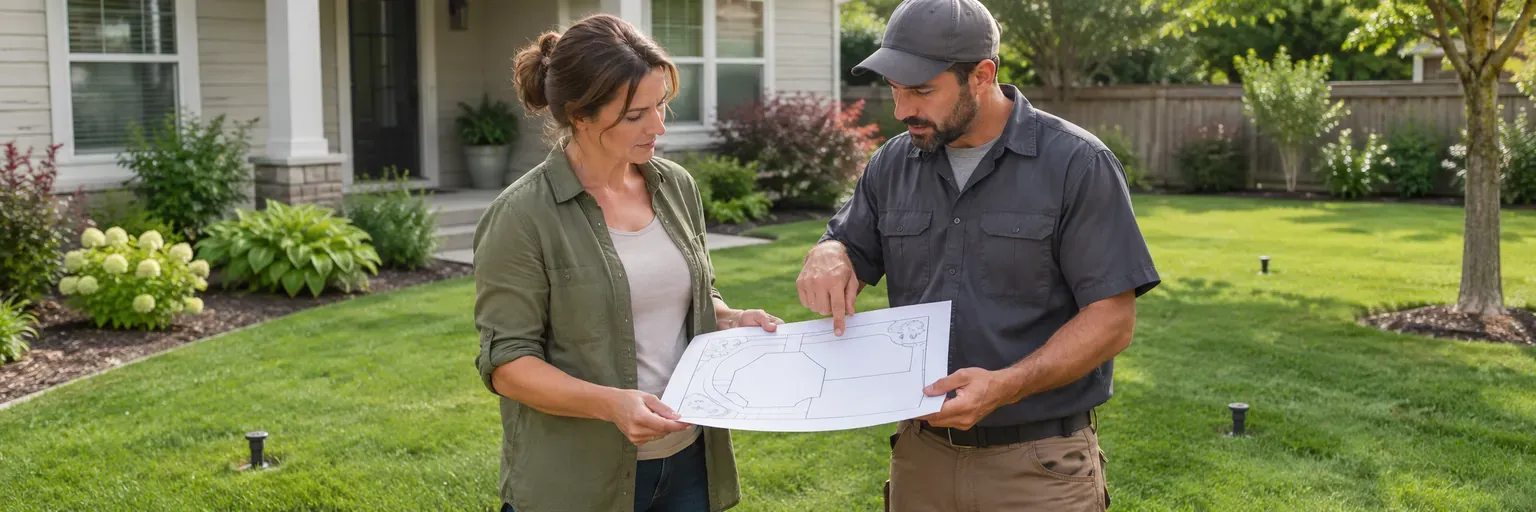
There is no safe single national price range for a sprinkler installation that can stand in for a local quote. A system can be a small drip zone on an established bed or a multi-zone underground system that needs a water connection, backflow protection, trenching, electrical work, restoration, permits, and seasonal service. Use written, like-for-like scopes to plan the decision—not a headline price—and ask each irrigation professional to explain what the total includes and what could change it.
Start by naming the job you need
“Sprinkler installation” can mean adding a few heads to an existing system, replacing a failed controller, extending drip irrigation to planting beds, or designing a new system for an entire yard. Those are different jobs. Before requesting proposals, make a short site note: the areas you want watered, existing irrigation equipment you can see, the water source you expect to use, slopes or drainage concerns, and places where trenching could affect plants, hardscape, or utilities.
Do not try to open a valve box, alter wiring, or change a backflow preventer to gather that information. A backflow preventer is a device intended to keep irrigation water from flowing back toward the drinking-water system. Its testing, repair, and local requirements are not a homeowner guessing exercise. The U.S. Environmental Protection Agency notes that cross-connection control protects drinking water, while local water suppliers and plumbing authorities set the applicable program and device rules.
Why a national installed-price number can mislead
HomeFAQ did not find a current, authoritative national installed-price baseline that describes a comparable sprinkler-system scope across U.S. properties. Published marketplace ranges commonly combine different yard sizes, water connections, equipment, labor markets, and restoration assumptions. Presenting one as a planning number would imply a precision this site cannot support.
Instead, use proposals to compare the same site and the same intended outcome. Ask each bidder to identify the design area, number of zones, proposed heads or drip components, controller, water-connection work, and any condition that must be confirmed on site. A lower total can be reasonable if it covers a smaller irrigated area or omits restoration; it is not automatically a better value.
What should appear in every installation proposal
An irrigation zone is a group of sprinklers or drip emitters controlled together. Zone count often changes the design, valve work, controller capacity, trenching, and future maintenance discussion. Ask for a plan or clear description showing which areas each zone serves and what equipment is included.
Use this checklist to compare written scopes:
- Water source and connection: Identify the proposed connection point, meter or well considerations, shutoff location, and any plumbing work that is included or excluded.
- Backflow and permits: Ask which backflow device, test, permit, inspection, or water-provider requirement applies locally, and who is responsible for each step.
- Zones, valves, heads, and nozzles: List the zone count, valve locations, head or nozzle type, drip areas, and whether the scope includes adjustment after installation.
- Controller and sensors: State the controller model or capability, whether a rain or soil-moisture sensor is proposed, and what wiring or power work is included. EPA WaterSense describes weather-based and sensor-based controls as tools that can adjust watering, but local setup and site conditions still matter.
- Trenching and restoration: Identify trench routes, boring or hand digging where needed, protection of existing landscaping, and the exact restoration included for turf, mulch, beds, pavement, or irrigation repairs.
- Startup, winterization, and warranty: State who programs and tests the system, what seasonal shutdown service is available in freezing climates, what owner orientation is included, and the separate equipment and workmanship terms.
Separate an estimate from a quote
An estimate is an early planning description; a quote or proposal should identify the actual scope, assumptions, exclusions, and price basis for your property. Ask each company to use the same written wish list and to flag unknown conditions instead of hiding them inside “as needed” language. If digging, access, a water connection, or an older landscape feature creates uncertainty, ask for a written change-approval process before additional work begins.
The Federal Trade Commission recommends getting written estimates and understanding the contract before hiring a contractor. Keep each proposal with the same site notes and compare the scope line by line. This makes it easier to see whether one proposal includes a controller, backflow work, restoration, or seasonal service that another leaves out.
When this approach does not fit
If water is entering a building, a line is actively leaking near electrical equipment, or you suspect a drinking-water cross-connection, do not wait to collect competing installation proposals. Limit yourself to safe observations, protect people from the area, and contact the appropriate qualified local professional or utility. Likewise, an irrigation installer may need a plumber, electrician, landscape designer, or local permitting authority involved when the water connection, electrical supply, grading, or drainage falls outside the irrigation scope.
Your next step
Write down the areas you want watered and take ground-level photos of visible equipment and landscape constraints. Then request itemized proposals using the checklist above. A useful proposal explains the designed system and its assumptions; it does not promise that one generic price fits every yard.
Questions to ask your irrigation professional
- Which parts of this installation scope are confirmed for my property, and which need a site visit or local-water-provider review before you price them?
- Can you itemize the zones, water connection, backflow work, controller, trenching, restoration, startup, and seasonal-service assumptions behind this proposal?
- If an underground condition changes the scope, how will you document it and obtain my approval before added work begins?
Sources
- U.S. Environmental Protection Agency: Cross-Connection Control Manual — drinking-water cross-connection and backflow context.
- U.S. Environmental Protection Agency WaterSense: Controllers — irrigation-controller and sensor context.
- Federal Trade Commission: Hiring a Contractor — written-estimate and contract guidance.
Be ready for the conversation
3 questions to ask your irrigation professional
- 1Which irrigated areas, zones, heads or drip components, valves, controller, and water-connection work are included in this price?
- 2Which backflow, permit, inspection, trenching, restoration, startup, and winterization tasks are included or excluded from the written scope?
- 3Which site conditions could change this proposal, and how will you document them and get my written approval before extra work begins?
Keep planning
Related irrigation lawn care guides
How to compare sprinkler installation estimates
Compare irrigation proposals by design, water connection, restoration, and seasonal service—not just the total price.
Sprinkler repair vs. replacement: when a focused fix is enough
Use the pattern of the problem, a documented diagnosis, and the condition of the system—not one wet spot alone—to decide whether sprinkler repair or a larger replacement discussion is the better next step.
Irrigation and lawn care terms homeowners should know
Decode irrigation words that appear in a sprinkler estimate, seasonal service record, or lawn-care conversation before you approve work.