
Homeowner blog
Your spare room may not have a space-heater spot
A heater can fit beside a desk yet have no usable operating spot. Check the room's combustible clearances and your routine before relying on portable heat.
Published October 19, 2026
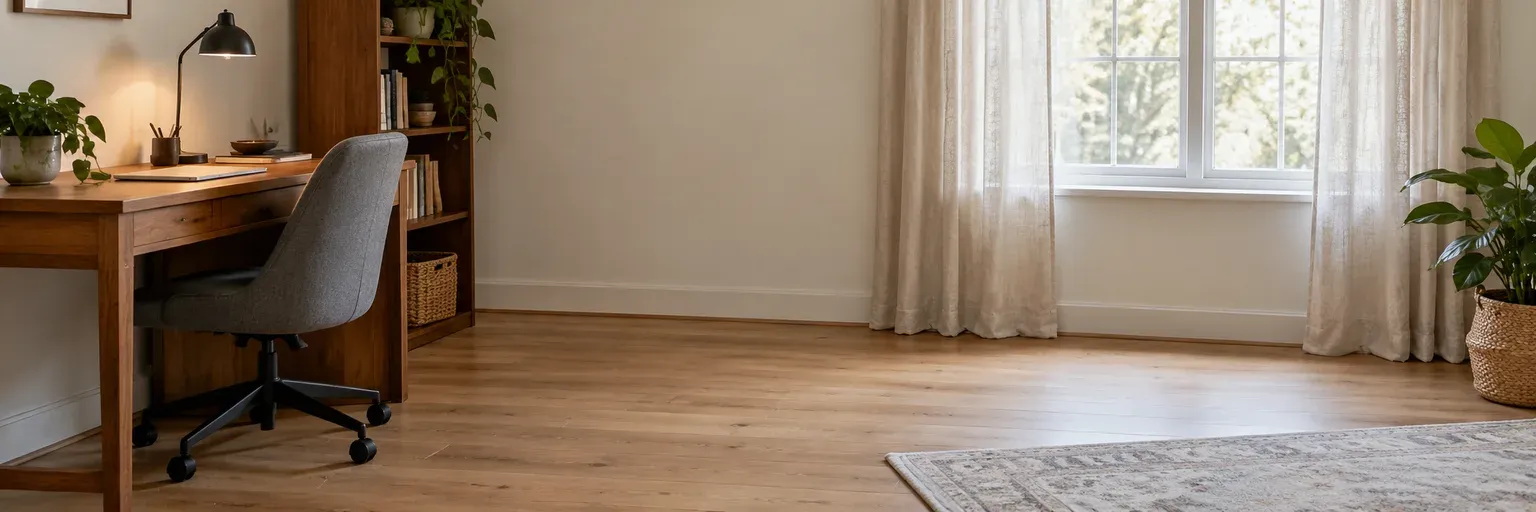
If your spare bedroom doubles as an office, the gap beside the desk may look like an obvious space-heater spot. Physical fit is not enough. First read the instructions for the exact heater and check whether the room can keep things that burn away from it during actual use. If it cannot, do not squeeze the heater into a smaller gap. If your plan depends on leaving it running when you leave the room or go to bed, select a different plan.
The U.S. Fire Administration says to keep anything that can burn at least 3 feet from heat sources, including space heaters, and to turn space heaters off when leaving the room or going to bed.1 Those two rules change the question from “Where does this appliance fit?” to “Can this room and my routine accommodate its use?” Meeting them is a starting point, not a complete safety approval or a substitute for the model’s instructions.
Walk through one illustrative spare room
Consider an imaginary room with a bed along one wall, a desk close to the window, and curtains beside the desk. This is an illustrative planning exercise, not a measured floor plan, a tested installation, or evidence about typical bedrooms. No particular heater has been evaluated.
The homeowner first considers the space between the desk and bed. The appliance itself might fit there, but the bedding is the relevant obstacle: the usable location must account for things that can burn, not just the appliance’s footprint. A blanket hanging over the edge of the bed still matters even if the bed frame is farther away. A gap that looks empty in a listing photograph is not a clearance measurement.
The second candidate is beside the window. Moving a small basket out of the way would create more floor space, but would not, by itself, resolve a curtain-clearance problem. The homeowner needs to inspect the whole intended location against the official guidance and the specific model’s instructions. Do not assume moving one object makes every other requirement disappear.
A genuinely different furniture arrangement might produce a location worth checking. Or it might show that the room has no suitable spot. Neither outcome calls for inventing a smaller clearance. The useful result of this exercise can be a decision not to use a portable heater in that room, even if the device was already purchased.
An empty floor is not the same as a workable routine
Now consider how the same room is used. During office hours, the homeowner sits at the desk but leaves repeatedly for calls elsewhere. At night, the room becomes a guest bedroom. A location that appears workable during a stationary daytime check does not solve the plan to leave heat running during those absences or while someone sleeps.
USFA’s instruction is to turn space heaters off when leaving the room or going to bed.1 A plan to warm the room while no one is there fails that routine check regardless of how much floor space was cleared. This is why rearranging furniture and changing the heating plan are separate decisions. Do not treat open space as permission for unattended operation.
Choose a path before choosing a spot
- Worth evaluating further: you have the exact model’s instructions, can accommodate its requirements and USFA’s guidance, and will turn the heater off whenever you leave or go to bed. Complete the remaining manufacturer checks before use; this article cannot certify a placement.
- Rearrange and recheck: furniture or movable belongings prevent a suitable location, but you can change the arrangement without creating another clearance problem. Inspect the resulting room again rather than assuming the move solved everything.
- Do not use it there: bedding, curtains, other combustible items, or the household’s routine prevent those conditions from being met. A smaller appliance footprint is not evidence that the conflict has been resolved.
The tradeoff is practical: preserving the desk, guest bed, and storage layout may mean giving up portable heat in that room. Rearranging can be inconvenient, and it still does not establish why the room feels cold. Neither choice proves that the home’s heating system needs replacement.
Make a room-placement checklist, not a repair diagnosis
Before deciding, write down:
- The heater’s exact model and where to find its complete operating instructions. If you cannot check them, pause the placement decision.
- The candidate location and nearby bedding, curtains, furniture, paper, and stored belongings. Compare actual clearances with the guidance; do not estimate from a photograph.
- What changes when the room is occupied: a pulled-out chair, unpacked guest belongings, or bedding moved during ordinary use. Reassess the intended location in that real arrangement.
- When everyone leaves the room and when it becomes sleeping space. Identify when the heater would have to be off rather than planning around continuous operation.
- Whether the room stays cold, when that happens, and whether other rooms are affected. Record observations without guessing at the cause or attempting electrical or heating-system repairs.
For a persistent cold-room concern, use the HVAC maintenance checklist to organize ordinary homeowner observations. Then read why a furnace tune-up cannot diagnose every problem before booking a visit. Bring the room-use notes and ask for an assessment of the reported comfort problem, not an automatic furnace replacement or a promise that a portable heater will solve it.
Questions to ask your HVAC professional
- What observations about this room’s temperature, timing, and use would help you distinguish a room-specific comfort concern from a whole-home heating problem?
- What will your proposed assessment investigate about this cold room, and what questions would remain outside that scope?
- If portable heat cannot accommodate this room’s layout or sleeping routine, which other approaches should we evaluate, and what findings would support each one?
Sources
Footnotes
-
U.S. Fire Administration, Heating Fire Safety — combustible-clearance and space-heater shutoff guidance; accessed October 19, 2026. The room walkthrough is HomeFAQ’s explicitly hypothetical application of those rules, not a USFA-approved layout. ↩ ↩2
Keep planning
Continue with Heating & Air Conditioning guides
Use these practical guides to take the next step, or browse the full topic when your question is broader.
Furnace and air conditioner maintenance checklist
Simple, safe checks for your furnace and air conditioner that can help you spot a problem early and know when to call a technician.
Should I repair or replace my furnace or air conditioner?
Use the age, repair history, comfort problems, and condition of your furnace or air conditioner to decide what to ask a technician before you spend money.
More from HomeFAQ
More homeowner notes
A Less Distracted Thanksgiving Kitchen
Make a simple holiday cooking plan for interruptions, busy stovetops, guests, and a safe exit if a fire occurs.
Ice Dam Warning Signs and a Safer Response
Learn what to look for from the ground or indoors, how to respond to a leak, and what to ask a qualified professional about recurring ice dams.
Make a Safer Portable Generator Plan Before an Outage
A power outage is the wrong time to improvise generator placement. Plan for outdoor use, carbon monoxide alarms, and an emergency exit before the lights go out.