
Homeowner blog
A Less Distracted Thanksgiving Kitchen
Make a simple holiday cooking plan for interruptions, busy stovetops, guests, and a safe exit if a fire occurs.
Published November 15, 2026
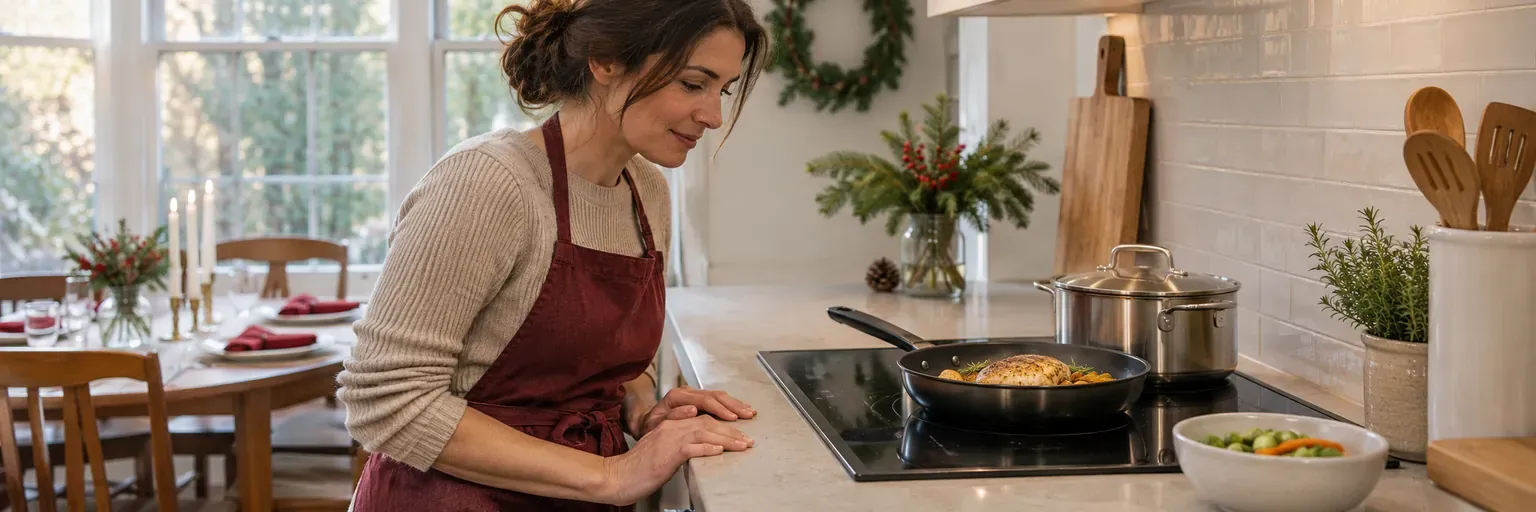
Thanksgiving dinner can bring several cooks, a crowded counter, and a doorbell that rings just as a pan needs attention. Before turning on the stove, decide who will stay with the cooking and what happens when that person needs to step away. The U.S. Fire Administration’s straightforward rule is to stand by your pan and turn the burner off if you leave the kitchen. 1
This is a plan for reducing distractions, not a guarantee that a fire cannot happen. If a fire starts and you are unsure you can handle it safely, leave, close the door behind you, and call 911 from outside. 2 Do not delay leaving to save dinner or belongings.
Give the stove a person, not just a timer
Choose one person to be responsible for the active stovetop. When the doorbell rings, a child needs help, or a delivery arrives, ask someone else to respond. When there is no one to take over, turn the burner off before leaving the kitchen. A timer can remind you to check food, but it cannot watch a pan or take the place of a person nearby.
Make the handoff explicit: tell the next cook which burner is on, what is in the pan, and that they are now watching it. Wait for them to acknowledge the handoff before you move away. If nobody is available, switch the burner off. This small pause matters when several people each assume someone else is watching.
Keep a written meal schedule away from the heat if it helps, but avoid adding extra tasks that pull the stove watcher out of the room. Consider preparing a dish earlier or simplifying the menu if the number of simultaneous tasks exceeds the people available to manage them.
Clear a working zone before the first pan
Move towels, packaging, oven mitts, and other things that can burn away from the cooking area. Turn pot handles toward the back of the stove so they are less likely to be knocked or grabbed. 1 Leave room to put a hot pan down safely, and keep the route to the kitchen exit clear of bags, chairs, and serving dishes.
Give children and pets a separate place away from hot appliances and the cook’s path. Invite guests to set drinks or coats elsewhere instead of gathering around the stove. When a guest wants to help, assign a task away from the hot surface, such as setting the table. The goal is a kitchen the cook can move through without having to dodge people or clutter.
Stay alert to what is happening in the pan. The U.S. Fire Administration says smoke or boiling grease means the heat is too high and advises turning the burner off. 1 Avoid cooking when you are sleepy or have been drinking alcohol. 2 If you need a break, arrange an attentive replacement or stop cooking until you are ready.
Plan for an interruption before it happens
Holiday interruptions are predictable even when their timing is not. Pick a host who can handle visitors, phone calls, and questions while another person cooks. Put a serving utensil and a clear landing spot near the work area before the food is hot, so the cook does not have to search through a crowded kitchen.
For a longer interruption, stop and reassess. Is the stove off? Is anyone still responsible for food in the oven? Has the exit remained clear? A timer and an agreed check-in can help the household keep track of an oven dish, but neither replaces checking it. If the plan no longer works, postpone a dish or ask a capable adult to take over rather than leaving an active cooktop unattended.
Know when the plan becomes an exit
Before guests arrive, identify a way out and a place to meet outside. Check that everyone knows the address to give emergency services and that exits are usable. Working smoke alarms provide an important warning; see our guide to smoke and carbon monoxide alarm alerts for what a low-battery signal means.
If there is a fire, prioritize getting people out. The National Fire Protection Association advises leaving if you have any doubt about fighting a small fire, closing the door behind you, and calling 911 or the local emergency number from outside. 2 Do not move a burning pan or carry it through the house. Never use water on a grease fire. 2 Let the fire department assess the situation before returning.
Afterward, do not use damaged cooking equipment until it has been assessed by an appropriate qualified professional. Ask what needs inspection or repair and whether any electrical or gas equipment should remain out of service. If you rent, notify the landlord or building manager as soon as it is safe.
A quick pre-dinner check
Before cooking begins, name the stove watcher, identify who handles interruptions, clear the heat and exit zones, and agree on an outside meeting place. If the watcher changes, make the handoff out loud. Those steps keep the holiday plan understandable even when dinner gets busy.
Sources
Footnotes
Keep planning
Continue with Kitchen guides
Use these practical guides to take the next step, or browse the full topic when your question is broader.
Browse all Kitchen guides →More from HomeFAQ
More homeowner notes
Ice Dam Warning Signs and a Safer Response
Learn what to look for from the ground or indoors, how to respond to a leak, and what to ask a qualified professional about recurring ice dams.
Make a Safer Portable Generator Plan Before an Outage
A power outage is the wrong time to improvise generator placement. Plan for outdoor use, carbon monoxide alarms, and an emergency exit before the lights go out.
A first freeze is a plumbing-plan signal, not a valve test
Before cold weather arrives, make a small plumbing plan instead of forcing old valves or guessing what your home needs.