
Homeowner blog
A first freeze is a plumbing-plan signal, not a valve test
Before cold weather arrives, make a small plumbing plan instead of forcing old valves or guessing what your home needs.
Published October 22, 2026
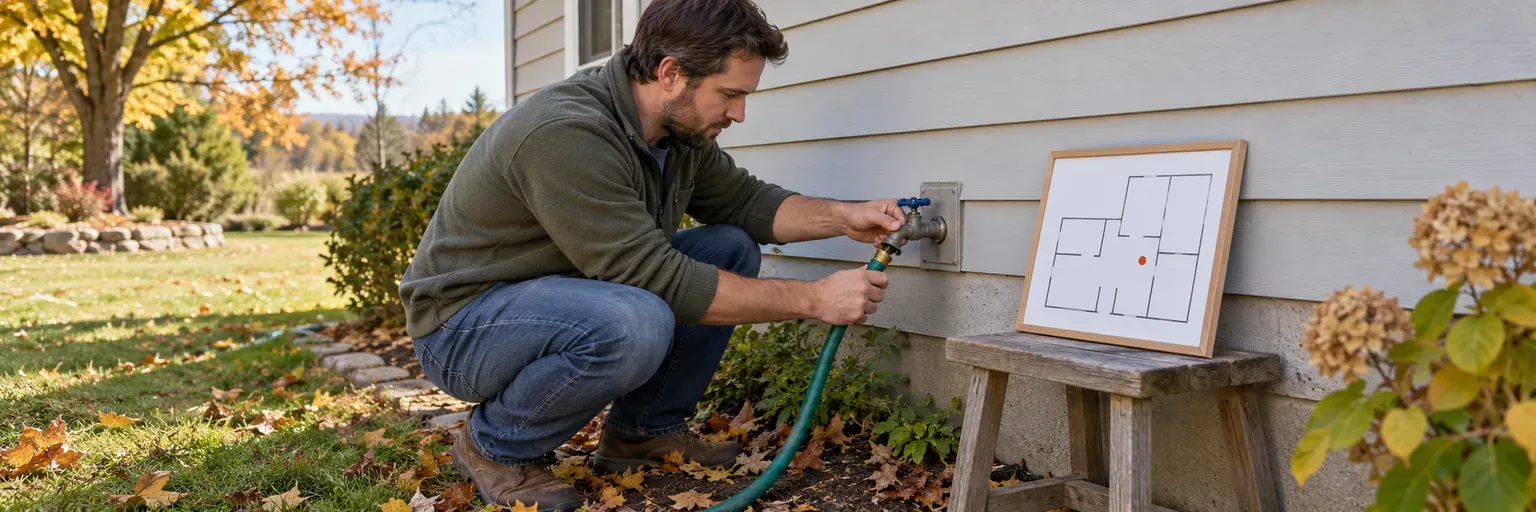
The first freeze forecast is a good reason to make a plumbing plan, not to start forcing every valve in the house. If you have an outdoor hose connection, begin with the simple, low-risk tasks your home’s setup allows: disconnect hoses, put away splitters or spray nozzles, and make sure you know where the indoor main water shutoff is. When a valve is corroded, leaking, or hard to move, leave it alone and arrange plumbing help before cold weather turns a small uncertainty into an urgent problem.
That is different from a generic winter checklist. The useful question is not whether every house needs the same sequence. It is whether you can identify the few parts of your water system that need attention, recognize the limits of a safe homeowner check, and have a clear response if a pipe leaks. Freeze risk depends on local weather, where pipes run, insulation, and the type of outdoor faucet installed.
Start with the outdoor connections you can see
Walk around the exterior without climbing, opening wall cavities, or using tools. Disconnect garden hoses from outdoor faucets (sometimes called hose bibs or sillcocks). A connected hose can hold water against the faucet even after the water is turned off, so removing it is a simple preparation step recommended by the American Red Cross.1
If your faucet has an indoor shutoff, do not assume it is safe to force just because cold weather is coming. Look for obvious leakage, corrosion, or a valve that does not move smoothly. Record what you see and ask a plumber whether that valve is meant to be operated seasonally and whether the exterior faucet is frost-free. “Frost-free” describes a faucet design; it does not make every installation or every connected hose risk-free.
Avoid wrapping heat tape, thawing a suspected frozen pipe with an open flame, or opening panels to trace plumbing. The Red Cross advises people to keep heat sources away from combustible materials and to use qualified help for a frozen or burst pipe when they cannot manage the situation safely.1
Make the plan before water is moving
The best time to find the main shutoff is before a leak. Identify the interior valve, keep its path clear, and make sure another adult in the household knows where it is. Do not tamper with a utility-owned curb valve or force a stuck main valve. A plumber can assess a valve that needs repair or replacement without turning a freeze-preparation task into a water-service interruption.
Write down three details in a note on your phone or a household record:
- The location of the main shutoff and any fixture-level shutoffs you can safely identify.
- Which outdoor faucets have been disconnected from hoses and which still need attention.
- The name and number of a qualified plumber or property manager to call if a leak starts.
This small record is the information gain: it turns a seasonal reminder into a decision-ready response plan. It also prevents a common mistake—testing unfamiliar valves under pressure without knowing whether they are maintained, shared, or utility-controlled.
Treat a cold-weather symptom as a plumbing question
Reduced flow, an unexplained wet area, a new sound in a wall, or a faucet that will not run normally can have several causes. Do not diagnose it from one symptom or keep trying the fixture until it changes. If water is actively leaking near electrical equipment, stay clear of the area and seek appropriate emergency help.
For a non-emergency concern, note when it started, which fixtures are affected, the outdoor temperature, and what you can observe without disassembly. That gives a plumber a better starting point than a theory about a frozen pipe. If a supply line breaks or water is running where it should not, use the main shutoff only if it is safe and accessible, then follow your local emergency and plumbing guidance.
For a broader walkthrough of the valve itself, read Find your main water shutoff before you need it. If you need to arrange a visit, How to prepare for a plumbing visit can help you gather the observations a professional needs.
Questions to ask your plumbing professional
- Which outdoor faucets and shutoff valves in my home should be part of my cold-weather routine, and which should I leave alone?
- Does this faucet or supply layout have a freeze-risk detail—such as an indoor shutoff, exposed pipe, or frost-free design—that changes the safe preparation steps?
- If a valve is stiff or leaking, what is the safest repair scope and what should my household do if water starts running before it is repaired?
Sources
Footnotes
-
American Red Cross, Winter Storm Safety — cold-weather preparation and frozen-pipe safety guidance; accessed October 22, 2026. ↩ ↩2
Keep planning
Continue with Plumbing guides
Use these practical guides to take the next step, or browse the full topic when your question is broader.
How to prepare for a plumbing visit
Document a plumbing problem, provide clear access, and ask useful scope questions before a repair or replacement begins.
Plumbing terms homeowners should know
Learn the plain-English plumbing words that can change the scope of a repair, an estimate, or an urgent call.
More from HomeFAQ
More homeowner notes
A Less Distracted Thanksgiving Kitchen
Make a simple holiday cooking plan for interruptions, busy stovetops, guests, and a safe exit if a fire occurs.
Ice Dam Warning Signs and a Safer Response
Learn what to look for from the ground or indoors, how to respond to a leak, and what to ask a qualified professional about recurring ice dams.
Make a Safer Portable Generator Plan Before an Outage
A power outage is the wrong time to improvise generator placement. Plan for outdoor use, carbon monoxide alarms, and an emergency exit before the lights go out.