
Homeowner blog
A furnace tune-up cannot diagnose every problem
Routine furnace maintenance can be worthwhile, but it is not a complete answer to every comfort, reliability, or safety concern.
Published October 11, 2026
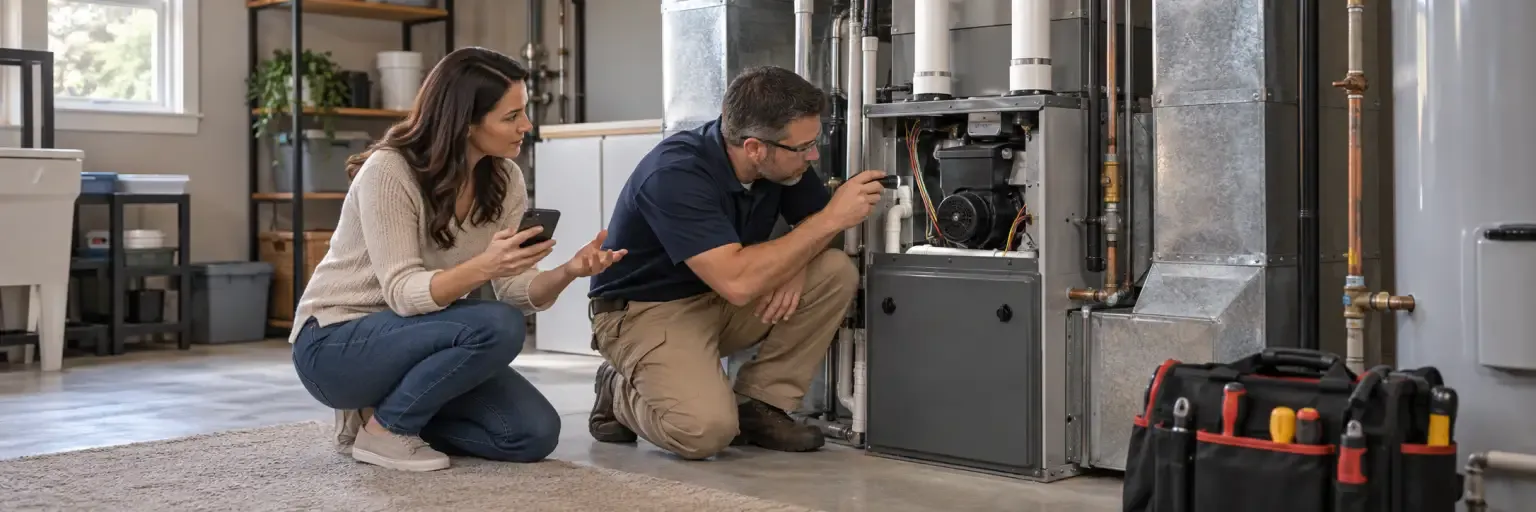
A furnace tune-up is a reasonable maintenance visit when your system is operating normally and you want to prepare for heating season. It is not, by itself, a diagnosis of a comfort problem, repeated shutdown, unusual smell, or possible safety issue. If something has changed, write down what you notice and ask for a separately explained assessment. If there is an immediate safety concern, leave the area and follow local emergency guidance instead of waiting for routine service.
That distinction matters because a maintenance checklist has a narrower job than a diagnostic visit. A technician may inspect accessible equipment, carry out manufacturer-recommended upkeep, and identify an obvious concern. But the cause of one cold room, cycling that happens only on certain days, or a symptom that comes and goes may require a different test, more history, or a visit while the problem is occurring. A successful tune-up is useful maintenance; it is not a promise that every part of a heating system has been tested under every condition.
Use routine maintenance for a system that is behaving normally
The best fit for a scheduled tune-up is a furnace that is heating the home as expected, has no new warning signs, and is due for the care described in its manufacturer documentation. The manufacturer’s manual for the exact model is the starting point: it can identify homeowner-accessible tasks, filter guidance, and when professional service is appropriate. Do not assume every furnace has the same service interval, filter type, or access procedure.
For a safe pre-visit check, you can usually note whether supply and return vents are blocked, whether the thermostat setting matches what you expect, and when the filter was last changed. Do not remove furnace panels beyond ordinary filter access, adjust gas piping, work on wiring, or try to prove a suspected problem by repeatedly cycling the equipment.
The HVAC maintenance checklist is a useful companion for those ordinary observations. It also does not replace the manual or a professional assessment.
Treat a new symptom as a separate question
Ask for diagnostic work when the home has a persistent comfort or reliability change rather than assuming a tune-up will cover it. A diagnostic assessment should explain the symptom being investigated, the observations or tests used, what remains uncertain, and the recommended next step. That gives you something concrete to compare if a repair or replacement conversation follows.
| What you notice | Better next step |
|---|---|
| Home heats evenly, starts normally, and has no new concerns | Schedule maintenance according to the manufacturer guidance and your normal seasonal plan. |
| One room stays noticeably colder, the system cycles differently, or a sound repeats | Record when it happens and ask for that symptom to be evaluated separately. |
| A burning odor, visible soot, repeated shutdown, or a carbon-monoxide alarm | Stop treating it as routine maintenance. Follow the equipment instructions and applicable emergency or qualified-help guidance. |
Carbon monoxide is an odorless gas, so smell alone cannot be used to rule it out. The U.S. Consumer Product Safety Commission advises households to have working carbon-monoxide alarms and to treat an alarm as a safety signal, not a furnace troubleshooting prompt.1 If a carbon-monoxide alarm sounds, get people to fresh air and follow the alarm instructions and local emergency guidance. Do not re-enter to inspect the furnace yourself.
Bring a short record, not a theory
The most helpful homeowner contribution is a small record of what changed. Note the date and time, outdoor conditions if they seem relevant, thermostat setting, rooms affected, sounds or odors, any alert from the thermostat, and what happened after the system restarted. A short video of a sound from a safe distance can help, but do not delay a safety response to document it.
Also bring the furnace model number if it is visible without removing a panel, the filter size you use, the date of the last service, and any earlier repair paperwork. This is not evidence of a diagnosis. It helps the technician decide what to inspect and lets you ask whether the proposed work addresses the reported symptom or only routine maintenance.
If the system does need a larger repair discussion, review HVAC repair or replacement before deciding. It may help you compare a written repair scope with the condition of the existing equipment without assuming replacement is the default answer.
Questions to ask your HVAC professional
- Is today’s work routine maintenance, diagnostic work for my reported symptom, or both—and what will each part include?
- Which observation or test supports the recommended repair, and what alternative causes were ruled out or remain uncertain?
- If the symptom returns, what details should I record and what follow-up test would help distinguish a furnace issue from airflow, thermostat, duct, or room-specific conditions?
Sources
Footnotes
-
U.S. Consumer Product Safety Commission, Carbon Monoxide Safety — carbon-monoxide alarm and response guidance; accessed October 11, 2026. ↩
Keep planning
Continue with Heating & Air Conditioning guides
Use these practical guides to take the next step, or browse the full topic when your question is broader.
Furnace and air conditioner maintenance checklist
Simple, safe checks for your furnace and air conditioner that can help you spot a problem early and know when to call a technician.
Should I repair or replace my furnace or air conditioner?
Use the age, repair history, comfort problems, and condition of your furnace or air conditioner to decide what to ask a technician before you spend money.
More from HomeFAQ
More homeowner notes
What safe charging looks like at home
A room-by-room way to decide whether a rechargeable-device setup should stay put, move, or pause for a manufacturer-guided check.
What a low-battery smoke or carbon monoxide alarm alert means
A low-battery alert needs prompt, manufacturer-guided attention, but it does not prove the alarm system is otherwise safe or ready for an emergency.
Fall is here: time to check your windows
A short, safe fall window check can help you spot drafts, moisture, worn weatherstripping, and operation issues before cold weather settles in.