
Homeowner guide
How to plan home water testing and treatment
A safe, step-by-step way to get the right water-quality information before choosing testing or a treatment system.
Published October 5, 2026
By the HomeFAQ Editorial Team · Reviewed for accuracy.
https://homefaq.com/water-treatment/how-to-plan-home-water-testing-and-treatment/
Printing is unavailable. Use your browser’s Print command.
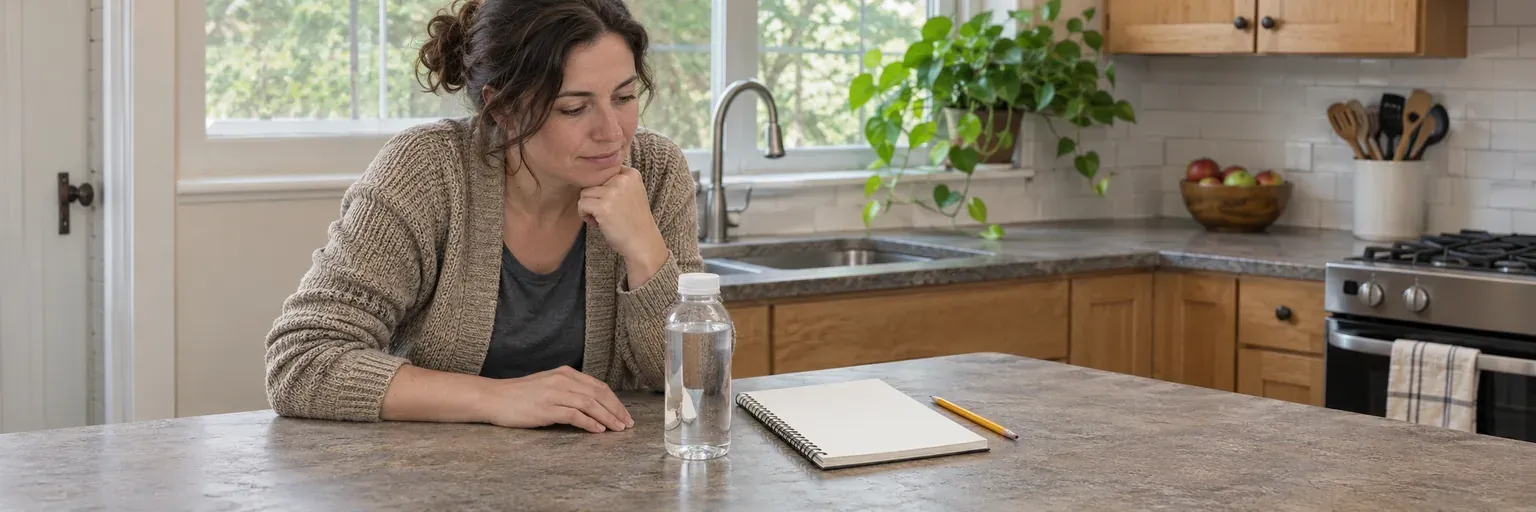
If your water tastes odd, leaves scale, or suddenly looks different, do not start by buying a filter or softener. First identify whether the water comes from a public system or a private well, gather the most recent reliable report or test, and use a laboratory or qualified professional to match any new test to a specific concern. A treatment device should address a documented condition—not a worry or a broad marketing claim.
This guide is for a homeowner who noticed a change, moved into a home with a well, or is considering a treatment proposal. The practical rule is to keep observation and testing separate from diagnosis and equipment selection. You can organize safe information; a laboratory or qualified professional should explain what a result means for your source and whether a specific treatment scope fits.
Step 1: Identify the water source
Public water systems and private wells have different information paths. If you receive public water, find the latest Consumer Confidence Report (CCR) through the system, state agency, or EPA water-report guide. It describes the system’s water and is a useful starting point, but it cannot confirm what comes from one particular faucet after water passes through a building’s plumbing.
Private-well owners are responsible for testing and maintenance. The EPA recommends annual testing of private wells for total coliform bacteria, nitrate, total dissolved solids, and pH, plus testing after flooding or another event that could affect the well. Local health authorities may recommend additional tests based on location and conditions. Do not assume a public-water report applies to a private well.
Step 2: Treat urgent notices and damage as urgent
If a public water system issues a boil-water or do-not-use notice, follow that notice before considering a product. If a well is flooded, damaged, or has lost pressure, contact the local health department or a qualified well professional for current guidance. A drinking-water safety concern is not a shopping decision. For an immediate health emergency, call emergency services.
Step 3: Write down the question before collecting a sample
A taste, odor, color, stain, or scale deposit can be a useful clue, but it does not diagnose a contaminant or show whether water is safe to drink. Note where and when the change appears: hot or cold water, one fixture or several, and whether there was recent flooding, well work, plumbing repair, or a system notice. Keep the report date and any photos of accessible areas with those notes.
Do not mix chemicals into the water, disinfect a well, open electrical equipment, or alter plumbing to obtain a sample unless a laboratory or qualified professional has specifically instructed you to do so.
Step 4: Use a certified laboratory and its instructions
Ask your state or local health department for testing guidance or a laboratory list. Tell the lab your water source and the question you are trying to answer, then ask which panel and sample location fit that question. The EPA notes that containers, preservatives, sampling methods, and holding times can differ by analyte and laboratory. Follow the lab’s instructions exactly; the wrong bottle, location, or timing can make a result less useful.
A laboratory can report what is in the sample. One result does not automatically explain the source of the condition or choose a whole-home system. When the issue may involve the building plumbing, the well, or a public-system notice, ask which qualified professional should assess that part of the question.
Step 5: Match any proposal to the documented result
Once you have a report or test result, ask a water-treatment professional to state the exact condition the proposal is intended to address. Request the model number, relevant certification claim, maintenance needs, and design assumptions for flow and daily use. NSF explains that certification applies to specific product claims; it is not a promise that one device treats every concern.
Do not compare a product-only price with an installed system. A useful written scope separates testing from installation and lists plumbing changes, drain or electrical work, startup, maintenance supplies, warranty terms, and exclusions. If the result is unclear, further testing or evaluation may be the better next step than equipment.
Your next action is to keep the report, test result, and observation notes together, then use the water-treatment cost guide to prepare a like-for-like scope request.
Sources
- U.S. Environmental Protection Agency: How to Find Your Water Quality Report — Consumer Confidence Reports and public-water-system information.
- U.S. Environmental Protection Agency: Private Drinking Water Wells — private-well testing and owner responsibilities.
- U.S. Environmental Protection Agency: Testing Your Private Well — laboratory and sampling context.
- NSF: Drinking Water Treatment Units — certification and product-claim context.
Be ready for the conversation
3 questions to ask your water treatment professional
- 1For my water source and concern, which samples or tests are appropriate, and which laboratory instructions should I follow?
- 2What can this report or screening tell us, and what does it not confirm about my water or the source of the issue?
- 3If further evaluation or treatment is needed, which flow, plumbing, test-result, or site details must be confirmed before you recommend a scope?
Keep planning
Related water treatment guides
How much should home water treatment cost?
A scope-first guide to budgeting for water testing, filtration, softening, or another treatment system without mistaking a planning figure for a quote.
How to compare water-treatment estimates
Compare water-treatment proposals by the test result, treatment target, flow demand, installation scope, maintenance, certification, warranty, and exclusions—not the total alone.
Water treatment terms homeowners should know
Plain-English water-treatment terms to help homeowners read test results, product claims, and written installation proposals.