
Homeowner guide
How to compare kitchen remodel estimates
Compare kitchen-remodel proposals by matching the written scope, allowances, responsibilities, and change process before comparing totals.
Published October 4, 2026
By the HomeFAQ Editorial Team · Reviewed for accuracy.
https://homefaq.com/kitchen/how-to-compare-kitchen-remodel-estimates/
Printing is unavailable. Use your browser’s Print command.
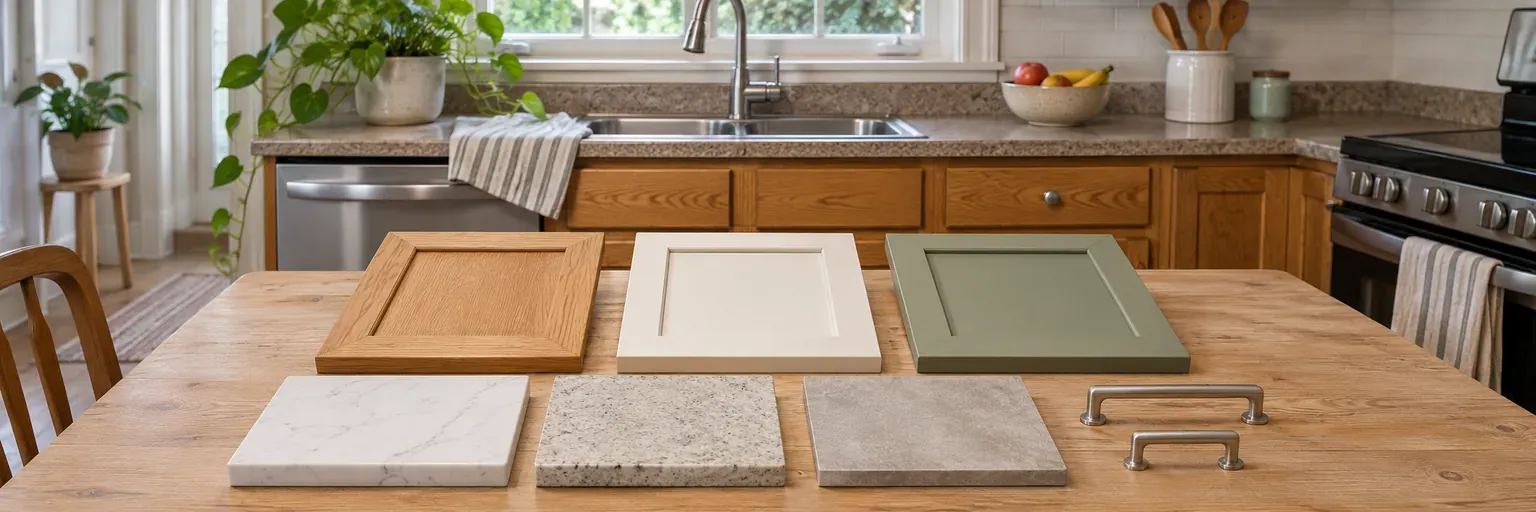
The best kitchen-remodel estimate is not automatically the lowest total. Choose the proposal that lets you see whether each bidder is pricing the same work: demolition, protection, cabinets, countertops, appliances, trade coordination, cleanup, and the process for conditions nobody could see at the first visit. Give every bidder the same written brief, then compare scope before price. A lower total can be a sound choice when it covers less work; it is not a like-for-like comparison until the difference is written down.
This guide is for a homeowner choosing among proposals for an occupied-home kitchen update or remodel. It cannot determine local permit requirements or diagnose a hidden condition. Your next action is to make one comparison sheet from the checklist below and send the same unanswered questions to every bidder.
Start with one shared project brief
Before requesting estimates, write the daily problem the project must solve: poor storage, an awkward work path, worn surfaces, an appliance change, a need for more accessible use, or a condition that needs an on-site assessment. Include approximate room dimensions, doors and windows, visible appliance and fixture locations, photos of visible staining or damage, and what needs to remain usable while work is underway. Give each bidder the same information. State whether you expect to keep the layout, who might supply appliances or fixtures, selections already made, and items that still need an allowance. An allowance is a placeholder amount for an item not yet selected. It is not a promise that every product choice will fit the quoted total.
From a safe standing position, photograph what you can see. Do not open walls, disconnect appliances, move gas equipment, or investigate wiring or plumbing yourself. If you smell gas, leave the area, avoid switches and flames, and contact the gas utility or emergency services from a safe location. If water is near electrical equipment, do not touch the equipment; seek qualified help promptly.
Compare the work behind the finishes
Cabinets, counters, and a new appliance package may be visible parts of a kitchen proposal, but they do not describe the full scope. Mark every row below as included, excluded, allowance, or unclear for each bidder. Ask for written clarification instead of filling a gap with an assumption.
| Scope item | What a comparable proposal should make clear |
|---|---|
| Demolition and disposal | What is removed, how debris leaves the home, and which existing items stay. |
| Protection and cleanup | Dust control, floor and path protection, daily cleanup, and final cleanup. |
| Layout and measurements | Existing versus new locations, who verifies final dimensions, and decisions needed before fabrication. |
| Cabinets and countertops | Product or allowance, delivery, installation, fillers or trim, templates, fabrication, and cutouts. |
| Appliances and fixtures | Who purchases, receives, moves, installs, connects, starts up, and removes each item. |
| Trade coordination | Included electrical, plumbing, gas, HVAC, ventilation, wall-repair, flooring, or painting tasks and who coordinates them. |
| Permits and inspections | Who verifies local requirements, obtains permits if needed, and schedules inspections. |
| Schedule and access | Expected sequence, kitchen downtime, access needs, and assumptions that could move the schedule. |
| Warranties and closeout | Product warranty versus workmanship commitment, final walk-through, and records handed over. |
A proposal can appropriately exclude work. The important point is that you can identify the exclusion and decide whether another bidder has included it. The Federal Trade Commission recommends getting written estimates and understanding the contract before hiring a contractor.
Make allowances and responsibilities specific
Do not compare a named cabinet line in one estimate with a broad cabinet allowance in another as if they mean the same thing. For each allowance, ask what product level, quantity, installation task, tax, delivery, or fabrication assumption it represents. Ask how the total changes if the selected item costs more or less. A clear answer does not need to predict every future choice; it does need to show where the decision belongs.
Also identify handoffs. An owner-supplied appliance may still require delivery access, a verified opening, electrical or gas work, water or drain connections, venting, trim, and removal of the old unit. Do not assume responsibility transfers just because a product is listed. Ask each bidder to name the tasks they own and the tasks another trade or the homeowner must arrange.
Treat unknown conditions as a decision point
Removal can reveal damage, uneven surfaces, an old alteration, or another condition that was not visible during a site visit. A responsible proposal may identify that uncertainty, but “repair as needed” is not enough information for a homeowner to compare risk. Ask what the team will document, what options it will present, how a price and schedule effect will be stated, and when your written approval is required before extra work begins.
Local permit and inspection requirements vary by jurisdiction. The International Code Council publishes model codes, but the local authority having jurisdiction decides what applies at a specific address. Ask the bidder who will verify the local path; do not treat a national article or a verbal assurance as a permit determination.
Use a like-for-like comparison worksheet
Before choosing, make a single sheet with one column per bidder and answer these questions:
- Does every bidder have the same room brief, photos, layout assumptions, and selection list?
- Are demolition, disposal, home protection, cleanup, and access conditions spelled out?
- Are cabinets, counters, appliances, fixtures, and their delivery or installation responsibilities either named or clearly allowed for?
- Are electrical, plumbing, gas, ventilation, HVAC, wall repair, flooring, and painting tasks assigned rather than implied?
- Does each proposal say who verifies permits and inspections when they apply locally?
- Are allowances, exclusions, and schedule assumptions visible?
- Is there a written process for a concealed condition, change order, and your approval?
- Can you distinguish product coverage from workmanship coverage and identify the final handoff?
Choose the proposal that most clearly solves the problem in your brief and gives you a documented choice when an unknown condition appears. If one bidder identifies an item the others omitted, ask all bidders to address that same item before treating totals as comparable.
A useful next step
Use how to plan a kitchen remodel to improve the brief you give to every bidder. Then use how much a kitchen remodel can cost as a dated national planning benchmark, not a quote. Keep the brief, proposals, selections, and approved changes together so you can compare promised work at each decision point.
Sources
Be ready for the conversation
3 questions to ask your kitchen remodeler
- 1Can you show which demolition, protection, cabinet, countertop, appliance, utility, permit, cleanup, and warranty tasks are included or excluded in this written kitchen-remodel scope?
- 2Which layout, allowance, product-selection, access, or existing-condition assumptions could change this total, and how will you document the options?
- 3If measurement or demolition reveals a condition outside this proposal, how will you explain it and obtain my written approval before extra work begins?
Keep planning
Related kitchen guides
How much should a kitchen remodel cost?
A U.S. planning guide to using national kitchen-remodel benchmarks without mistaking them for a quote for your home.
How to plan a kitchen remodel
A homeowner-first sequence for defining a kitchen remodel, preparing a clear scope, and comparing written proposals.
Kitchen terms homeowners should know
Plain-English kitchen-remodel terms that help homeowners compare proposals, selections, and installation scopes.