
Homeowner guide
How to compare garage door replacement estimates
Make garage-door proposals comparable by matching the door, hardware, opener, opening work, and written exclusions before choosing a price.
Published October 3, 2026
By the HomeFAQ Editorial Team · Reviewed for accuracy.
https://homefaq.com/garage-doors/how-to-compare-garage-door-replacement-estimates/
Printing is unavailable. Use your browser’s Print command.
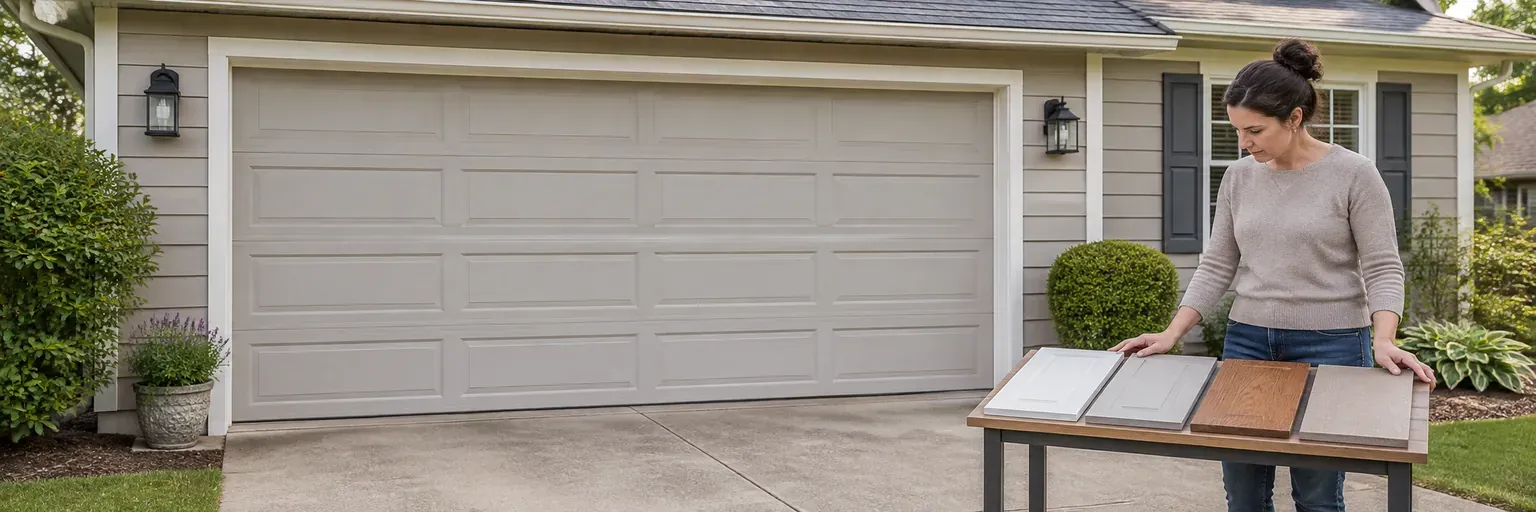
The lowest garage-door replacement estimate is not necessarily the better buy. First make sure every proposal covers the same opening, door construction, counterbalance hardware, safety features, removal, and finish work. A lower price can simply leave out an opener, weather seal, electrical work, disposal, or a responsibility that another installer included. Ask each installer to put inclusions and exclusions in writing before comparing totals.
This guide is for a homeowner with two or more garage-door proposals who needs to decide whether they describe the same job. The practical answer is to normalize the scope: give each bidder the same information, compare each line item, and request written clarification for anything unclear. Your next action is a revised proposal or written scope summary—not an assumption based on a short product description.
Begin with the opening and the door itself
Start by giving every bidder the same facts: the number of openings, whether each is one-car or two-car, approximate opening width and height, attached or detached garage, and any visible damage or water history. You can measure from the floor or take photos from ground level, but do not climb a ladder, disconnect a door, or handle springs, cables, bottom brackets, or tracks. The installer should verify measurements and the condition of the opening on site.
Ask each proposal to name the door manufacturer and model or an equivalent level of detail. “New insulated door” is not enough to compare construction. It should state the panel material, number of layers, insulation description if offered, window layout if any, color or finish, and hardware options. A door with a different construction, size, window package, or finish is a different scope even when both proposals call it a replacement.
If an installer raises wind-load or permit requirements, ask them to identify who will check the applicable local authority, product documentation, and site conditions. Requirements vary by location and project; do not assume a generic claim about permits or wind ratings applies to your address. The International Code Council publishes code information, but your local building department determines what applies locally.
Use one comparison checklist
Put each proposal beside the checklist below. A blank cell is useful information: it is a reason to ask a question before signing, not proof that an item is included.
| Scope item | What a comparable proposal should clarify |
|---|---|
| Opening and measurements | Which opening is included, confirmed width and height, headroom or side-room limitations, and any visible framing or surface condition. |
| Door construction | Manufacturer, model or product line, material, layers, insulation description, panel design, windows, finish, and decorative hardware. |
| Wind-load and local responsibility | Whether the installer will verify product requirements and permits with the local authority, and what is excluded if site conditions change. |
| Springs, tracks, and hardware | Counterbalance system, springs, cables, drums, tracks, rollers, reinforcement, and which existing parts will remain or be replaced. |
| Opener and safety features | Opener model, controls, photo eyes, mounting, compatibility, and the tests completed at handoff. |
| Removal and disposal | Existing door, opener, hardware, packaging, debris removal, and site cleanup. |
| Trim and weather seal | Perimeter weather seal, bottom seal, trim or jamb work, caulk, paint, and any finish restoration. |
| Electrical work | Outlet, wiring, circuit, low-voltage controls, or lighting work; name the trade responsible if it is outside the installer’s scope. |
| Permits and scheduling | Who checks permit requirements, obtains permits if needed, schedules inspections, and handles access or delay conditions. |
| Warranties and exclusions | Product warranty, workmanship coverage, who administers each, duration, maintenance conditions, and items not included. |
The Door & Access Systems Manufacturers Association notes that garage-door springs and related hardware are under high tension. That is one reason not to treat “hardware as needed” as a clear scope. Ask the installer to identify the counterbalance and track work included, what will be inspected, and what safe operation checks will be performed after installation.
Separate known work from discovery work
Replacement can reveal a condition that was not visible while the old door was in place: damaged trim, deteriorated framing, an uneven mounting surface, water-related damage, or an electrical issue. A proposal cannot always price an unknown condition in advance. It should still explain the change process.
Look for a written distinction between the base installation and possible additional work. Ask who will document a newly found condition, whether you will receive photos or an explanation, how the added work will be priced, and when your written approval is required. Avoid treating an open-ended phrase such as “repair as needed” as a price commitment.
Also keep separate trades separate. Door installation may involve an opener, but an installer’s scope may not include changing a receptacle, adding a circuit, repairing drywall, repainting trim, or correcting structural conditions. If a proposal recommends that work, ask for a separate line item or a written referral of responsibility. That makes it easier to compare the actual door project without accidentally accepting an incomplete handoff.
Check the safety and handoff plan
An opener is only one part of the system. The U.S. Consumer Product Safety Commission describes photo-eye sensors and entrapment-reversal protection as important garage-door opener safety features. Ask how the installer will place, test, and demonstrate the safety system according to the installed opener manufacturer’s instructions. Do not accept a plan to bypass a sensor or leave a door operating unpredictably while another item is ordered.
Before choosing, ask for the same final details from each bidder: expected start and completion timing, site protection and cleanup, who will be present for the final walk-through, operating instructions, warranty documents, and the exact process for approving changes. A manufacturer warranty and an installer’s workmanship warranty are different promises. Compare what each covers, who handles a claim, and what records you should keep.
Once the opening, door specification, hardware, opener, removal, finish work, electrical responsibility, permit process, and exclusions match, then compare the totals. If a lower proposal omits a necessary item, it may be a lower scope rather than a lower price. For context on what moves a project price without treating a national range as a local quote, read How much should garage door replacement cost?. If you are still deciding whether replacement is warranted, read Garage door repair vs. replacement: how to choose safely.
Questions to ask your garage-door installer
- Can you show me, in writing, the exact door specification and every spring, track, opener, removal, weather-seal, and finish item included in this price?
- If removal reveals an opening, trim, framing, or electrical condition, what documentation, price method, and written approval step will you use before the scope changes?
- Which local permit or wind-load responsibilities will you verify for this installation, and which photo-eye, reversal, and door-operation checks will you demonstrate at handoff?
Sources
- Door & Access Systems Manufacturers Association, Garage Door and Opener Safety — safety context for springs and related high-tension hardware.
- U.S. Consumer Product Safety Commission, Automatic Garage Door Opener Safety — consumer guidance on photo eyes and entrapment-reversal systems.
- International Code Council, Digital Codes — code reference context; local authorities determine applicable requirements.
Be ready for the conversation
3 questions to ask your garage door professional
- 1What did you test on the door, springs, tracks, hardware, photo eyes, and opener before recommending this work?
- 2Which repair, replacement, safety-test, programming, and cleanup tasks are included or excluded?
- 3What result would mean the door should stay out of use, and what will you test with me at handoff?
Keep planning
Related garage doors guides
Garage door repair vs. replacement: how to choose safely
Use the door's safety systems, structural condition, and documented repair scope—not a single symptom—to decide whether garage-door repair or replacement is the better next step.
How much should garage door replacement cost?
A U.S. scope-first guide to comparing garage-door replacement proposals when a generic national price cannot replace a written local quote.
Garage door terms homeowners should know
Plain-English garage-door terms to help you understand a safety recommendation or compare a written repair or replacement scope.