
Homeowner guide
How much should garage door replacement cost?
A U.S. scope-first guide to comparing garage-door replacement proposals when a generic national price cannot replace a written local quote.
Published October 3, 2026
By the HomeFAQ Editorial Team · Reviewed for accuracy.
https://homefaq.com/garage-doors/how-much-should-garage-door-replacement-cost/
Printing is unavailable. Use your browser’s Print command.
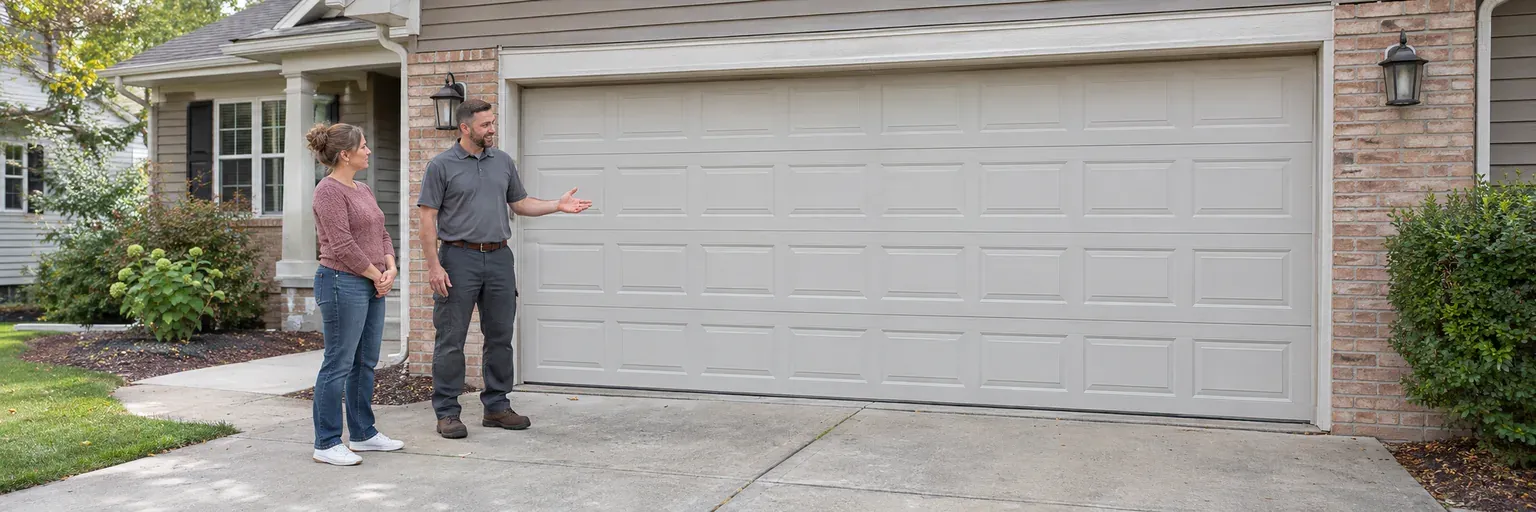
There is no single safe national price for garage-door replacement. A one-car or two-car opening, a basic uninsulated sectional door, an insulated door, a new opener, and repair to the opening can be very different projects. The useful decision rule is to compare the complete door, opening, counterbalance, opener, and finish scope in writing before comparing totals. A planning estimate is not a quote for your home; use a qualified local professional’s measured, written proposal to decide what the work should cost.
HomeFAQ does not publish a national dollar range here. Public occupational wage data does not establish an installed residential price, and product instructions do not price removal, opening repair, electrical work, local requirements, or finish work. A broad online range can combine a door-only purchase with installation, an opener, spring replacement, disposal, or repairs that are not visible until removal. Treat a low starting number as a prompt to ask what is missing, not proof that two proposals are comparable.
Start by describing the door and the problem
Tell every bidder whether the opening is for one or two vehicles, whether the door is sectional or another style, and whether the project is replacement, a known repair, or a change in use. A sectional door is made of horizontal panels that travel on tracks. Note what you can observe safely from the floor: unusual noise, slow movement, visible rust, damaged panels, gaps at the bottom or sides, remote-control concerns, or a door that will not reverse as expected.
Also note whether you want insulation, windows, a different exterior finish, a new opener, battery backup, keypad access, or an exterior outlet. These are product and scope choices, not automatic inclusions. Take clear photos from a safe standing position and share any prior repair records. Do not loosen springs, cables, bottom brackets, tracks, or opener wiring. The Door & Access Systems Manufacturers Association (DASMA) warns that garage-door springs and related hardware are under high tension and should be handled by trained personnel.
Why a national range would create false precision
The visible door is only part of the project. The existing opening may need measurement, alignment, framing assessment, trim work, weather sealing, or finish repair. The door’s construction, insulation level, size, windows, wind-load needs where applicable, hardware, and installation access can all change the work. An opener may be retained, replaced, or found incompatible with the selected door and its safe operation.
HomeFAQ does not have a licensed residential garage-door price dataset or an approved public coefficient model that can turn these different scopes into a truthful national installed range. BLS wage tables describe occupations, not a complete project with materials, business overhead, travel, product selection, access, and site conditions. Instead of giving a misleading average, build a written scope that lets you compare local proposals on the same basis.
Compare each proposal line by line
Ask each bidder to mark the following as included, excluded, allowance, or unknown. If a line is not stated, ask for clarification before treating totals as comparable.
| Scope item | What to compare |
|---|---|
| Door and panels | Door size, construction, material, insulation description, finish, windows, reinforcement, and model or product line if chosen. |
| Opening and measurements | Who verifies the opening, what the base proposal assumes about framing and surfaces, and how a concealed condition will be documented. |
| Removal and disposal | Existing door, tracks, hardware, opener if applicable, debris removal, and protection for nearby surfaces. |
| Counterbalance and tracks | Springs, cables, drums, tracks, rollers, hinges, brackets, and any replacement or adjustment within the professional’s scope. Do not compare these as optional DIY parts. |
| Opener and safety equipment | Whether the opener, rail, controls, photo-eyes, backup power, programming, and reversal test are included, retained, or excluded. |
| Sealing and finish work | Bottom seal, perimeter weather seal, trim, caulk, paint or finish touch-up, and any adjacent siding or drywall work. |
| Administration | Local permit or wind-load responsibility where applicable, scheduling, cleanup, product and workmanship warranty responsibility, and change-order approval. |
A lower proposal may be reasonable if it has a narrower scope. It is not directly comparable to a proposal that includes an opener, removal, upgraded hardware, weather sealing, trim, or documented opening repair. Ask what the installer will test before handoff. The U.S. Consumer Product Safety Commission’s garage-door-opener guidance emphasizes the entrapment-reversal system and photo-eye sensors; a professional should explain the safe operation checks that apply to the installed equipment.
Separate known work from conditions found after removal
Ask each professional to identify what they observed and what their base price assumes. If removal reveals damaged framing, moisture-related deterioration, an uneven opening, electrical work, or another condition outside the written scope, request a documented change process: a description or photo, the added work, the price or pricing method, and your approval before additional work proceeds when practical.
Do not let an allowance hide an unanswered question. An allowance is a placeholder for an unselected product or undefined task. Ask what it covers, what product level or labor it assumes, and what happens if the actual need differs. If you live where wind-load or permit rules may apply, ask which local authority or product documentation the professional will check and who is responsible for that step. Requirements vary by location and project; a generic article cannot determine them for your home.
Build a quote-ready packet
Give every bidder the same short project brief: safe photos, opening location, door use, visible symptoms, desired features, access constraints, existing opener information, and any known water or impact history. Ask for the same written breakdown of door product, counterbalance hardware, tracks, opener and safety equipment, removal, sealing, trim, finish work, cleanup, and exclusions.
If the door will not stay open, is visibly hanging from a cable, has a damaged bottom bracket, will not reverse as expected, or has a broken spring or track concern, stop using it and arrange qualified assessment rather than trying to price-shop a repair. Those conditions can affect safe operation. For a broader checklist on comparing written scopes, use How to compare door replacement estimates; it cannot replace a garage-door professional’s measured assessment.
Questions to ask your garage-door professional
- Which door model, panel construction, insulation description, hardware, tracks, springs, and weather seals are included, and which are allowances or exclusions?
- Will you retain or replace the opener and its safety equipment, and what operation and reversal checks will you complete before handoff?
- If removal reveals an opening, framing, electrical, or finish condition outside the proposal, how will you document it and obtain written approval before changing the cost?
Sources
- Door & Access Systems Manufacturers Association, Garage Door and Opener Safety — consumer safety context for high-tension garage-door components and safe operation.
- U.S. Consumer Product Safety Commission, Automatic Garage Door Opener Safety — entrapment protection and reversal-system consumer guidance.
- U.S. Bureau of Labor Statistics, Occupational Employment and Wage Statistics — occupational wage data, which does not provide a garage-door-specific installed project quote.
Be ready for the conversation
3 questions to ask your garage door professional
- 1What did you test on the door, springs, tracks, hardware, photo eyes, and opener before recommending this work?
- 2Which repair, replacement, safety-test, programming, and cleanup tasks are included or excluded?
- 3What result would mean the door should stay out of use, and what will you test with me at handoff?
Keep planning
Related garage doors guides
Garage door terms homeowners should know
Plain-English garage-door terms to help you understand a safety recommendation or compare a written repair or replacement scope.
How to compare garage door replacement estimates
Make garage-door proposals comparable by matching the door, hardware, opener, opening work, and written exclusions before choosing a price.
Garage Door Opener: Safe Troubleshooting Checks
Use simple, visible checks to separate an opener problem from a garage-door safety issue, and know when to stop using the door and call a qualified technician.