
Homeowner guide
Garage Door Opener: Safe Troubleshooting Checks
Use simple, visible checks to separate an opener problem from a garage-door safety issue, and know when to stop using the door and call a qualified technician.
Published October 8, 2026
By the HomeFAQ Editorial Team · Reviewed for accuracy.
https://homefaq.com/garage-doors/garage-door-opener-safety-and-troubleshooting/
Printing is unavailable. Use your browser’s Print command.
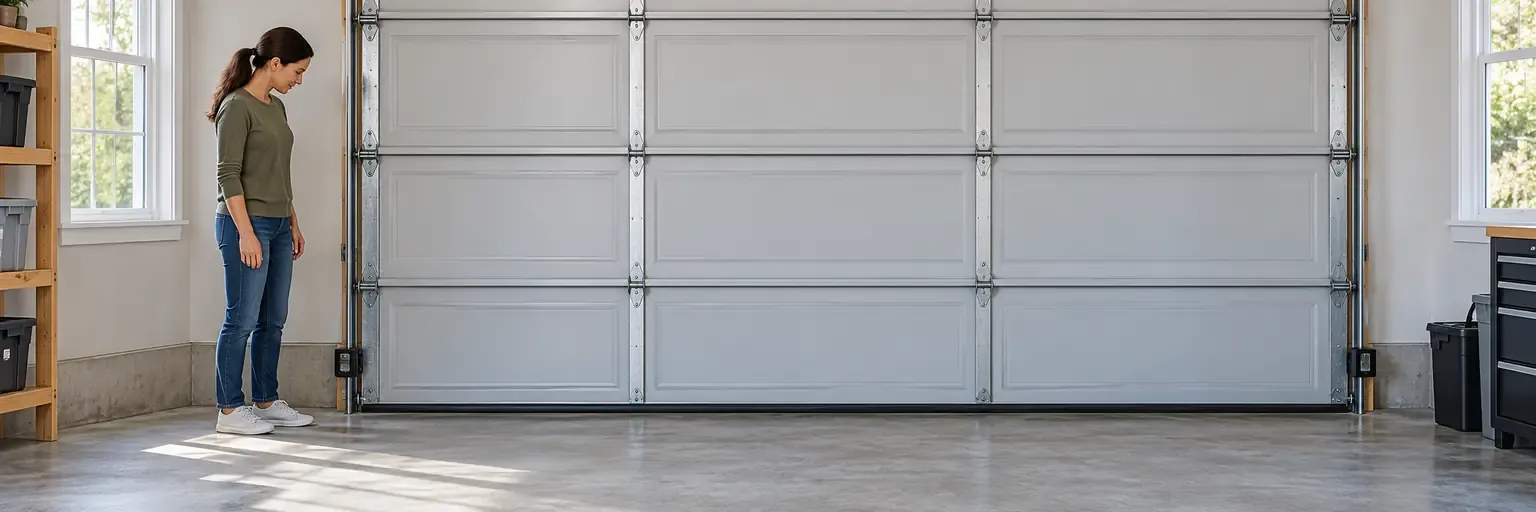
If your garage-door opener will not run, or the door starts down and reverses, begin with checks you can make from the floor: power, the door’s travel path, the photo-eye area, and the remote battery. Stop using the automatic opener and arrange qualified service if the door is crooked, a cable is loose, a spring looks broken, a track is bent, or the door does not behave as the manufacturer says it should during its safety test. Do not try to decide that a heavy door problem is “just the opener” by adjusting, forcing, or bypassing anything.
This guide is for a homeowner who needs a safe first response—not a DIY diagnosis. The decision is whether a visible, low-risk check resolves an obvious issue or whether the symptom needs a garage-door technician. Your next action is to make a short record of what you observed and share it with the technician instead of repeatedly cycling an unreliable door.
Start with the stop-use signs
A garage door is a heavy moving system. The opener moves it, but springs, cables, drums, tracks, rollers, hinges, and bottom brackets help control its path and counterbalance. A problem in any of those parts can look like an opener problem from across the garage.
Do not operate the door again if you can see a loose or broken cable, a separated spring, a bent or loose track, a damaged bottom bracket, or a door that hangs crookedly. Keep people and vehicles clear of the opening. The Door & Access Systems Manufacturers Association (DASMA) cautions that springs and related hardware are under high tension; they are not homeowner adjustment tasks. Do not pull on a cable, loosen hardware, stand under the door, or use the emergency release unless your specific manufacturer instructions say when that is safe.
Also stop using the opener if the door moves unpredictably, will not reverse during the manufacturer-prescribed safety test, or gives you any reason to think a person, pet, or vehicle could be in its path. The U.S. Consumer Product Safety Commission (CPSC) treats entrapment protection and photo eyes as safety features, not optional accessories.
Make four safe, visible checks
Only make these checks while the door is closed and you are standing on the floor, clear of the door path.
- Check power without opening equipment. Confirm that the opener’s plug has not been knocked loose and that the garage has power. If an outlet, cord, or opener housing looks damaged, smells hot, or shows another electrical concern, leave it alone and arrange qualified help. Do not remove covers or work on wiring.
- Clear the travel path. Move bicycles, bins, toys, loose cords, and other objects away from the floor and doorway. A door that reverses after it meets an obstruction is giving a safety response, not necessarily identifying a failed opener.
- Look at the photo-eye area. Photo eyes are the small sensors near the bottom of the opening. Check whether storage, leaves, cobwebs, or dirt visibly block the lenses or their line of sight. If your manual permits it, gently wipe only the outside of the lenses with a soft cloth. Do not tape over, rewire, move, or defeat the sensors.
- Try the remote battery and normal controls once. A weak remote battery can be a narrow explanation when the wall control works normally and the door itself has no safety warning signs. Follow the remote’s manual for the battery type. Do not keep pressing the remote or wall button if the door begins an unsafe or irregular movement.
These checks can remove an obvious obstruction or identify a simple remote issue. They cannot show whether a spring is balanced correctly, whether a cable is seated properly, or whether the opener force and travel settings are safe. Leave those questions to the qualified technician and the model-specific manual.
Tell an opener symptom from a door symptom—without diagnosing it
Your observations can help narrow the visit. They are not proof of the cause.
| What you can safely observe | Better next step |
|---|---|
| Wall control works but a remote does not; the door moves normally when watched | Check the documented remote battery and settings, then report the result if the issue remains. |
| Door begins closing but reverses with the photo-eye path visibly blocked | Clear the obstruction and use the manufacturer manual for the next safe check. |
| Door reverses with no visible obstruction, or the photo eyes look damaged or misaligned | Stop repeated testing and use manufacturer guidance or a qualified technician. |
| Opener hums, strains, or stops; door is uneven, noisy, or has visible hardware damage | Stop use and arrange a garage-door technician; the door system may need assessment. |
| Door has moved after an impact, power issue, or unknown change | Record what happened and request an inspection before assuming an adjustment is safe. |
An opener light, beep, or flashing indicator can be useful information, but its meaning depends on the exact model. Record the pattern and model number instead of relying on a generic online code list. Manufacturer manuals explain the safety test and troubleshooting sequence for that equipment.
Use the safety test only as your manual describes
Find the opener manual for your exact model before testing its automatic reversal or photo eyes. Manufacturers specify the setup because the test method, controls, and required object can vary. Keep people, pets, vehicles, and loose belongings away from the opening. Follow only the model’s stated test procedure.
If the door fails that procedure, stop using the automatic opener until it is assessed. Do not increase force settings, bypass a sensor, hold a control to force a close, or repeat a failed test hoping it will clear. Those actions can turn a warning into an entrapment risk.
For related low-risk upkeep, see How to maintain a garage door safely. If a technician finds a broader condition, Garage door repair vs. replacement: how to choose safely explains how to compare the next decision without treating a symptom as a diagnosis.
Prepare a useful record for the technician
Write down the opener make and model, when the problem began, which control you used, whether the door was opening or closing, and any power outage, impact, or weather event before the symptom. From a safe distance, a photo of the clear photo-eye area or a short video of a normal-distance observation can be useful if it does not require you to repeat unsafe operation. Do not take close-up photos of springs, cables, or brackets or try to make the door move for a recording.
Ask the technician to explain what they inspected before recommending work. A clear scope should say whether the concern is with the door system, opener controls, sensors, or another condition; what will be tested after the repair; and what remains outside the scope.
Sources
- Door & Access Systems Manufacturers Association, Garage Door and Opener Safety — consumer safety guidance on high-tension springs, cables, and related hardware.
- U.S. Consumer Product Safety Commission, Automatic Garage Door Opener Safety — consumer guidance on entrapment protection, photo eyes, and safer opener use.
- The Genie Company, Owner’s Manuals — example manufacturer resource for model-specific operation, testing, and troubleshooting instructions.
Be ready for the conversation
3 questions to ask your garage door professional
- 1Which safe checks did you complete on the door, photo eyes, travel path, and opener before deciding whether the issue is in the opener or the door system?
- 2What did the door-travel and manufacturer-prescribed reversal tests show, and which part of the recommended work addresses that result?
- 3After the repair, which safety features will you test with me, and what observation should make me stop using the opener and call again?
Keep planning
Related garage doors guides
Garage door repair vs. replacement: how to choose safely
Use the door's safety systems, structural condition, and documented repair scope—not a single symptom—to decide whether garage-door repair or replacement is the better next step.
How to maintain a garage door safely
Use simple ground-level checks and your opener manual to spot garage-door issues safely, while leaving springs, cables, and powered repairs to a qualified technician.
Garage door terms homeowners should know
Plain-English garage-door terms to help you understand a safety recommendation or compare a written repair or replacement scope.