
Homeowner guide
Should I repair or replace my fence?
Repair a fence when damage is limited and its posts and layout are sound; seek a replacement scope when support, alignment, or failure is widespread.
Published October 1, 2026
By the HomeFAQ Editorial Team · Reviewed for accuracy.
https://homefaq.com/fencing/fence-repair-or-replacement/
Printing is unavailable. Use your browser’s Print command.
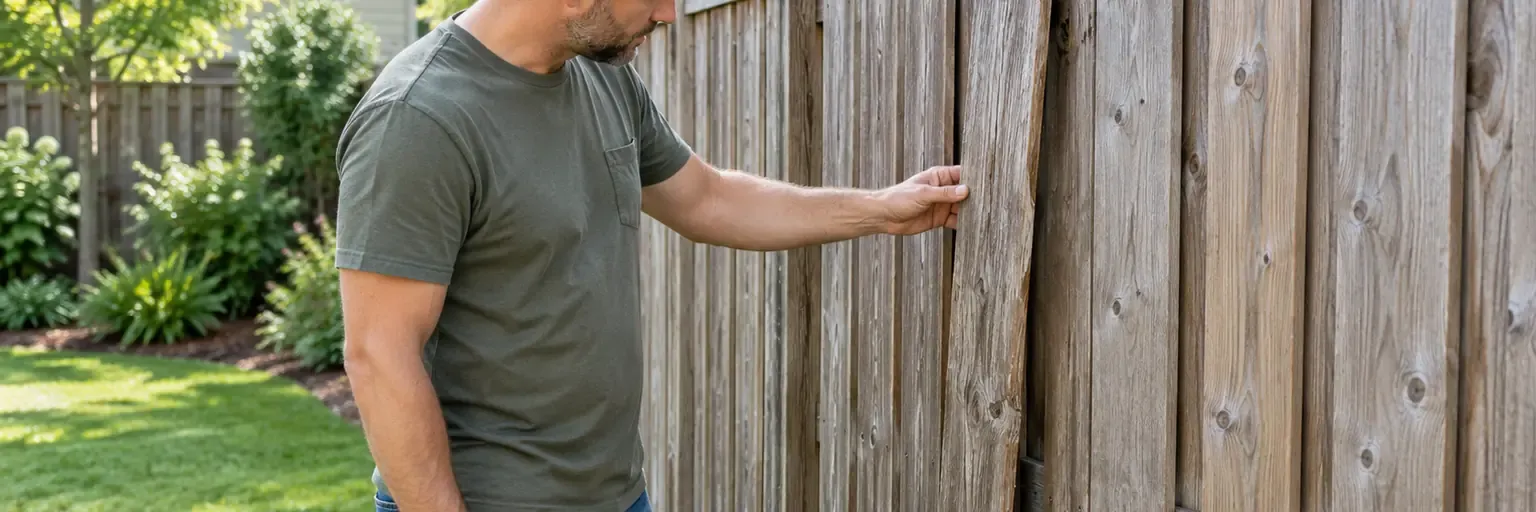
Repair is usually the better first path when a fence has one damaged board, panel, rail, or hinge but the posts are solid and the fence line is still straight. Ask for a replacement scope when posts are loose or decayed, several sections lean or fail, the fence no longer works as a boundary or safety enclosure, or repairs keep spreading to new areas. Start with a safe ground-level inspection and a written explanation of what is sound, what has failed, and what each option would leave in place.
Start with the support and the layout
A fence is more than the visible boards or panels. Posts transfer the fence’s weight and wind loads into the ground; rails or stringers run between posts and support the pickets or panels. A damaged picket can often be replaced without rebuilding the fence. A broken rail or sagging gate may also be repairable when the nearby posts remain firm and correctly aligned.
For wood fences, decay often begins where wood stays wet or contacts soil. The U.S. Forest Products Laboratory explains that wood-decay fungi need moisture, oxygen, suitable temperatures, and food; keeping wood dry is an important part of prevention. That does not mean every discolored board has structural decay, but soft wood, recurring moisture, and failed posts deserve closer evaluation. Do not use a screwdriver or force to test a questionable post near a gate, retaining wall, or pool barrier.
| What you can observe safely | A repair may fit when | Ask for a replacement evaluation when |
|---|---|---|
| Boards, pickets, or one panel | Damage is confined and the rails and posts beside it are sound. | Several sections have damaged or failing materials. |
| Posts and fence line | Posts appear plumb and the line remains stable. | Posts lean, move, decay, or the line has shifted. |
| Gates | Hardware needs adjustment and the opening is still square. | The gate opening has moved, posts are weak, or repeated adjustments fail. |
| Past work | This is an isolated event with a clear cause. | Repairs recur or new failures appear across the fence. |
When a repair is the sensible choice
Ask a fence professional to describe a limited repair in writing when the fence’s support system is sound and the work has a clear boundary. A useful scope identifies the affected sections, materials to be replaced, matching limitations, fasteners or hardware, and whether the contractor will reset any post. It should also explain what the repair will not correct elsewhere in the fence.
An isolated storm impact, one broken gate hinge, or a few damaged boards may not justify removing a full fence. However, a cosmetic match is not always possible when existing material has weathered. Decide whether an acceptable appearance matters more than preserving a sound larger section, and do not accept a vague promise that a repair will “blend” without seeing the material and finish plan.
When replacement deserves a written scope
Replacement becomes easier to evaluate when the failure is structural or repeated. Failed posts, widespread material breakdown, multiple out-of-line sections, or a gate system that cannot stay aligned can make piecemeal repairs harder to compare and maintain. Request a drawing or clear description of the proposed fence line, post locations, gates, material, height, removal, disposal, access needs, and cleanup.
Confirm the boundary before authorizing work. A survey, plat, easement, or local rule can affect where a fence may go and who may approve it. An easement is a legal right for someone else, such as a utility, to use a defined part of property; it is not something a contractor can resolve from a visual inspection. Local permitting, height, setback, and pool-barrier requirements also vary. Your local building or planning office and utility-marking service are better sources than a general rule of thumb.
If a fence is part of a pool barrier, treat a broken latch, gap, damaged gate, or climbable condition as a safety issue rather than a routine appearance repair. The U.S. Consumer Product Safety Commission recommends barriers that isolate pools and self-closing, self-latching gates; local rules may be stricter. Keep children away from the area and arrange prompt qualified repair instead of improvising a latch or propping a gate closed.
Compare the two scopes, not just two prices
Before choosing, gather photos taken from your side of the property, the approximate age and material of the fence if known, prior repair records, and notes on drainage, trees, gates, and access. Ask each contractor to separate repair work from any optional replacement work. Compare whether each proposal includes post work, removal, hauling, finish, gate hardware, utility marking coordination, permits, and an allowance for hidden conditions.
Use the fence cost guide only to frame a planning conversation, not to judge whether a specific repair quote is fair. For a larger replacement, the fence project planning guide can help you prepare a consistent written scope. Neither guide settles a property boundary or replaces local requirements.
Questions to ask your fence contractor
- Which posts, rails, and gate supports are sound enough to keep, and what evidence supports that conclusion?
- If you repair this section, what existing condition could cause another repair soon, and how will the new material attach to the old structure?
- For a replacement, how will you confirm the fence line, utilities, permits, drainage, gates, removal, and any pool-barrier requirements before work starts?
Sources
- USDA Forest Products Laboratory, Wood Handbook, chapter 14: Biodeterioration of Wood
- U.S. Consumer Product Safety Commission, Safety Barrier Guidelines for Residential Pools
- FTC, Choosing a Contractor
Be ready for the conversation
3 questions to ask your fence professional
- 1Which property, layout, utility, gate, soil, and access details must be verified before the final fence route is set?
- 2Which fence, post, gate, removal, cleanup, permit, and restoration tasks are included or excluded?
- 3If digging reveals an obstacle or private line, how will you document the options and get approval before changing the work?
Keep planning
Related fencing guides
Fencing terms homeowners should know
Decode the fence words that appear in an estimate, survey note, or contractor conversation before you agree to a scope.
How much should a fence cost?
Plan a fence project without false price precision by defining the site, materials, and written scope that local quotes must cover.
How to compare fence installation estimates
Compare fence proposals by matching the written scope before comparing the total price.