
Homeowner guide
How much should a fence cost?
Plan a fence project without false price precision by defining the site, materials, and written scope that local quotes must cover.
Published October 1, 2026
By the HomeFAQ Editorial Team · Reviewed for accuracy.
https://homefaq.com/fencing/how-much-should-a-fence-cost/
Printing is unavailable. Use your browser’s Print command.
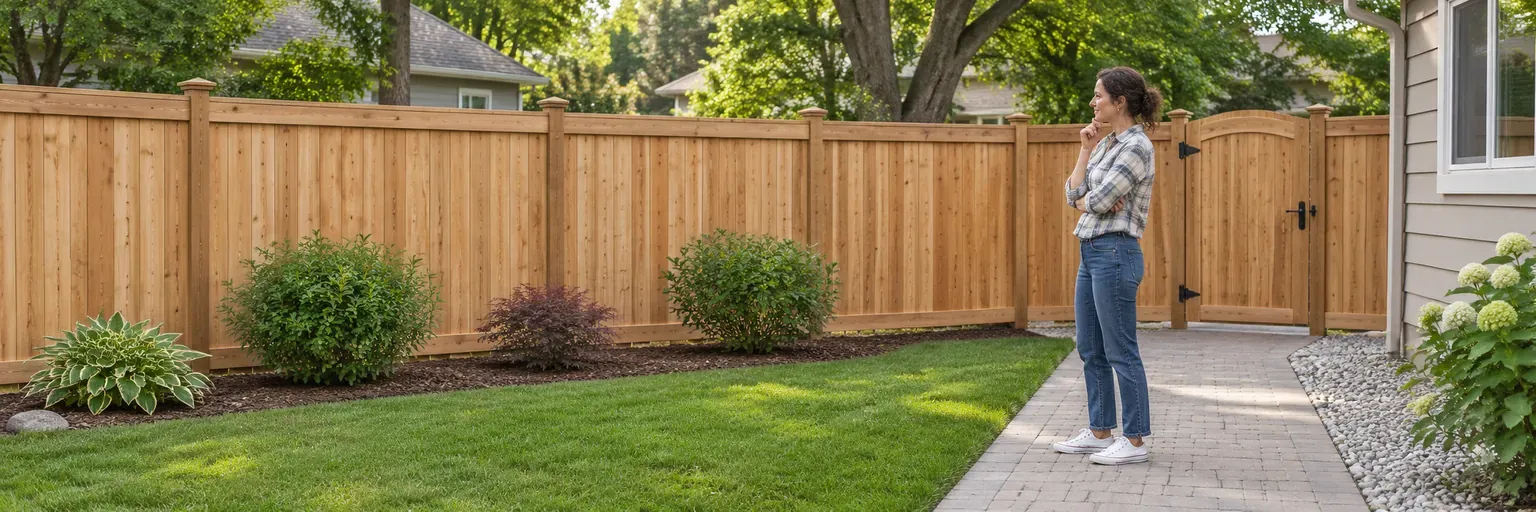
There is no single national fence-installation price that can safely stand in for a local quote. A short, level run of chain-link fence and a long privacy fence with gates, slopes, removal, and local approval needs are different projects. If you are deciding whether a fence fits your budget, start by defining the fence line and the work you need, then ask qualified local contractors to price the same written scope. That makes quotes comparable without treating an online headline number as a promise.
This guide is for a homeowner planning a new fence or replacement. Your next action is to make a simple site brief: the purpose, approximate length, preferred material family, gates, visible access limits, and any existing fence to remove.
Why a national installed-price range can mislead
Public U.S. sources track construction wages and changes in material prices, but they do not publish one current installed-price table that accounts for every fence material, length, height, gate, soil condition, terrain, permit requirement, and local labor market. A wage or material index is not a contractor’s complete billing cost. Turning either into a per-foot promise would create false precision.
The total can change when a proposal includes work that is easy to miss: post holes and concrete, removal and disposal, corner or end posts, gates and hardware, clearing vegetation, working around a slope, protecting nearby surfaces, or restoring disturbed ground. A lower total is not necessarily a better deal if it leaves out work another proposal includes.
Start with the purpose and fence line
Write down what the fence needs to do: contain a pet, create privacy, mark a visible edge, limit access, or enclose a pool area. The purpose affects material, height, gate location, hardware, and safety expectations. Take photos from your property and measure or estimate the visible run from the ground. Note corners, changes in grade, trees, sheds, driveways, and narrow access routes.
Do not treat a fence line, an old fence, or a map image as proof of a legal property boundary. Boundary, easement, and setback questions are local legal or survey matters. A qualified survey professional or local authority can explain what applies to a specific property. Before digging begins, use the local 811 process so underground utilities can be marked; a utility mark helps protect buried facilities but does not establish a property line.
Build a written scope before comparing totals
Give each bidder the same short brief and ask for a written proposal. The Federal Trade Commission recommends getting written estimates and understanding what a contract includes before hiring a contractor. A useful fence scope identifies:
- Layout and length. List approximate footage, corners, ends, changes in elevation, and who confirms the final layout.
- Material and appearance. Name the material family, height, style, color or finish, and whether panels, pickets, rails, posts, caps, or fasteners are included.
- Posts and ground work. Ask how posts will be set, how difficult soil or rock will be handled, and what happens if hidden conditions are found.
- Gates and access. Record each gate’s location, width, swing direction, latch and hinge hardware, and any access limits for people, materials, or equipment.
- Removal and closeout. State whether an old fence, vegetation, spoil, packaging, and debris are removed; include cleanup and restoration expectations.
- Approvals and changes. Ask who checks locally applicable permits or association rules, who schedules any required inspection, and how changes are documented and approved.
What commonly moves a local quote
Material choice and linear footage matter, but they are only part of the job. More corners, gates, taller sections, steep or uneven terrain, difficult digging, limited access, demolition, disposal, and landscaping conflicts can change labor and equipment needs. Local permit, zoning, association, and utility-locating processes can also change timing and scope. Ask a contractor to explain which of these assumptions their total includes rather than assuming a low line-item price covers everything.
If a fence is part of a pool barrier, treat it as a safety system rather than an ordinary privacy project. The U.S. Consumer Product Safety Commission explains that pool barriers need features such as restricted access and self-closing, self-latching gates; local rules may be more specific. Confirm the applicable requirements for the address before choosing a design or altering a gate.
Compare proposals line by line
Place each proposal beside the same scope sheet. Check whether the measured length, material, height, post spacing, gate count, removal, cleanup, approvals, schedule, payment terms, workmanship warranty, and change-order process match. Ask each bidder to identify exclusions and allowances in writing. A proposal may be reasonably higher because it includes removal, a better-defined gate, difficult access, or a condition the other proposal has not addressed.
Keep photos, your site brief, and every written proposal together. If a contractor finds an unexpected condition, ask for the condition, options, price effect, and your approval to be recorded before additional work starts. This is planning education, not a quote or a substitute for a local site assessment.
Questions to ask your fence professional
- What exact fence length, height, material, posts, gates, removal, and cleanup are included in this written scope?
- Which site conditions or local approvals could change this price, and how will you document and approve a change?
- How will you confirm the layout, utility-marking process, and gate operation before work begins?
Sources
- Federal Trade Commission: Hiring a Contractor — written estimates and contract guidance.
- Call 811: Before You Dig — national one-call information for utility locating.
- U.S. Consumer Product Safety Commission: Safety Barrier Guidelines for Residential Pools — pool-barrier and gate-safety context.
Be ready for the conversation
3 questions to ask your fence professional
- 1Which property, layout, utility, gate, soil, and access details must be verified before the final fence route is set?
- 2Which fence, post, gate, removal, cleanup, permit, and restoration tasks are included or excluded?
- 3If digging reveals an obstacle or private line, how will you document the options and get approval before changing the work?
Keep planning
Related fencing guides
Fencing terms homeowners should know
Decode the fence words that appear in an estimate, survey note, or contractor conversation before you agree to a scope.
How to compare fence installation estimates
Compare fence proposals by matching the written scope before comparing the total price.
Fence maintenance and safety checklist for homeowners
Seasonal fence checklist for spotting loose hardware, leaning posts, damaged panels, gate problems, drainage issues, and urgent pool-barrier concerns.