
Homeowner guide
Fence maintenance and safety checklist for homeowners
Seasonal fence checklist for spotting loose hardware, leaning posts, damaged panels, gate problems, drainage issues, and urgent pool-barrier concerns.
Published October 1, 2026
By the HomeFAQ Editorial Team · Reviewed for accuracy.
https://homefaq.com/fencing/fence-maintenance-and-safety-checklist/
Printing is unavailable. Use your browser’s Print command.
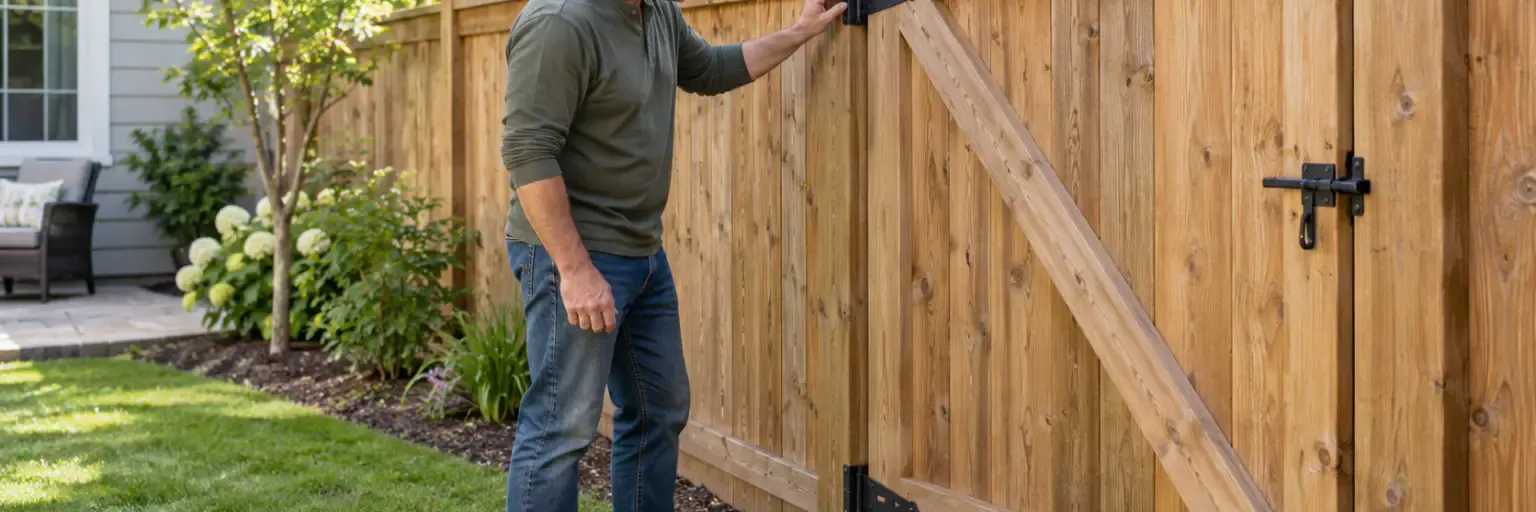
A seasonal fence check is worthwhile when you want to catch a loose gate, a leaning post, a damaged panel, or a drainage problem before it spreads. Walk the fence from your side of the property on stable ground, look rather than force anything, and write down changes after storms, freeze-thaw weather, or yard work. Call a qualified fence professional promptly when a fence is unstable, a gate will not secure, or a pool barrier has a gap or faulty latch. This checklist is general maintenance education, not a property-line determination, code inspection, or substitute for local requirements.
Do a calm seasonal walk-around
Choose daylight and dry, stable footing. Start at one end and look along the fence line for sections that are no longer straight, posts that appear to lean, or panels that no longer meet their rails. Check from your property only; do not climb a fence, lean a ladder against it, or enter a neighbor’s yard to inspect it. Keep children and pets away from a visibly unstable section.
Check fasteners, rails, panels, and posts without testing their strength
Look for missing, protruding, corroded, or loose-looking fasteners; split pickets; cracked panels; sagging rails; and sharp edges. A single damaged board or panel can sometimes be a limited repair, but repeated fastener failures or several damaged sections may point to a larger scope. Do not hammer hardware back into a fence that is leaning or pull on a questionable rail to see whether it moves. A weakened section can shift unexpectedly.
For wood fencing, watch for wood that stays wet, soft, or visibly deteriorated near the ground and around posts. The USDA Forest Products Laboratory explains that wood-decay fungi need moisture, oxygen, suitable temperature, and food; reducing persistent wetness is an important prevention step. Discoloration alone does not prove structural decay, so ask a professional to assess posts or rails that look soft, split, or no longer hold the fence line.
Treat gates as working safety hardware
Open and close a gate only if it moves normally. Look for rubbing at the ground, a latch that does not catch, hinges pulling away, a sagging leaf, or a gap that lets a pet or child pass through. Do not prop a gate closed, improvise a latch, or rely on a bungee cord as a repair. Ask for prompt repair when the gate cannot be secured or its supporting post has shifted.
If the fence helps enclose a pool, treat the barrier and gate as a safety system, not ordinary yard décor. The U.S. Consumer Product Safety Commission recommends barriers that isolate the pool and gates that are self-closing and self-latching; local rules can be stricter. Keep the pool area inaccessible while a gate, latch, panel, or opening is compromised, and confirm the local requirements before altering the barrier.
Look for vegetation, moisture, and drainage clues
Trim vegetation only when it can be done safely from the ground and without damaging the fence or crossing a property boundary. Vines, shrubs, and piled leaves can hold moisture against wood, hide a damaged panel, and make it harder to see a changing fence line. Do not cut a neighbor’s plant or remove a tree limb that could fall without their permission and, when appropriate, qualified help.
After rain, look for water collecting at posts, soil washing away, downspouts discharging against the fence, or a grade that directs runoff toward one section. Take photos after the water has drained. Do not dig near posts or alter drainage blindly: buried utilities, property conditions, and local drainage rules can affect the safe remedy. A contractor can explain whether the fence repair needs a separate drainage evaluation.
Know when the issue is urgent
Arrange prompt qualified help rather than waiting for a routine maintenance visit when you see:
- A fence section or post that is actively leaning, loose, or at risk of falling.
- A broken, protruding, or sharp component where people or pets could be hurt.
- A gate that will not latch, especially around a pool, pet area, driveway, or child-access area.
- A pool-barrier opening, damaged panel, or climbable condition that reduces controlled access.
- A fallen tree, vehicle impact, or storm damage that affects the fence line or may involve overhead or buried utilities.
For an immediate hazard involving electrical equipment or a downed line, stay away and contact the utility or emergency service appropriate to the situation. Do not move a damaged fence section if it is touching or near utility equipment.
Turn observations into a useful repair request
Send dated photos and a short description to each contractor. Ask them to identify the affected components, access needs, cleanup, drainage observations, and what they will leave in place. If a section is near a boundary, easement, or pool, ask who will verify the relevant layout or local requirement before work begins.
For help deciding whether a limited repair still makes sense, read Should I repair or replace my fence?. It explains the support and layout signs that warrant a replacement evaluation.
Questions to ask your fence contractor
- Which observed conditions are cosmetic, and which indicate a post, rail, gate, or drainage problem that should be repaired now?
- How will you secure and test this gate or barrier after repair, including any pool-safety or local-requirement checks that apply?
- What moisture, vegetation, runoff, or access condition could shorten this repair’s life, and which of those items are included in your written scope?
Sources
- USDA Forest Products Laboratory, Wood Handbook, chapter 14: Biodeterioration of Wood — moisture and wood-decay context.
- U.S. Consumer Product Safety Commission, Safety Barrier Guidelines for Residential Pools — pool-barrier and gate-safety guidance; local rules vary.
- FTC, Choosing a Contractor — written-scope and contractor-selection context.
Be ready for the conversation
3 questions to ask your fence professional
- 1Which property, layout, utility, gate, soil, and access details must be verified before the final fence route is set?
- 2Which fence, post, gate, removal, cleanup, permit, and restoration tasks are included or excluded?
- 3If digging reveals an obstacle or private line, how will you document the options and get approval before changing the work?
Keep planning
Related fencing guides
Should I repair or replace my fence?
Repair a fence when damage is limited and its posts and layout are sound; seek a replacement scope when support, alignment, or failure is widespread.
Fencing terms homeowners should know
Decode the fence words that appear in an estimate, survey note, or contractor conversation before you agree to a scope.
How much should a fence cost?
Plan a fence project without false price precision by defining the site, materials, and written scope that local quotes must cover.