
Homeowner blog
A simple fall electrical safety check before indoor season
Before lamps, heaters, and holiday decorations get more use, take a quiet look at outlets, cords, and warning signs.
Published September 25, 2026
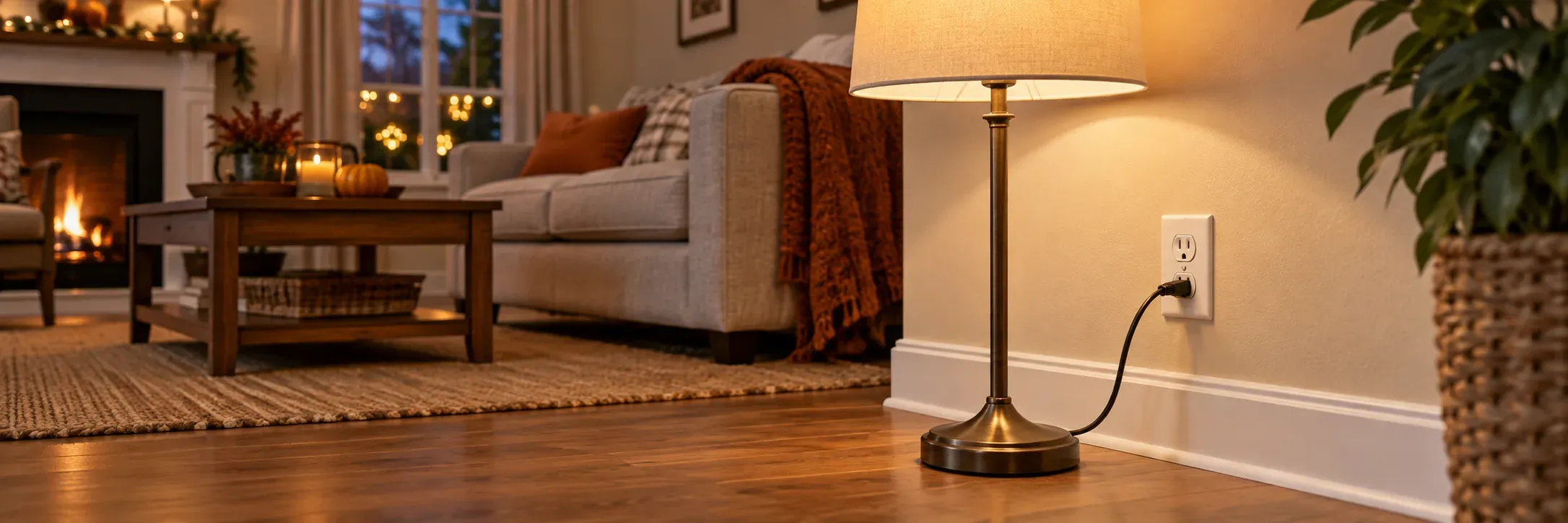
As days get shorter, homes rely more on indoor lighting and plug-in devices. This is a good moment for a visual check—not for opening panels or working on wiring.
Look for obvious cord and outlet problems
Check lamps, chargers, power strips, and visible extension cords for cracked insulation, loose plugs, scorch marks, or a hot smell. Replace damaged cords rather than taping them. Keep cords out from under rugs and away from doorways where they can be pinched or tripped over.
Use outlets as intended
Do not overload an outlet with stacked adapters or daisy-chained power strips. Larger appliances and portable heaters should go directly into a properly rated wall outlet, following the manufacturer’s instructions. Keep anything that produces heat away from curtains, bedding, and furniture.
Know when to stop and call an electrician
Flickering lights, a buzzing outlet, a breaker that trips repeatedly, a warm receptacle cover, or a burning odor need qualified attention. Do not keep resetting a breaker to make the symptom disappear. If you need help separating an urgent concern from a future project, read When to call an electrician.
Sources
Keep planning
Continue with Electrical Services guides
Use these practical guides to take the next step, or browse the full topic when your question is broader.
When to call an electrician
Recognize electrical warning signs, avoid unsafe troubleshooting, and prepare clear observations for a qualified electrical assessment.
GFCI, AFCI, and outlet planning: what to ask an electrician
Learn what GFCI and AFCI protection are intended to do, when an outlet project may involve circuit changes, and how to compare a safe written scope.
More from HomeFAQ
More homeowner notes
Make a Safer Portable Generator Plan Before an Outage
A power outage is the wrong time to improvise generator placement. Plan for outdoor use, carbon monoxide alarms, and an emergency exit before the lights go out.
A first freeze is a plumbing-plan signal, not a valve test
Before cold weather arrives, make a small plumbing plan instead of forcing old valves or guessing what your home needs.
Your spare room may not have a space-heater spot
A heater can fit beside a desk yet have no usable operating spot. Check the room's combustible clearances and your routine before relying on portable heat.