
Homeowner guide
Should I repair, resurface, or replace my pool?
Use a documented inspection, the type of problem, and the scope of needed work to decide whether pool repair, rehabilitation, or replacement deserves a written comparison.
Published October 5, 2026
By the HomeFAQ Editorial Team · Reviewed for accuracy.
https://homefaq.com/pool-spa/pool-repair-vs-replacement/
Printing is unavailable. Use your browser’s Print command.
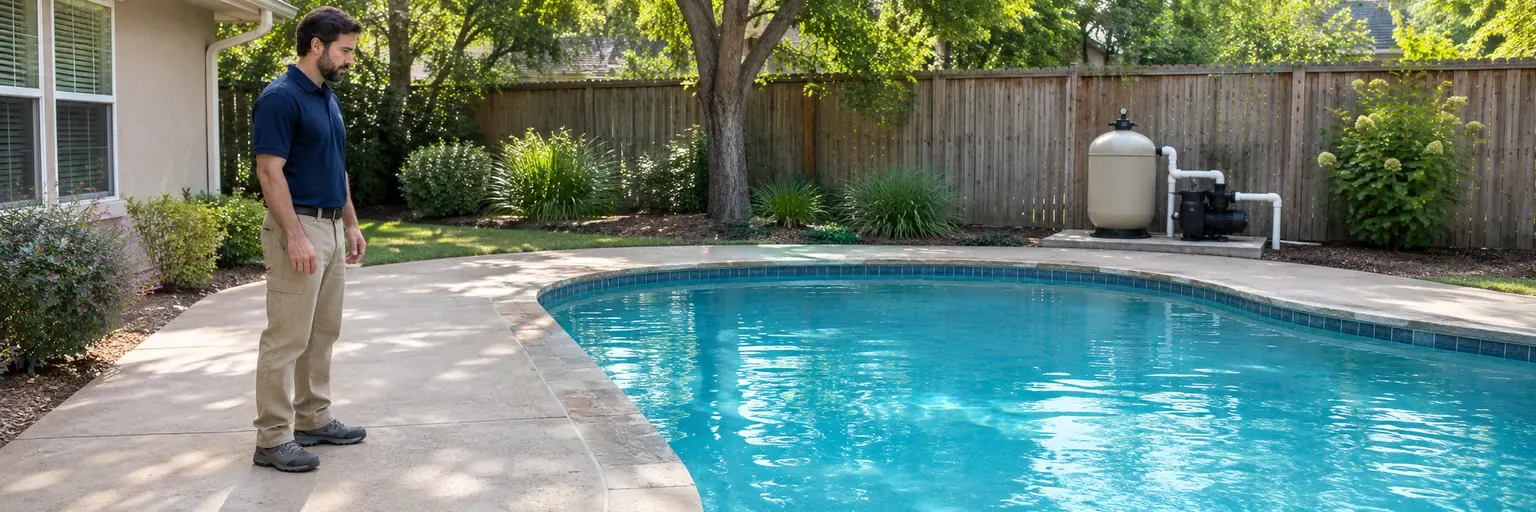
A targeted repair is usually the best first path when a qualified pool professional can identify one problem—such as a failed pump component, a damaged fitting, or a limited surface defect—and explain what the repair will and will not solve. Consider resurfacing or broader rehabilitation when the pool shell, finish, plumbing, equipment, or safety components need coordinated work but the structure is still suitable to keep. Discuss replacement or major reconstruction when a qualified inspection finds a structural, persistent leak, safety, or site problem that a smaller scope cannot address. Do not choose by the age of the pool or a headline price alone; ask for the evidence behind the diagnosis and compare written scopes.
A pool “leak test” is not always a diagnosis. It may show that water loss appears greater than normal evaporation or that a system loses water under a particular condition. Finding the location and cause can require visual inspection, pressure testing, dye testing, or other work selected by a qualified professional. Do not drain a pool to investigate a suspected leak unless the manufacturer or a qualified local professional says it is safe for that pool and site; groundwater and structure conditions can matter.
Start with a safe record, not a guess
Before an appointment, note when the water level changes, whether loss seems different with the pump on or off, visible cracks or loose material, recent repairs, unusual noise, and whether water is reaching nearby structures. Photograph accessible conditions from a safe distance and keep prior invoices, equipment model information, and any test results. Those details can help distinguish a circulation problem from a surface, plumbing, or structural concern.
Do not open electrical equipment, remove drain covers, enter a drained pool, or attempt underground plumbing work. The U.S. Consumer Product Safety Commission advises that broken, missing, or improperly fitted drain covers are a serious suction-entrapment hazard. Keep people out of the pool and arrange qualified service if a drain cover is damaged or missing. Stop using the pool and seek qualified electrical help if you feel tingling, see damaged wiring or equipment, or notice other electrical warning signs; the Electrical Safety Foundation International advises leaving the water immediately if you feel a tingling sensation.
Which path is the best fit?
| Situation | Usually the best fit | What to require in writing |
|---|---|---|
| One identified equipment, fitting, or limited finish problem; the rest of the pool has performed reliably. | Targeted repair. | The diagnosed cause, parts or area repaired, testing after repair, warranty, and what remains outside the scope. |
| Worn finish, several aging components, or planned upgrades, while an inspection supports keeping the shell and site. | Resurfacing or rehabilitation comparison. | Which surfaces, plumbing, equipment, electrical work, permits, startup steps, and restoration are included or excluded. |
| Documented structural movement, repeated unresolved leaks, unsafe conditions, or a site problem that smaller work cannot correct. | Replacement or major reconstruction comparison. | The inspection evidence, demolition or disposal, engineering or permit assumptions, drainage, barriers, electrical work, and change-order process. |
Repair may not fit when it would leave a documented safety issue, repeat a short-lived fix without explaining the underlying cause, or leave a material leak or structural problem unaddressed. A recommendation to replace may not fit when it relies only on age, a vague statement that the pool is “worn out,” or a total price without an inspection finding and a complete scope.
Compare rehabilitation and replacement by scope
Resurfacing changes the finish of some pool types; it does not automatically correct a crack, plumbing leak, poor drainage, or structural movement. Likewise, a new pump or heater does not prove that the shell, electrical equipment, or circulation layout is suitable. Ask the professional to separate confirmed repairs from optional appearance, convenience, or efficiency upgrades.
If replacement is proposed, compare more than the new shell or pool type. A complete written scope should identify demolition, access, excavation, soil or groundwater assumptions, utility locating, drainage, plumbing, electrical bonding and inspection coordination, barrier work, decking or landscape restoration, startup, cleanup, warranties, exclusions, and how unexpected conditions are approved. Local authorities decide permit and barrier requirements, so confirm the requirements for your address before signing. Call 811 before digging or allowing excavation plans to proceed near underground utilities.
For any path, ask how the professional tested the conclusion, who is responsible for permits and inspections, and what happens if the work reveals a different condition. If the pool is safe to leave in its current condition and the recommendation is a major change, a second qualified assessment can help you compare diagnoses—not just totals.
Make the next decision easier
Use our pool and hot-tub cost guide to organize a planning budget without treating it as a quote. Then use the pool and hot-tub maintenance checklist to separate routine care from a condition that needs professional attention. The best next step is a written scope that explains the evidence, safety boundary, and remaining uncertainty.
Questions to ask your pool professional
- What inspection result or test supports repair, rehabilitation, or replacement for this specific pool?
- If I choose the smaller scope, which leak, surface, structural, safety, or equipment concerns will remain and how will we monitor them?
- For a rehabilitation or replacement proposal, which drainage, electrical, barrier, permit, restoration, and unexpected-condition items are included, excluded, or awaiting verification?
Sources
- U.S. Consumer Product Safety Commission, Pool Safely — drain-cover, barrier, and pool-safety context.
- Electrical Safety Foundation International, “Water and Electricity Don’t Mix” — electrical warning-sign and leave-the-water guidance.
- Call 811 — safe-digging information before excavation.
- Pool & Hot Tub Alliance, International Swimming Pool and Spa Code overview — model-code context; local authorities determine adopted requirements.
Be ready for the conversation
3 questions to ask your pool or spa professional
- 1Which site, delivery, base, drainage, electrical, barrier, permit, and startup assumptions are included?
- 2Which equipment, water-care, inspection, cleanup, restoration, and warranty responsibilities are included or excluded?
- 3If access, excavation, or testing reveals another condition, how will you document options and obtain approval before work changes?
Keep planning
Related pool spa guides
How much should a pool or hot tub cost?
Use current planning ranges and a written-scope checklist to budget for an above-ground pool, an in-ground pool, or a portable hot tub without mistaking an estimate for a quote.
Pool and hot-tub maintenance checklist: safe routine care
Use this beginner checklist to keep routine pool or portable-spa care organized, spot warning signs, and know when to call qualified help.
How to compare pool and hot-tub quotes
Compare pool and hot-tub proposals by the actual site, safety, equipment, electrical, startup, and restoration scope—not only the total.