
Homeowner guide
How much should a pool or hot tub cost?
Use current planning ranges and a written-scope checklist to budget for an above-ground pool, an in-ground pool, or a portable hot tub without mistaking an estimate for a quote.
Published October 5, 2026
By the HomeFAQ Editorial Team · Reviewed for accuracy.
https://homefaq.com/pool-spa/how-much-should-a-pool-or-hot-tub-cost/
Printing is unavailable. Use your browser’s Print command.
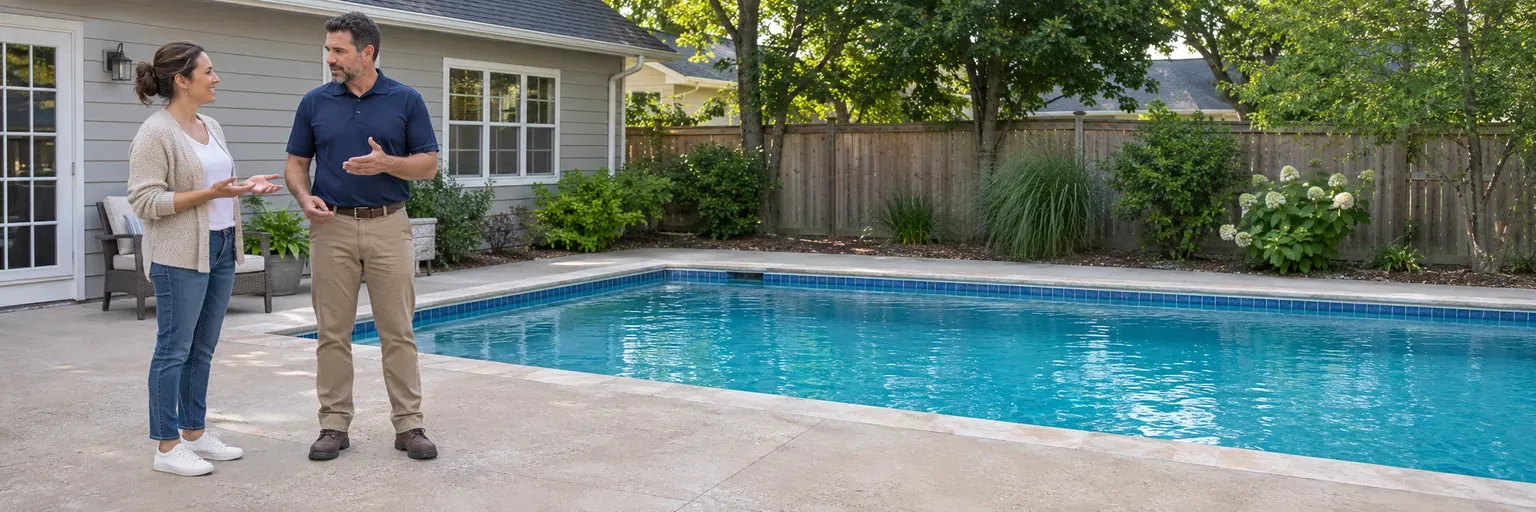
An above-ground pool, an in-ground pool, and a portable hot tub are different projects, so they should not share one “average cost.” This guide is for a U.S. homeowner choosing among them. As checked October 5, 2026, Latham Pool gives a $50,000–$150,000 planning range for a fiberglass in-ground pool; that manufacturer range can rise with a broader backyard project and is not a local quote. Jacuzzi says installation for an above-ground hot tub commonly adds about $1,500–$6,000 beyond the spa price. A public national installed-price range cannot reliably cover every above-ground pool, site, and local rule.
Start with the project type, then compare complete written scopes. An above-ground pool may fit when a removable or lower-commitment seasonal option suits the property and local rules. An in-ground pool needs planning for excavation, permanent safety and site work, and long-term ownership. A portable hot tub can fit a year-round soaking goal when the delivery path, base, and electrical work are feasible.
Start with the project type, not a headline number
An above-ground pool sits on or above a prepared surface. Intex’s product line includes several construction types, so a kit price does not describe the cost of a prepared, safe installation. It may exclude delivery, a level base, electrical work, a barrier, water, chemicals, equipment upgrades, and seasonal removal or storage.
An in-ground pool is a permanent construction project. The shell or structure is only one part of the scope. Excavation, access for equipment, soil or rock conditions, drainage, electrical equipment, plumbing, decking, barriers, permits, inspections, restoration, and features can materially change the total. Latham’s range is a broad planning signal for its fiberglass-pool context, not a promise for concrete, vinyl-liner, or highly customized work in your yard.
A portable hot tub is a self-contained spa delivered to the property. The spa price differs from the installed cost. Jacuzzi’s 2026 planning guidance says installation commonly adds about $1,500–$6,000 depending on site preparation, electrical work, and delivery complexity. That does not establish the cost of a particular spa, crane delivery, deck reinforcement, or local permit.
Budget in separate buckets
Ask every seller or contractor to show these items separately. If something is excluded, have the proposal say so plainly.
- Product and delivery. Identify the exact pool, shell, liner, spa, pump, filter, cover, steps, and accessories. Confirm freight, unloading, delivery-path limits, and whether a crane or added labor is assumed.
- Site preparation. List demolition, grading, excavation, soil handling, base material, compaction, drainage, and restoration. A level-looking yard may still need professional assessment.
- Electrical and equipment. Have a qualified electrician define the needed circuit, disconnecting means, bonding or grounding work, and inspection path for the selected equipment and local rules. Do not use an extension cord or make electrical changes based on a national article.
- Safety and approvals. Clarify barriers, gates, alarms, covers, permits, plan review, and inspections. The International Swimming Pool and Spa Code is a model code; the local authority decides what it has adopted and how it applies.
- Water care and ownership. Request expected treatment supplies, cleaning routine, winterization or opening work, repairs, and warranty responsibilities. Energy and care costs depend on climate, rates, use, equipment, cover habits, and water-care choices.
Site conditions that change the proposal
Access is often decisive. A narrow side yard, retaining wall, overhead lines, soft ground, landscaping, or a long distance from the street can change delivery and equipment plans. For in-ground work, ask how the bid handles rock, groundwater, unsuitable soil, excess spoil, drainage, and damage to nearby surfaces. The written change-order process should identify who documents an unexpected condition, which alternatives are available, and who approves added cost.
For an above-ground pool, ask what the installer considers an acceptable base and what the manufacturer requires for the selected model. For a hot tub, ask whether the planned pad, patio, or deck is suitable for the filled unit and occupants. Do not assume an existing deck is adequate; obtain qualified evaluation when needed.
Contact the local permitting department before signing a contract. Ask whether setbacks, electrical permits, barriers, drainage, or homeowner-association approval apply. A contractor can coordinate approvals, but the proposal should name who is responsible for each step and fee.
Compare written scopes before totals
Give each bidder the same brief: project type, approximate location and dimensions, access photos, known slope or drainage issues, desired equipment, and any patio, deck, or utility constraints. Compare product model; delivery; base or excavation; electrical; plumbing; filtration and sanitation; barrier and permit assumptions; decking or landscaping; startup; cleanup; warranty; exclusions; payment schedule; and change-order rules.
The best fit is usually the scope that explains what it will deliver, what it excludes, and how unknown conditions will be handled. It is not automatically the lowest total. Do not treat a national range, kit price, or monthly-payment advertisement as a completed-project budget.
Safe homeowner planning limits
You can photograph the location, measure a visible delivery path, note where water collects after rain, and gather permit information. Do not excavate, alter electrical equipment, or fill a pool or spa on an unverified base. Call 811 before digging or driving stakes where underground utilities may be present. Stop for qualified local evaluation when the project involves power equipment, a questionable deck, or significant drainage problems.
Next action
Use the Pool and Spa hub to keep planning. As more Pool and Spa guides are published, this page will surface the most relevant next reading automatically.
Sources
- Latham Pool, “How Much Does an Inground Fiberglass Pool Cost?” — manufacturer planning range for fiberglass in-ground pools.
- Jacuzzi, “Hot Tub Installation Costs & Planning Guide for 2026” — installation planning range for above-ground spas.
- Intex, Above Ground Swimming Pools — product-category context for above-ground pools.
- Pool & Hot Tub Alliance, International Swimming Pool and Spa Code overview — model-code context.
- Call 811 — national safe-digging information.
Be ready for the conversation
3 questions to ask your pool or spa professional
- 1Which site-preparation, electrical, barrier, permit, and inspection items are included, allowances, or exclusions in this exact scope?
- 2What delivery route and equipment access do you assume, and what happens if the spa, pool components, or excavation equipment cannot use it?
- 3For this model, what water-care, opening or closing, and warranty responsibilities should I budget for after installation?
Keep planning
Related pool spa guides
How to compare pool and hot-tub quotes
Compare pool and hot-tub proposals by the actual site, safety, equipment, electrical, startup, and restoration scope—not only the total.
Pool and spa terms homeowners should know
Learn the plain-English pool and spa terms that make maintenance notes, repair diagnoses, and installation quotes easier to compare.
Pool and hot-tub maintenance checklist: safe routine care
Use this beginner checklist to keep routine pool or portable-spa care organized, spot warning signs, and know when to call qualified help.