
Homeowner guide
When pest activity needs professional help: a homeowner safety guide
Learn which pest signs can be documented safely and which situations need licensed pest control, wildlife help, emergency care, or a prompt medical call.
Published October 1, 2026
By the HomeFAQ Editorial Team · Reviewed for accuracy.
https://homefaq.com/pest-control/when-pest-activity-needs-professional-help/
Printing is unavailable. Use your browser’s Print command.
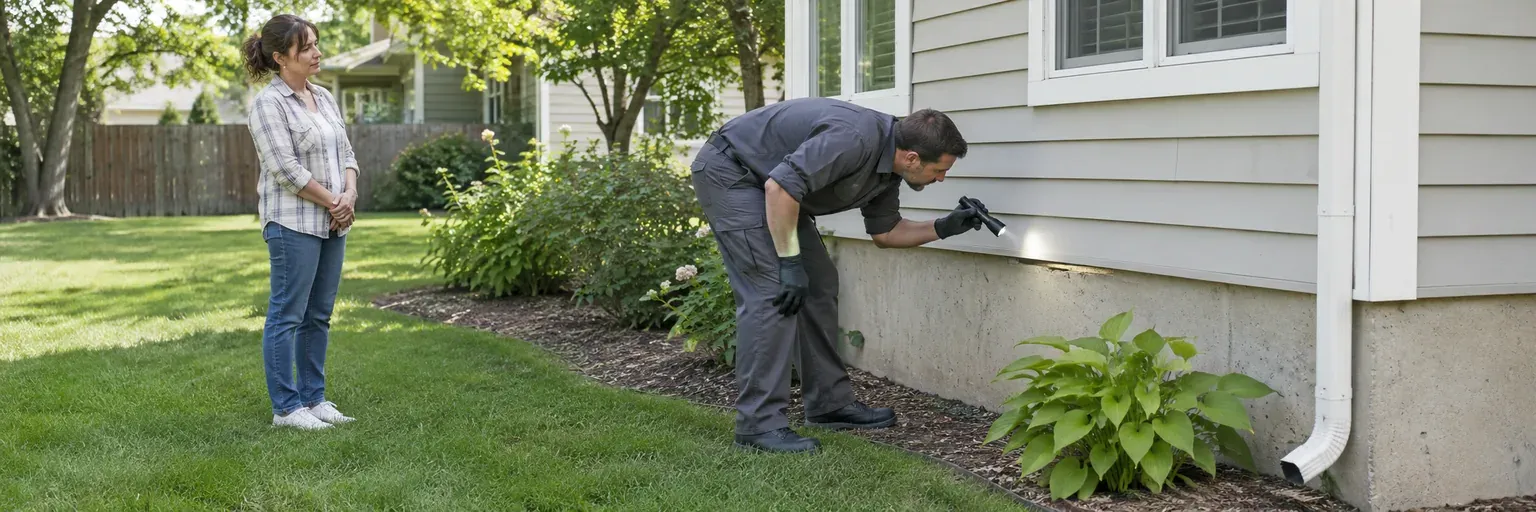
Most household pest activity is not an emergency, but a few situations should not become a do-it-yourself project. You can usually document a small, accessible sign—such as an insect seen from a distance or a food-storage issue—then reduce food and moisture while you decide what to do next. Stop and get the right help when there may be termite damage, a stinging-insect nest near people, wildlife inside, extensive rodent contamination, or possible pesticide exposure. Do not handle animals, disturb a nest, open a wall, or use a product you do not understand. The safest next step depends on the risk: a licensed pest-control professional, qualified wildlife-control provider, emergency service, poison center, or medical professional may be appropriate.
Start by observing, not treating
From a safe distance, note the date, location, what you saw, and whether the activity is new or repeated. Take a photo only if you can do so without touching the pest, droppings, nest, or damaged material. Keep children and pets away from the area. This record helps a professional decide what to inspect and helps you avoid treating the wrong problem.
For a limited, identified household issue, reduce accessible food, water, and shelter: close food containers, clean spills, empty indoor trash, and report a recurring leak. The Environmental Protection Agency (EPA) calls this integrated pest management (IPM), a prevention-first approach that uses information about the pest and site conditions before choosing controls. Do not assume a product is the next step just because an insect or droppings appeared once.
Avoid climbing, entering a crawl space or attic, moving heavy appliances, reaching into an opening, or opening a wall to investigate. Those actions can create fall, electrical, contamination, bite, or structural risks and can make a later inspection harder to interpret.
Suspected termite damage needs a qualified inspection
Termites can damage wood that is not visible from a room. Mud tubes, discarded wings, or wood that appears damaged may be useful observations, but they do not tell you the extent, cause, or safety of a structural concern. Do not probe a potentially weakened area, remove material, or spray an unknown insect path before it can be inspected.
Arrange a qualified termite or pest inspection promptly when you see signs that could be termite activity or when a provider identifies possible damage. If a floor feels unsafe, a stair or deck connection appears loose, or you see a sudden structural hazard, keep people away and contact an appropriate building or emergency professional. A pest-control scope and a structural evaluation are different jobs; ask which findings need a separate qualified contractor, engineer, or inspector.
Treat nests near occupants as an access and medical-risk issue
A visible nest, hive, or concentrated insect activity near a doorway, play area, bedroom window, or required path deserves prompt professional guidance—especially if anyone in the household has had a severe allergic reaction to stings. Do not hit, spray, burn, flood, or seal a nest. Disturbing it can increase stings and may trap insects in a wall or living area.
Keep people and pets away, use another safe entrance if possible, and contact a licensed pest-control professional or local guidance resource. Call emergency services immediately for trouble breathing, swelling of the face or throat, fainting, or other signs of a severe allergic reaction after a sting. For a non-emergency exposure or symptom question, contact a medical professional or poison center rather than relying on a pest-control product label alone.
Wildlife indoors is not a handling job
Bats, raccoons, squirrels, birds, snakes, and other wildlife can bite, scratch, carry disease risks, or be protected by local rules. Do not touch, feed, trap, relocate, or seal an opening when you think an animal may still be inside. Do not approach a bat or try to capture it; public-health guidance may be needed when a bat is found in a room where a person may have had contact while asleep, or where a child or person unable to report contact was present.
If an animal poses an immediate threat, call local emergency services. Otherwise, keep the area isolated and contact a qualified wildlife-control professional or local wildlife agency. Ask how the provider will confirm animals have left before exclusion work begins, and whether any cleanup, repair, or public-health follow-up is outside its scope.
Use special care around rodent droppings and contamination
A few accessible droppings can still warrant professional advice if the source is unknown or activity repeats. Extensive droppings, nesting material, urine staining, a dead rodent, or contamination in a ventilation, food-preparation, attic, or crawl-space area is not a dry-sweeping or vacuuming task. The Centers for Disease Control and Prevention (CDC) advises against stirring rodent-contaminated dust because it can put particles into the air.
Keep people and pets out of the area. For ordinary accessible cleanup, follow current CDC guidance: ventilate the area when appropriate, wear suitable protective gloves, wet the material with an EPA-registered disinfectant or bleach solution prepared as directed, allow the stated contact time, and pick it up without sweeping or vacuuming. Never mix bleach with other cleaners. If contamination is extensive, inaccessible, or connected to a heating and cooling system, ask a qualified cleanup or pest-control professional about the proper scope.
Possible pesticide exposure needs immediate, source-specific advice
A pesticide is not a general cleaning product, and the label directions, precautions, and re-entry instructions are legally enforceable. If a product was used incorrectly, spilled, swallowed, got in eyes, was inhaled, or caused symptoms, move people and pets away from the exposure if it is safe to do so. Do not induce vomiting, give food or drink, or try to neutralize the product unless a medical or poison professional tells you to.
For collapse, seizure, trouble breathing, or another life-threatening symptom, call 911 immediately. For other possible exposures in the United States, call Poison Help at 1-800-222-1222 or use the product label to identify the active ingredient and first-aid directions while you wait for guidance. Keep the container or a photo of its label available, but do not delay emergency care to search for it. A pest-control provider can explain its treatment plan; it is not a substitute for poison or medical advice after an exposure.
Prepare for the right professional visit
Before arranging a non-emergency inspection, collect your dated observations, photos taken safely, prior service records, and product labels. Tell the provider about children, pets, allergies, pregnancy, moisture issues, prior treatment, and any area you could not safely access. Ask the provider to identify what it found, what it did not inspect, which prevention or repair steps are outside its scope, and what preparation or re-entry instructions apply.
For ordinary prevention and a structured way to document signs, read How to prevent household pests and know when to call a professional. This guide cannot diagnose a pest, determine a building condition, or replace emergency, poison, medical, wildlife, or licensed local advice.
Questions to ask your pest-control professional
- Which observations support the pest or damage finding, what areas were safely inspected, and what uncertainty remains?
- Does this situation require pest treatment, wildlife exclusion, contamination cleanup, structural evaluation, or a separate specialist—and who is responsible for each part?
- What preparation, access limits, product-label precautions, re-entry instructions, follow-up, and written changes to scope should I expect?
Sources
- U.S. Environmental Protection Agency, “Integrated Pest Management (IPM) Principles,” accessed October 1, 2026
- U.S. Environmental Protection Agency, “Read the Label First,” accessed October 1, 2026
- Centers for Disease Control and Prevention, “Cleaning Up After Rodents,” accessed October 1, 2026
- Centers for Disease Control and Prevention, “Preventing Rabies from Bats,” accessed October 1, 2026
- Poison Help, “Get Help,” accessed October 1, 2026
Be ready for the conversation
3 questions to ask your pest control professional
- 1What pest or evidence did you identify, which areas will you inspect, and what remains uncertain?
- 2Which treatment, monitoring, return visits, exclusion work, preparation, and re-entry instructions are included?
- 3Which repairs, sanitation tasks, wildlife work, or added findings are excluded or require separate approval?
Keep planning
Related pest control guides
How much should pest control cost?
A U.S. planning guide to comparing pest-control inspection, treatment, and ongoing-plan scopes when one national price would be misleading.
How to compare pest-control estimates
Compare pest-control proposals by the evidence, treatment and prevention scope, follow-up, exclusions, and contract terms—not the total alone.
Pest control terms homeowners should know
Decode common pest-control words before you compare an inspection report, treatment label, or written service plan.