
Homeowner guide
How much should pest control cost?
A U.S. planning guide to comparing pest-control inspection, treatment, and ongoing-plan scopes when one national price would be misleading.
Published October 1, 2026
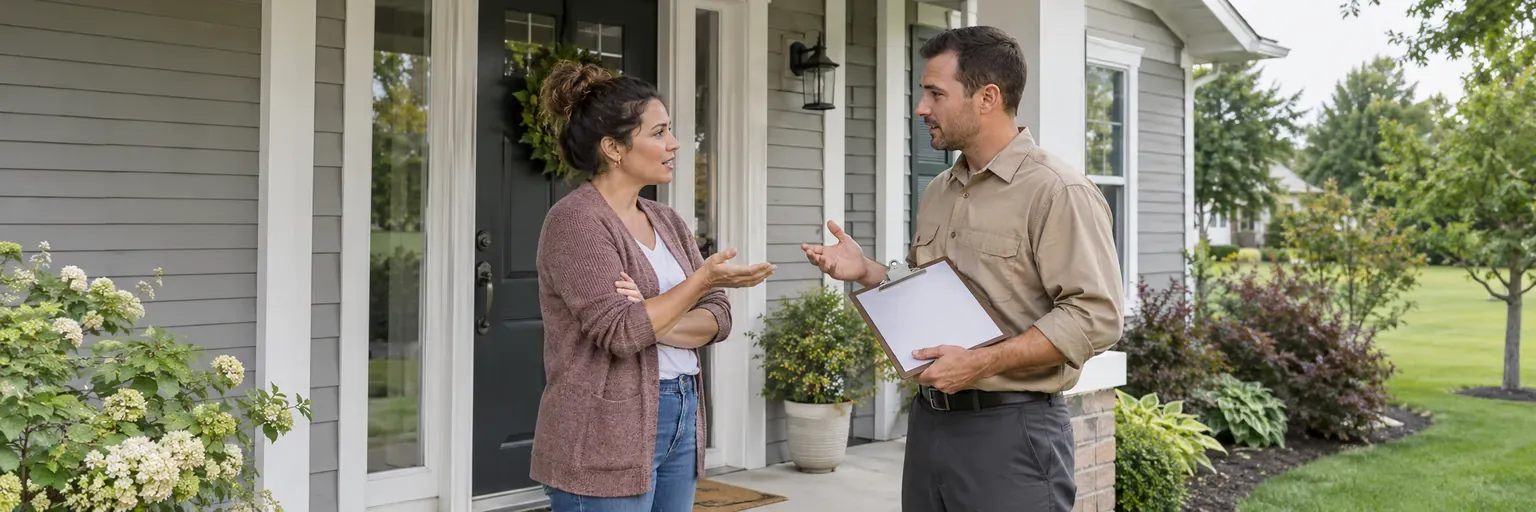
There is no single safe national price for pest control because termites, rodents, insects, wildlife, an inspection, and an ongoing prevention plan are different scopes. The better choice is the written scope that identifies the pest or evidence, says what will be inspected or treated, and explains follow-up—not simply the lowest advertised starting price. If the pest is unknown, the first decision is usually an inspection or identification, not a treatment package. An estimate helps you compare possible work; a quote should describe the work offered for your home.
HomeFAQ does not publish a national price range here. A public number cannot show whether a proposal includes an inspection, identification, access work, monitoring, treatment, return visits, or repairs that another trade must handle. The U.S. Environmental Protection Agency (EPA) recommends integrated pest management (IPM): a prevention-and-monitoring approach that uses pest information and targeted controls rather than treating every situation alike. Use that approach to compare what each provider is proposing.
Start by naming the problem—or the evidence
Before requesting a quote, write down where and when you noticed activity. Photos of an accessible insect, droppings, damaged material, or an entry point can help a provider understand the issue, but do not handle wildlife, disturb a nest, open a wall, or use a product outside its label instructions. Keep children and pets away from suspected pests or treatment areas as directed by the provider and product label.
Tell each provider the same facts: the rooms or exterior areas involved, when activity began, whether it is recurring, and any prior treatment. Ask whether the provider is proposing identification, an inspection, a one-time treatment, exclusion work (closing likely entry points), monitoring, or an ongoing service plan. Those are not interchangeable jobs.
Why the scope changes the price conversation
Termite work may involve an inspection, a treatment plan, monitoring, and separate repair evaluation. Rodent work can involve finding access points, removing a source of food or shelter, and deciding who will complete exclusion or cleanup. Insect service may be targeted to a specific pest or include recurring exterior and interior monitoring. Wildlife situations can require local rules, species-specific handling, and a qualified professional; do not assume a general pest-control visit includes wildlife removal.
An ongoing plan can be useful when a provider can explain the covered pest, visit schedule, monitoring, treatment triggers, and cancellation or renewal terms. It is not automatically better than a one-time scope for a limited, identified issue. Ask what problem each visit is intended to solve and what the plan does not cover.
| Compare this row | What to look for |
|---|---|
| Identification and inspection | The pest or evidence observed, the areas checked, and what remains uncertain. |
| Proposed control | The targeted treatment or non-treatment steps, where they apply, and label or access limits. |
| Prevention and exclusion | Moisture, food, vegetation, gaps, or repairs that the homeowner or another trade must address. |
| Follow-up | Monitoring, return visits, the condition that triggers another visit, and what is included. |
| Contract terms | Covered pests, exclusions, cancellation or renewal terms, and any separate inspection or repair work. |
Compare written scopes before totals
Ask each provider to put the pest, affected area, proposed method, and follow-up in writing. A lower total may leave out inspection time, return visits, exclusion, cleanup, or a different pest category. A higher total is not automatically more complete either. Compare the same rows, then ask why a difference exists.
Be especially careful with work that crosses into repair, sanitation, or structural access. Pest control may identify a gap, moisture source, damaged wood, or contaminated area without including the repair or cleanup. Ask who is responsible for each part and whether another qualified professional should inspect it. Do not treat a pest-control proposal as a guarantee that no future activity can occur; outdoor conditions, food sources, construction details, and neighboring activity can change exposure.
Build a quote-ready packet
Give every provider the same brief description and accessible photos. Request the agreement or service plan before authorizing work, and compare:
- the pest identified and evidence supporting it;
- rooms, exterior areas, or monitoring points included;
- the proposed treatment and non-treatment steps;
- homeowner preparation, access, and re-entry instructions;
- visit frequency, follow-up, and what triggers additional work;
- exclusions, cancellation or renewal terms, and written approval for changes; and
- any repair, exclusion, cleanup, or wildlife work that is separate.
Next, return to the Pest Control hub to identify the type of help that fits the issue and prepare questions for a local provider.
Questions to ask your pest-control professional
- What pest or evidence supports this proposed scope, and which accessible areas did you inspect?
- Which inspection, treatment, monitoring, preparation, re-entry, and follow-up steps are included in this price, and what would cost extra?
- Which exclusion, cleanup, repair, wildlife, or damage-evaluation tasks are outside this agreement, and who should assess them?
Sources
- U.S. Environmental Protection Agency, “Integrated Pest Management (IPM) Principles,” accessed October 1, 2026
- U.S. Environmental Protection Agency, “Read the Label First,” accessed October 1, 2026
Be ready for the conversation
3 questions to ask your pest control professional
- 1What pest or evidence did you identify, which areas will you inspect, and what remains uncertain before treatment?
- 2Which treatment, monitoring, return visits, exclusion work, preparation, and re-entry instructions are included in this written scope?
- 3Which pests, repair or cleanup tasks, wildlife work, renewal terms, and added findings are excluded or require my written approval?
Keep planning
Related pest control guides
How to compare pest-control estimates
Compare pest-control proposals by the evidence, treatment and prevention scope, follow-up, exclusions, and contract terms—not the total alone.
Pest control terms homeowners should know
Decode common pest-control words before you compare an inspection report, treatment label, or written service plan.
Prevent Household Pests: When to Call a Pro
Use a safe seasonal routine to reduce food, water, and hiding places for pests, document activity, and recognize when professional help is the safer next step.