
Homeowner guide
How much should concrete and masonry work cost?
A U.S. scope-first guide to comparing concrete and masonry estimates when a single national price range would hide important site, drainage, and structural differences.
Published October 2, 2026
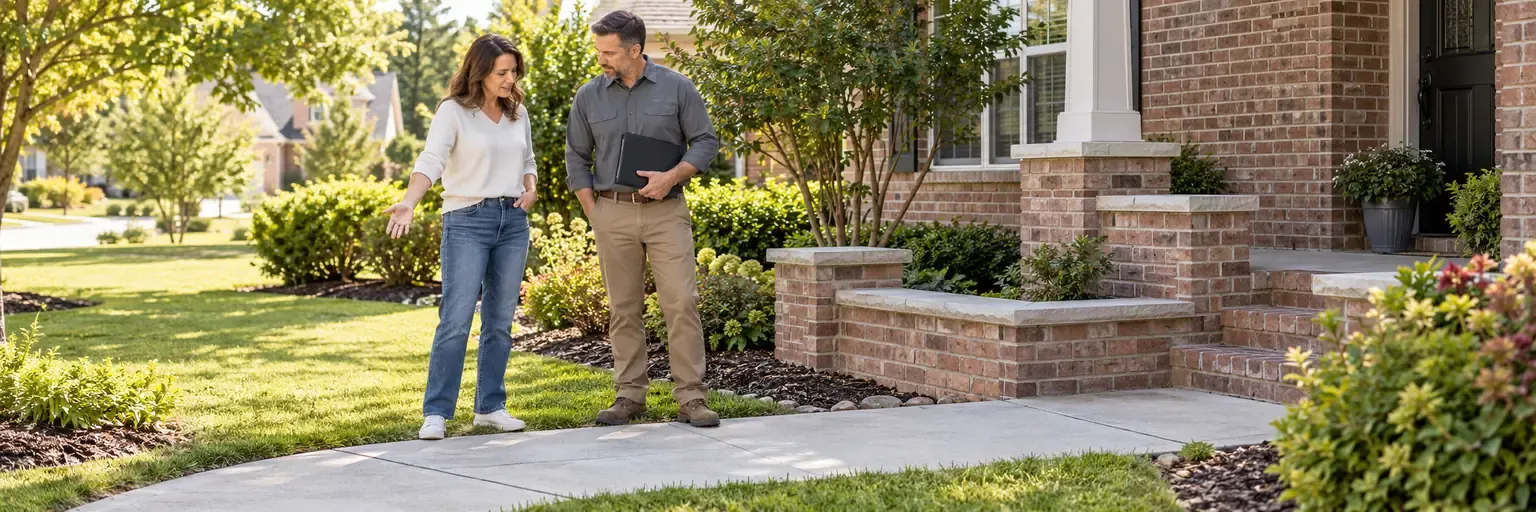
If you are pricing concrete or masonry work, start by defining the work—not by choosing the lowest advertised price. A driveway replacement, a small walkway, a new slab, brick repointing, stone repair, and a crack near a foundation can look similar in a search result but require different investigation, materials, access, drainage planning, and qualified trades. HomeFAQ does not publish one national dollar range for this group of projects because public sources do not provide a current, comparable residential installed-price table across those scopes. A planning estimate is not a quote for your property. The useful first step is to get written proposals that describe the same work, limits, and site conditions.
Concrete is a mixture that hardens into a slab or structural element; masonry is construction with individual units such as brick, block, or stone. Both can be affected by water, soil movement, loading, age, and earlier repairs. The right proposal explains what the professional believes is happening, what evidence supports that conclusion, what work is included, and what could change the price after demolition or closer inspection.
Why a single price range would be misleading
The visible surface is only part of the job. Replacing a driveway may involve demolition, disposal, base preparation, reinforcement, joints, grading, and protecting adjacent landscaping. A crack may be cosmetic, may reflect movement, or may need evaluation before a repair method is selected. Brick and stone work can require matching materials, careful removal, compatible mortar, and weather protection. Those are different scopes with different risks.
Public technical guidance supports the importance of site conditions and proper construction, but it does not turn a national wage or material index into a safe local bid. For example, the Federal Highway Administration explains that drainage and support conditions affect pavement performance, while the Portland Cement Association describes joints and curing as parts of durable concrete work. Those sources help a homeowner ask better questions; they do not establish what a contractor should charge at a particular address.
Do not treat an online “per square foot” figure as a comparable quote unless it states the measurements, thickness, removal, base, reinforcement, finish, access, drainage work, permits, and exclusions. A low starting price may omit the work that makes two projects meaningfully different.
Start with the project type and the problem you can observe
Before requesting estimates, write a short description of the concern. Include whether you need a new driveway, patio, walkway, slab, retaining-wall or masonry repair, tuckpointing (removing failed mortar and placing new mortar), or an assessment of cracking or movement. Note when you first noticed the issue, whether water collects nearby, whether doors or gates have changed operation, and whether there has been excavation, tree removal, a plumbing leak, or another site change.
You can safely take ground-level photos, measure accessible length and width, and mark where water appears to flow. Do not chip at a crack, dig beside a foundation, climb on a wall, remove loose masonry, or assume a crack is harmless because it is small. If a wall is leaning, bulging, separating, or dropping material, keep people away from the area and seek a qualified local professional promptly. Structural or safety questions may require a licensed engineer or the authority having jurisdiction, depending on local rules.
Make written estimates comparable
Give each bidder the same information and ask for a written scope. The table below identifies the details that commonly change a concrete or masonry proposal.
| Scope item | What to compare |
|---|---|
| Existing condition | The observed problem, measurements, photos, prior repairs, and whether the proposal is repair, replacement, or evaluation only. |
| Demolition and disposal | What will be removed, how debris will leave the site, and whether buried material or extra thickness is excluded. |
| Base and drainage | Excavation depth, base material and compaction, grading, water-routing work, and any site condition that needs a separate trade. |
| Concrete or masonry specification | Slab thickness, reinforcement, joints, finish, edge details, unit or stone type, mortar approach, and matching limitations. |
| Access and protection | Equipment route, gate or fence removal, protection for landscaping and structures, and restoration that is or is not included. |
| Curing, weather, and schedule | How the work will be protected while it cures, weather limits, when it can be used, and who decides whether conditions allow placement. |
| Permits and unknown conditions | Who checks local requirements, what is excluded, and how added work will be documented and approved. |
For concrete, ask the professional to explain the planned thickness, base, reinforcement, control joints, finish, and curing plan in everyday language. Control joints are planned lines that help manage where concrete cracks as it shrinks; they do not guarantee a crack-free slab. For masonry, ask whether the work is repointing, rebuilding, cleaning, waterproofing, or a combination. A proposal that says only “repair wall” is not detailed enough to compare.
Build a quote-ready packet
Send the same packet to every professional: your project description, accessible measurements, ground-level photos, known drainage concerns, desired finish or material, access limits, and any prior report. Ask each bidder to mark these items as included, excluded, or unknown:
- demolition, disposal, excavation, base work, compaction, and grading;
- concrete thickness, reinforcement, joints, finish, curing, and protection; or masonry units, mortar, flashing, drainage details, and matching limits;
- permits, utility locating, engineering, testing, and repair of concealed conditions;
- protection and restoration for lawns, landscaping, fences, pavement, or interior areas; and
- the evidence and written approval process required before any change in scope or price.
Compare the scopes before comparing totals. A narrower repair can be the best fit when a qualified professional identifies an isolated, non-structural issue and explains its limits. It is not the best fit when water, support, movement, or safety concerns have not been assessed. Conversely, replacing a large area is not automatically better if a smaller, defined repair solves the documented problem. Ask what each option is intended to address and what it will not address.
Your useful next step
Use the Concrete and Masonry hub to build your project plan as related driveway, repair, masonry, and foundation guides are published. For now, collect proposals only after each professional has the same description and has identified the included work, unknowns, and approval process in writing.
Questions to ask your concrete or masonry professional
- What condition are you addressing, what evidence supports that diagnosis, and when should I involve a structural engineer or local authority before repair?
- Which demolition, base, drainage, reinforcement, joints, curing, masonry materials, and site-restoration items are included, excluded, or still unknown?
- If you uncover poor support, hidden damage, or a drainage problem, what written documentation will you provide and how will you obtain approval before changing the scope or price?
Sources
- Federal Highway Administration, Pavement — pavement, drainage, and support-condition context.
- Portland Cement Association, Joints in Concrete Slabs — homeowner context for planned joints and cracking control.
- Portland Cement Association, Curing in Construction — curing and protection context.
- National Park Service, Preservation Brief 2: Repointing Mortar Joints in Historic Masonry Buildings — masonry-repair scope and compatible-mortar context.
Be ready for the conversation
3 questions to ask your concrete or masonry professional
- 1Which terms in this proposal describe the condition you observed, and which identify work you are including or excluding?
- 2For the slab, wall, or masonry area at issue, what does the scope include for preparation, joints, reinforcement, mortar or finish, water management, protection, and cleanup?
- 3If you see movement, loose material, water, or an unknown support condition, what is within your scope to assess and when should I obtain a separate qualified evaluation?
Keep planning
Related concrete masonry guides
Concrete and masonry terms homeowners should know
Plain-English concrete and masonry terms to help you read a proposal or inspection note, compare a written scope, and know when a condition needs qualified review.
Compare concrete and masonry estimates by scope
Compare concrete and masonry proposals line by line so demolition, base work, drainage, materials, cleanup, and changes are clear before you choose.
Concrete repair vs. replacement: how to choose a safer scope
Repair may fit an isolated surface or joint problem after its cause is assessed; plan replacement or a qualified evaluation when movement, drainage, support, or safety concerns are present.