
Homeowner guide
Household cleaning safety: call a specialist
Use a simple stop-or-clean decision rule to handle ordinary household cleaning safely and recognize when mold, sewage, pests, unknown residues, or damage need a different professional.
Published October 2, 2026
By the HomeFAQ Editorial Team · Reviewed for accuracy.
https://homefaq.com/cleaning/household-cleaning-safety-and-when-to-call-a-specialist/
Printing is unavailable. Use your browser’s Print command.
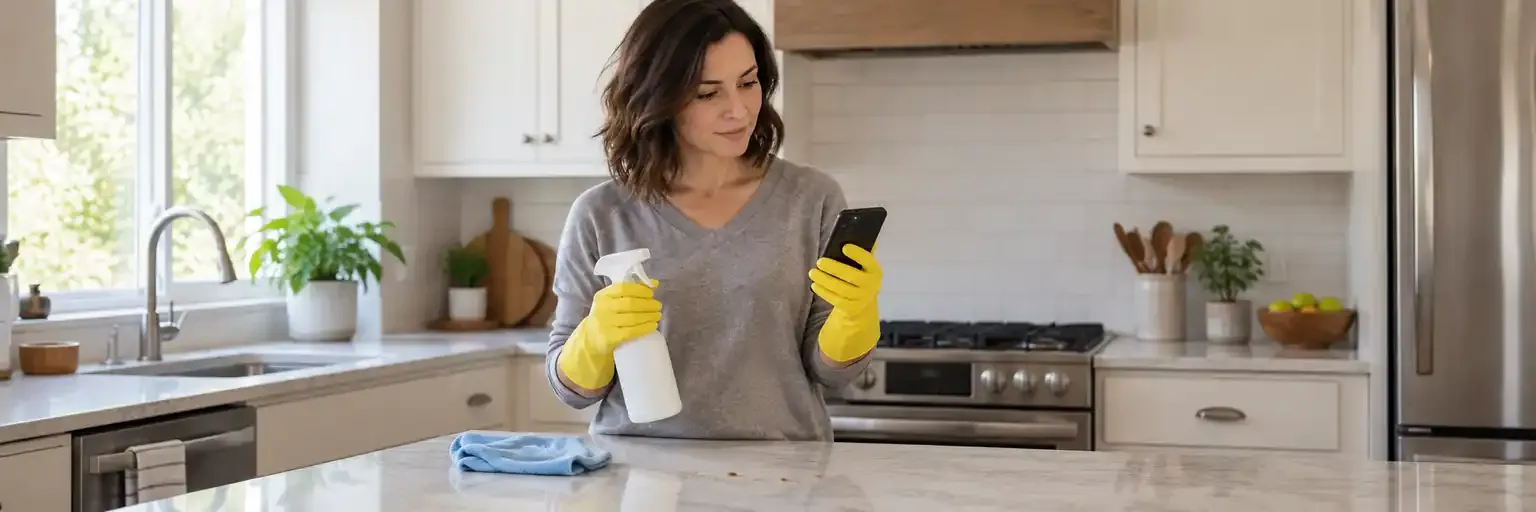
Use ordinary household cleaning only when the area is accessible, the material is known, and you can follow one product label safely. Stop and get the right help when you see suspected mold tied to ongoing moisture, sewage or flood contamination, pests or animal waste, an unknown residue, damaged building materials, or a condition that would require you to climb, open a wall, move heavy equipment, or mix products to solve it. Cleaning can remove routine dirt and buildup; it cannot identify contamination, repair a water source, or make a damaged area safe.
This guide is for a homeowner deciding whether a normal cleaning task is reasonable. It is not medical advice, a mold-remediation plan, or instructions for handling a spill or contamination event. If someone has trouble breathing, feels ill after an exposure, or there is an immediate danger, leave the area if it is safe to do so and seek appropriate emergency or medical guidance.
Start with a simple decision rule
Before you clean, ask four questions:
- Do I know what the material is? Ordinary dust, tracked-in dirt, soap film, and a food spill are different from an unidentified powder, a chemical odor, or water from an unknown source.
- Is the surface sound and reachable from the floor? Do not climb on furniture or ladders, open building materials, move heavy appliances, or work near damaged wiring to clean.
- Can one labeled product handle the task? If the label does not describe the surface or use, or you feel you need to combine products, stop.
- Is there an active cause? A recurring leak, dampness, pest activity, sewage backup, or damage needs attention beyond surface cleaning.
If the answer to any question is no, take a photo only from a safe distance, keep children and pets away as appropriate, and describe the condition to the right professional or property manager. A cleaning provider can explain its ordinary-service limits, but may not be the right person to assess a moisture, pest, plumbing, electrical, or structural problem.
Use products as labeled—one at a time
For routine jobs, choose a product labeled for the surface and task, then follow its directions, dilution instructions, warnings, protective measures, and ventilation requirements. The U.S. Environmental Protection Agency says that a pesticide label is legally enforceable; the broader household lesson is the same: a label sets the product’s intended use and safety limits. Keep products in their original containers, do not use an unlabeled bottle or homemade mixture, and store them away from children, pets, food, and heat as the label directs.
Never mix cleaning or disinfecting products. Some combinations can release irritating or dangerous gases, and a stronger smell is not evidence of a safer or better result. Do not improvise a recipe to remove an odor, stain, or residue. If a label conflicts with a surface-care instruction, pause and check the manufacturer’s guidance or ask a qualified cleaner who understands that material.
Set up the space before ordinary cleaning
Read the label before opening the product. Use ventilation exactly as directed, such as opening a window or using an exhaust fan when that is safe and practical. Keep other people and pets out of the work area for the period stated on the label. Use any protective equipment the label requires, and wash hands after cleaning.
Clear a stable path and work from the floor. Wipe or wash only accessible, intact surfaces. Do not use a household cleaner on electrical equipment, an unknown material, a hot surface, or a surface that is crumbling, swollen, or visibly water-damaged. If a routine spill or buildup cannot be removed without aggressive scrubbing, repeated product use, or damage to the surface, stop rather than escalating the chemicals.
Conditions that need a different specialist
Suspected mold or persistent dampness. The EPA says moisture control is the key to mold control. Surface cleaning does not identify what is behind a wall, under flooring, or inside a persistently damp material. First address or assess the moisture source; a qualified moisture, remediation, or building professional may be appropriate depending on the condition.
Sewage, floodwater, or unknown contaminated water. Do not treat these as a standard house-cleaning task. The Centers for Disease Control and Prevention advises avoiding contact with floodwater and contaminated materials and following its cleanup guidance. Keep people and pets away, avoid disturbing materials, and contact a qualified restoration, plumbing, or local public-health resource as appropriate.
Pests, animal waste, or an unknown residue. Do not handle a nest, wildlife, droppings, sharps, or an unidentified powder or liquid as routine cleaning. A pest-control, wildlife-control, remediation, or local public-health professional can help identify the next safe step. For ordinary household pest prevention, see how to prevent pests and know when to call a professional.
Damage or a safety concern. Stop if you see damaged drywall, soft flooring, a leak near electrical equipment, a strong unexplained odor, structural movement, or a condition that requires disassembly. A general cleaner should not be asked to investigate or conceal a building problem.
A practical stop-work checklist
Pause the job and arrange the appropriate assessment when you notice any of the following:
- Repeated moisture, staining, peeling material, or a musty odor that returns after cleaning.
- Water from a toilet, drain backup, flood, or unknown source.
- Visible pest activity, animal waste, a nest, or material you cannot identify.
- Crumbling, swollen, charred, loose, or otherwise damaged building materials.
- A need to mix products, use a product outside its label directions, climb, open a wall, or work around wiring.
- Symptoms after exposure or an immediate concern for a child, pet, or another household member.
For normal cleaning that remains within these boundaries, make the scope specific before hiring help: rooms, surfaces, products you do not want used, access limits, and tasks that should be excluded. How to plan a house-cleaning service can turn that list into a clear provider brief. If you are deciding between a routine visit and a broader reset, read standard cleaning vs. deep cleaning.
Questions to ask your cleaning or remediation professional
- Based on the condition I described, is this within ordinary cleaning scope, or should a moisture, plumbing, pest, remediation, or other specialist assess it first?
- Which areas or materials should remain untouched until the cause is identified, and what access or preparation would be safe for me to provide?
- If you can perform the work, what products, ventilation, protective measures, exclusions, and follow-up limits will you put in the written scope?
Sources
- U.S. Environmental Protection Agency, “A Brief Guide to Mold, Moisture and Your Home” — moisture-control and mold guidance.
- U.S. Environmental Protection Agency, “Read the Label First” — label-use and safety information.
- Centers for Disease Control and Prevention, “Cleaning Up After a Flood” — floodwater and contaminated-material safety guidance.
Be ready for the conversation
3 questions to ask your cleaning professional
- 1Which rooms, tasks, supplies, and exclusions are included in this visit?
- 2Which conditions or requests fall outside a general house-cleaning scope?
- 3How will I approve a change to the scope before extra work begins?
Keep planning
Related cleaning guides
How to plan a house-cleaning service
Prepare a clear room-by-room cleaning brief so you can request a routine, deep, or one-time cleaning scope that fits your home.
Standard vs. deep cleaning: which is right?
Use this room-by-room comparison to decide whether recurring standard cleaning or a one-time deep clean fits your home's current needs.
Cleaning services terms homeowners should know
Decode common cleaning-estimate terms so you can compare a visit's actual scope before booking.