
Homeowner guide
How to plan a house-cleaning service
Prepare a clear room-by-room cleaning brief so you can request a routine, deep, or one-time cleaning scope that fits your home.
Published October 2, 2026
By the HomeFAQ Editorial Team · Reviewed for accuracy.
https://homefaq.com/cleaning/how-to-plan-a-house-cleaning-service/
Printing is unavailable. Use your browser’s Print command.
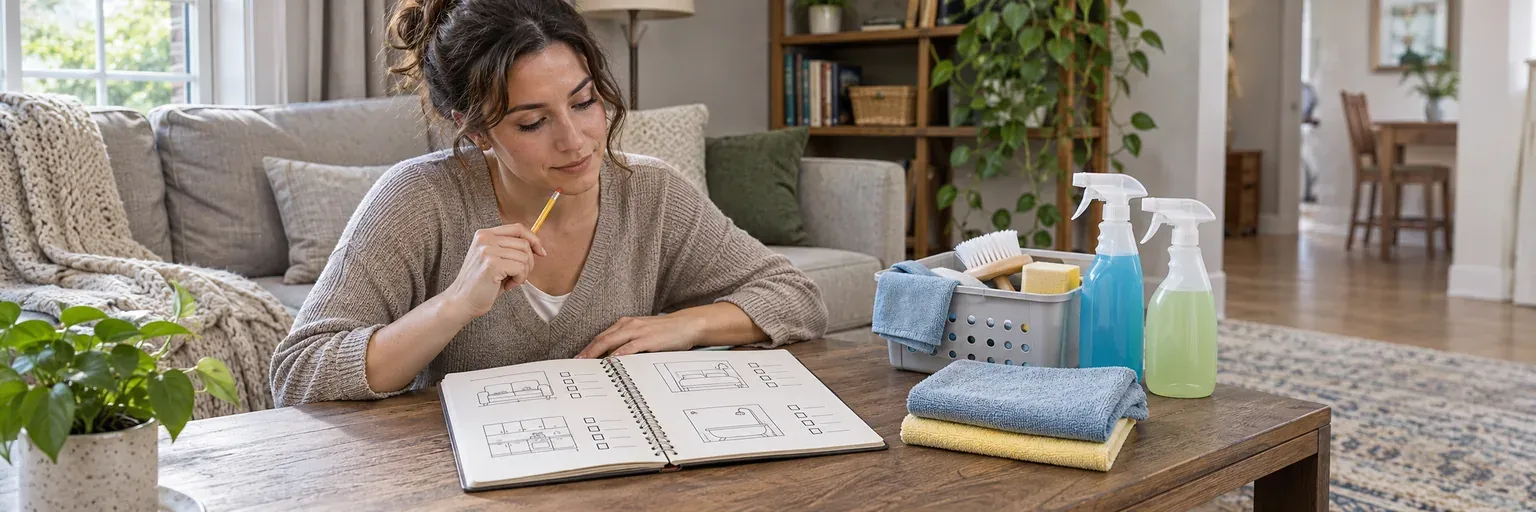
Plan a house-cleaning service by making a short, room-by-room list of what you want cleaned, what matters most, and what the cleaner can safely access. A recurring visit is usually for ongoing upkeep; a one-time or deep-clean visit is a broader reset that needs its own task list. Do not choose a label or price before you compare the written scope. If you find suspected mold, sewage, pests, unknown residues, or structural damage, pause instead of treating it as ordinary cleaning and ask the appropriate specialist what assessment is needed.
This checklist helps you prepare for an estimate or booking. It is not a diagnosis of a stain, odor, water problem, or contamination condition. The goal is to give each provider the same useful information so the scope—not a vague service name—drives the comparison.
1. Decide what kind of visit you need
Start with the purpose of the appointment:
- Recurring upkeep means the repeatable tasks that keep normally used rooms in order, such as dusting agreed surfaces, vacuuming or mopping accessible floors, and cleaning listed bathroom and kitchen surfaces.
- One-time cleaning is a single visit for a particular need, such as preparing for guests or catching up after a busy period. It may be narrow or broad, so the task list matters.
- Deep cleaning usually means more detailed work than a routine visit, but providers do not use one universal definition. Ask which extra tasks, buildup, fixtures, edges, or inside-surface work are included.
- Move-in or move-out cleaning is a separate scope. Confirm whether it includes inside cabinets, appliances, closets, windows, or cleanup after other work; do not assume it does.
Choose the smallest scope that answers your immediate need. A household that mainly needs help keeping bathrooms, kitchen surfaces, and floors manageable may fit recurring upkeep. A home that has not had routine care for some time may need a first visit or deep-clean discussion before it can settle into a recurring plan. Neither label proves what will be done.
2. Make a room-by-room priority list
Walk through accessible areas from the floor. List each room, then mark must do, helpful if time allows, or do not clean. Include the number of bathrooms, bedrooms, stairs, and any rooms that will be closed. Note visible, ordinary conditions such as pet hair, clutter that needs to be moved by the household, or a surface you do not want treated with a particular product.
For each room, name tasks rather than saying “clean the room.” For example, a kitchen request might distinguish counters, exterior appliance surfaces, sink, stovetop, floor, and trash. A bathroom request might distinguish fixtures, mirror, floor, and shower or tub surfaces. This is not about inspecting hidden conditions; it is about turning your priorities into a scope a provider can accept, adjust, or decline.
3. Set safe boundaries before anyone arrives
Prepare only what you can do safely. Put away valuables, medication, documents, and fragile items; clear a normal path to the rooms; secure pets as appropriate; and share any access or parking instructions. Tell the provider about surfaces or products you do not want used. Follow product labels for any cleaning you do yourself, and do not mix products or ask a cleaner to use an unlabeled mixture.
Do not make ordinary cleaning a substitute for an unresolved condition. The Environmental Protection Agency says moisture control is the key to mold control; a persistent moisture source or suspected mold growth may need a qualified assessment rather than surface cleaning alone. Keep people away from sewage, unknown residues, active water damage, or damaged building materials when possible, and describe the condition before scheduling. A general house-cleaning scope may not be appropriate for pests, biohazards, mold, or damage.
4. Put the written scope in a simple brief
Send the same brief to each provider. It can be a message, email, or checklist with:
| Include in your brief | Why it helps |
|---|---|
| Visit type and desired frequency | Separates a first visit, recurring upkeep, deep clean, or move-related request. |
| Room list and priorities | Makes the base scope comparable. |
| Specific requested tasks and optional add-ons | Prevents an optional task from being mistaken for a standard visit. |
| Access, parking, stairs, pets, and timing limits | Lets the provider flag practical constraints before arrival. |
| Supplies and equipment expectations | Clarifies who brings products, vacuum, mop, or specialty equipment. |
| Exclusions and sensitive surfaces | Gives both sides a chance to set boundaries in writing. |
Ask the provider to return the scope in writing with the visit type, rooms, tasks, exclusions, price basis, number of workers if known, estimated time or time limit if used, and process for approving added work. The Federal Trade Commission recommends getting estimates and understanding written terms for home work; the same habit helps a homeowner compare in-home cleaning scopes without relying on a headline total alone.
5. Confirm the day-of plan
Before booking, confirm the arrival window, who can provide access, pet arrangements, parking or building instructions, and what happens if a room is unavailable. Agree on how to communicate a missed task or an issue noticed during the visit. If the provider sees a condition outside the agreed scope, ask them to stop and explain it rather than assuming it should be cleaned or added to the bill.
Keep your priority list for the first visit. Afterward, adjust the recurring scope based on what actually fit in the appointment. For a price-focused comparison, use How much should house cleaning cost?. Return to the Cleaning Services hub to compare future cleaning guides as they are published.
Questions to ask your cleaning professional
- Based on my room-by-room priorities, which tasks can you include in the base visit and which should be optional add-ons?
- What supplies, products, equipment, access arrangements, and pet plan do you need confirmed before the appointment?
- If you find a condition outside ordinary cleaning scope, how will you pause, document it, and get my approval before changing the work?
Sources
- U.S. Environmental Protection Agency, A Brief Guide to Mold, Moisture and Your Home — moisture-control and mold guidance.
- Federal Trade Commission, What to Know About Hiring a Contractor — written-estimate and contract considerations for home work.
Be ready for the conversation
3 questions to ask your cleaning professional
- 1Based on my room list and priorities, which tasks belong in the base visit and which should be optional add-ons?
- 2Is this a recurring upkeep visit, first visit, or deep-clean scope, and which rooms, surfaces, supplies, and exclusions will you list in writing?
- 3What access, pet, parking, arrival-window, rescheduling, and damage-reporting details do you need before the visit, and what should I do if a specialized condition is present?
Keep planning
Related cleaning guides
How much should house cleaning cost?
A U.S. planning guide to comparing routine and one-time house-cleaning scopes before you choose a provider.
Cleaning services terms homeowners should know
Decode common cleaning-estimate terms so you can compare a visit's actual scope before booking.
How to compare house-cleaning estimates
Compare cleaning estimates by visit type, rooms, tasks, supplies, access, exclusions, and changes.