
Homeowner guide
Prepare your fireplace and chimney for heating season
Use a low-risk seasonal checklist to prepare a fireplace or wood-burning appliance, document concerns, and know when a qualified inspection is the next step.
Published October 2, 2026
By the HomeFAQ Editorial Team · Reviewed for accuracy.
https://homefaq.com/chimney-fireplace/how-to-prepare-your-fireplace-and-chimney-for-the-heating-season/
Printing is unavailable. Use your browser’s Print command.
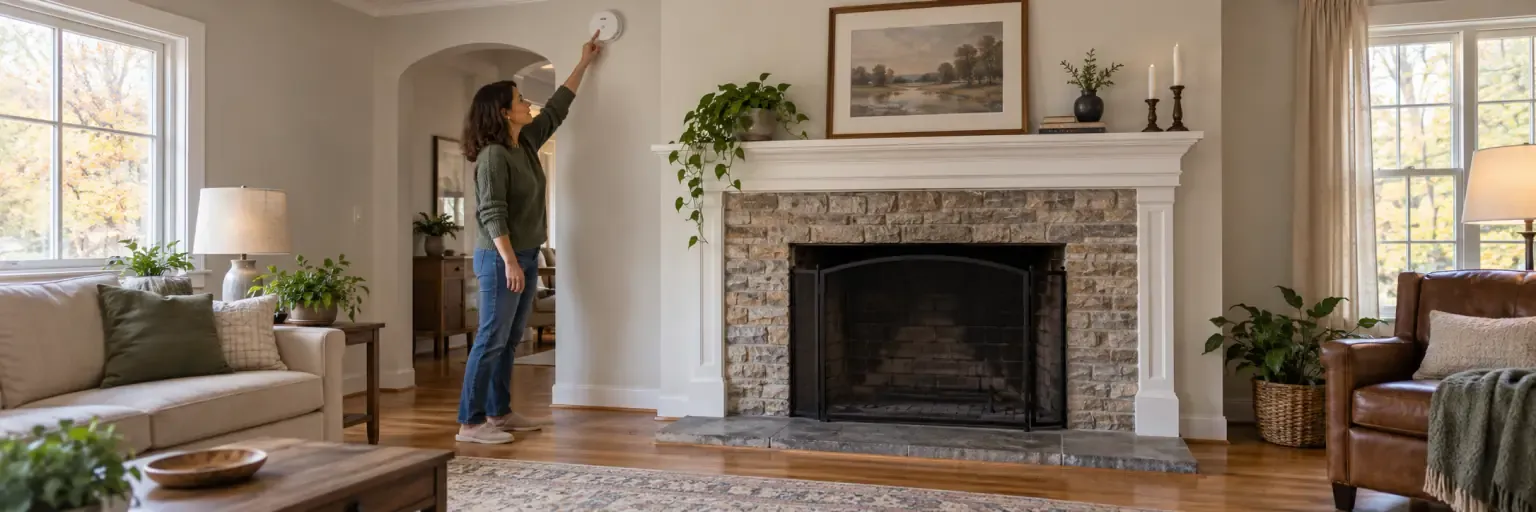
Before you use a fireplace, wood stove, or other solid-fuel appliance for the heating season, make the safe work small: read the appliance instructions, check only what you can see from a stable location, keep the area clear, and arrange a qualified chimney inspection when the system is due or anything has changed. Do not climb onto the roof, reach into a flue, scrape deposits, remove a liner or damper, or light a fire to test a concern. Stop using the system and get prompt professional or emergency help if smoke enters the room, you suspect a chimney fire, or you notice a fuel-gas odor from a gas appliance.
A seasonal check cannot prove that a chimney, liner, vent, or fireplace is safe. The National Fire Protection Association (NFPA) recommends annual inspection of chimneys, fireplaces, and vents, with cleaning or repair as needed. The inspection scope can vary with the appliance, fuel, access, prior use, damage, and changes to the system. Treat a checklist as a way to prepare a clearer visit—not as a substitute for an inspection.
Start with the manual and a clear area
Find the current manual for the exact appliance or fireplace insert, if you have one. It is the best source for its approved fuel, ash handling, clearances, operating limits, and user-serviceable care. Do not assume that advice for an open fireplace applies to a wood stove, pellet appliance, gas log set, or insert.
From the floor, remove stored items, decorations, furniture, and other combustibles from the area around the appliance as its instructions require. Make sure the room has working smoke alarms and carbon monoxide alarms where recommended by local requirements and the alarm manufacturer. The U.S. Fire Administration advises testing smoke alarms monthly and replacing their batteries or units according to the manufacturer’s instructions. Test alarms with the test button; do not use a fireplace fire as an alarm test.
Keep the fireplace screen, doors, grate, tools, and hearth area in normal operating condition only if they are already present and clearly intact. Do not improvise a screen, alter a door, or repair cracked refractory panels, a firebox, a damper, or a vent connection yourself. Those parts affect how heat and combustion products move through the system.
Make safe observations before the first use
Walk around the accessible interior and exterior areas in daylight. From the ground, look for a visibly loose or damaged chimney cap, masonry, flashing, siding, or roof-edge material. Indoors, note water staining, a new odor, loose material, a damaged-looking hearth or firebox, or a change in how a door or damper seems to operate. Take a photo from a safe distance and write down when you first noticed it. Do not use a ladder, roof access, or a flashlight inside a flue to investigate further.
Also record what has changed since the last known inspection: a new appliance, a remodel, a long period without use, storm or water exposure, smoke entering the room, a suspected chimney fire, or a change in fuel. These details help a qualified professional decide what inspection method and access are appropriate. They are more useful than trying to name the defect yourself.
Know the boundary between preparation and professional work
A qualified chimney professional should inspect the system on the annual schedule and sooner when a condition, appliance change, or event warrants it. The Chimney Safety Institute of America describes inspection levels that vary with the situation and accessible areas; a routine visual review is not automatically sufficient after a system change or suspected damage.
Leave cleaning, deposit removal, flue examination, repairs, relining, vent changes, masonry repairs, and appliance adjustments to qualified professionals. The U.S. Consumer Product Safety Commission warns that wood-burning appliances and their chimneys need proper installation, operation, and maintenance to reduce fire and carbon-monoxide hazards. A homeowner should not try to clear a blockage, patch a liner, or burn a hotter fire to solve poor draft.
| What you notice | Safe next step |
|---|---|
| No visible change, but annual inspection is due or records are unclear | Schedule an inspection and share the appliance type, fuel, and history. |
| Water staining, loose material, a damaged cap, new odor, or an operating change | Do not use the system until a qualified professional explains whether it is safe to resume. Document what you observed from a safe location. |
| Smoke entering the living space, a suspected chimney fire, or fire/heat damage | Stop using the system. If there is an active fire or immediate danger, move to safety and call emergency services; otherwise seek prompt qualified assessment. |
| A gas odor from a gas fireplace or appliance | Do not operate switches or flames. Leave the area and follow the local gas utility’s emergency instructions or contact emergency services as appropriate. |
Prepare a useful inspection visit
Put the appliance manual, prior inspection or cleaning reports, repair invoices, photos, and a short symptom timeline in one place. Tell the professional the fuel, appliance type, last known use, and whether there has been a change, water entry, or concerning event. Ask them to state which areas they can access, what their inspection includes, what it cannot establish, and whether cleaning, camera work, testing, or repairs are separate.
This preparation is also a good time to compare scopes rather than advertised starting prices. Use HomeFAQ’s chimney inspection cost guide to request comparable written inspection details, then return to the Chimney and Fireplace hub for related planning guides as they are published.
Questions to ask your chimney professional
- Based on my appliance, fuel, history, and any change I noted, what inspection level and accessible areas should you evaluate before seasonal use?
- Which observations from my safe checklist matter, what can you confirm during the visit, and what will remain outside the inspection limits?
- Are cleaning, camera work, repairs, appliance checks, and a written report included, separately priced, or excluded before you advise that the system may be used?
Sources
- National Fire Protection Association, Chimneys and Fireplaces — annual inspection and safe-use guidance.
- Chimney Safety Institute of America, Chimney Inspections — inspection-level context and scope distinctions.
- U.S. Fire Administration, Smoke Alarms — alarm testing and replacement guidance.
- U.S. Consumer Product Safety Commission, Woodstove Safety — consumer safety context for solid-fuel appliances and chimneys.
- American Gas Association, Natural Gas Safety — gas-odor emergency precautions; follow local utility instructions.
Be ready for the conversation
3 questions to ask your chimney and fireplace professional
- 1Based on this appliance, fuel, history, and the changes I observed, what inspection method or level fits this visit and why?
- 2Which accessible areas, cleaning, camera work, testing, photos, and written findings are included or excluded from your scope?
- 3What condition would mean I should keep the appliance out of use, and how will you document any added work for my approval before it begins?
Keep planning
Related chimney fireplace guides
How much should a chimney inspection cost?
A U.S. scope-first guide to comparing chimney-inspection proposals when a generic national price cannot replace the right inspection level and a written local scope.
Chimney and fireplace terms homeowners should know
Plain-English chimney and fireplace terms to help you read an inspection report or repair proposal and ask clearer questions about scope.
How to compare chimney inspection and repair estimates
A homeowner worksheet for comparing chimney inspection and repair proposals by findings, scope, access, testing, changes, and closeout—not just the total price.