
Homeowner guide
How to prevent bathroom moisture and ventilation problems
Use a safe daily routine to move moisture out of a bathroom, notice repeat warning signs, and know when a qualified professional should inspect the cause.
Published October 2, 2026
By the HomeFAQ Editorial Team · Reviewed for accuracy.
https://homefaq.com/bathroom/how-to-prevent-bathroom-moisture-and-ventilation-problems/
Printing is unavailable. Use your browser’s Print command.
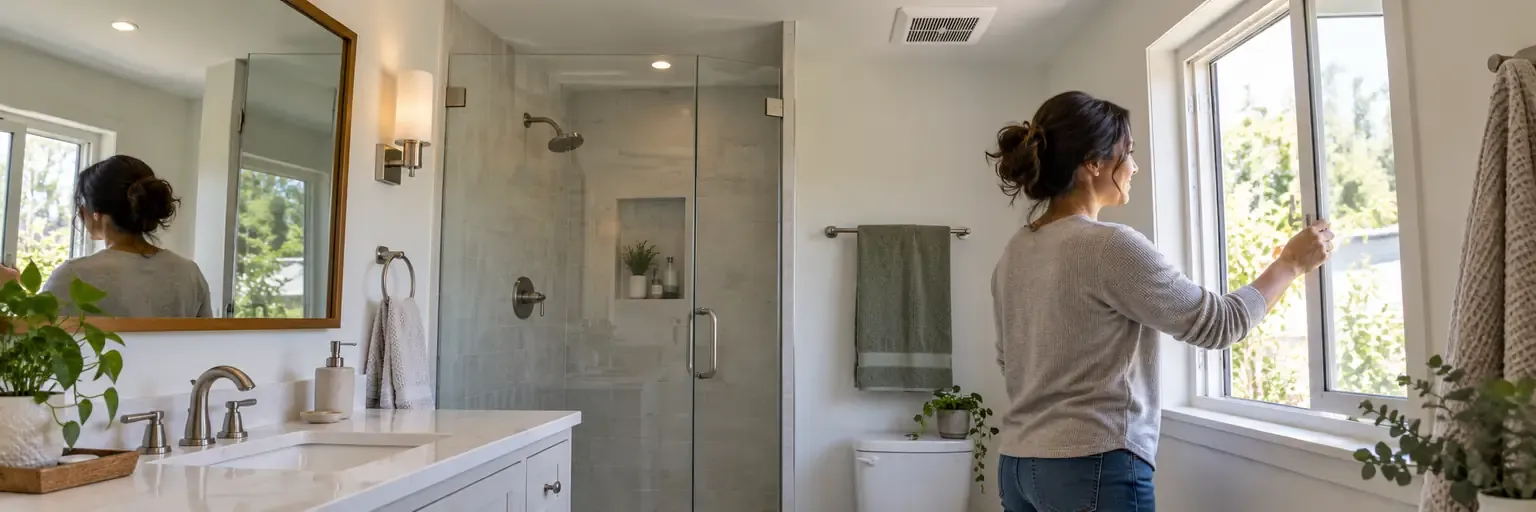
The best way to prevent most bathroom moisture problems is to remove humid air promptly, dry ordinary wet surfaces, and address repeat water sources instead of covering the evidence. Run the bathroom exhaust fan during bathing and after, keep the room reasonably clean and dry, and watch for changes such as persistent condensation, peeling paint, a musty smell, or water that keeps returning. Those signs do not diagnose a leak or mold problem. They are a reason to have a qualified professional identify the moisture source before a bathroom refresh or cleanup hides it.
This guide is for a homeowner who wants a practical prevention routine. It is not instructions for opening walls, repairing wiring, removing significant mold growth, or deciding what local code requires. If water is near electrical equipment, a ceiling is sagging, sewage is involved, or a leak is active, stay out of the affected area when safe and seek appropriate qualified help promptly.
1. Use the fan as moisture control, not just odor control
Turn on the bathroom exhaust fan before or when a shower or bath begins. Leave it running long enough to clear the humid air after you finish; the exact time depends on the room, fan, and conditions. If a fan is noisy, does not run, seems to move little air, or exhausts moisture into another indoor space, do not take it apart or enter an attic or crawl space to investigate it. Ask a qualified electrician, HVAC professional, or remodeler to assess the equipment and where it discharges.
The U.S. Environmental Protection Agency recommends using exhaust fans that vent outside and using them while showering. A fan is not a substitute for fixing a plumbing leak or a wet building material, but it is a simple daily tool for reducing ordinary shower humidity.
2. Remove standing water and give surfaces a chance to dry
After bathing, hang towels so air can reach them, spread out a wet bathmat to dry, and wipe up ordinary puddles on a counter, floor, tub ledge, or shower threshold. Open a shower door or curtain after use when doing so lets the enclosure dry without blocking a walkway. Keep toiletries from trapping water on a ledge, and wash washable fabrics on a routine that fits your household.
Use ordinary cleaning products only as directed. Never mix cleaners, and do not use bleach or another chemical to mask an odor while the area remains wet. Cleaning a visible surface cannot tell you what is happening behind tile, under flooring, or inside a wall.
3. Check accessible areas for repeat moisture clues
During a normal cleaning, look at places you can see and reach from the floor: around the toilet base, sink cabinet, tub or shower edge, ceiling below a bathroom above, window trim, fan grille, and painted surfaces. Note a recurring drip, staining, peeling paint, swollen trim, loose flooring, cracked or missing caulk, or condensation that remains long after bathing.
Take a photo and write down the date and location if a sign returns. A simple record helps a professional understand whether the issue follows showers, rain, a fixture use, or no obvious event. Do not press on soft material, remove a ceiling cover, pull up flooring, or open a wall to find the source.
4. Keep water where the bathroom finish is designed to handle it
Use a shower curtain or door as intended, replace an obviously worn curtain liner when it no longer keeps water in the enclosure, and avoid directing the shower spray outside the tub or shower. If you notice a loose fixture, a drain that backs up, water escaping an enclosure, or a toilet that moves when used, pause rather than adding more sealant over the symptom. A plumber or qualified bathroom professional can determine what inspection and repair are appropriate.
Caulk is a flexible sealant often used at a joint between bathroom finishes. It can need routine maintenance, but it is not proof that the waterproofing behind a shower or tub surround is sound. Before a remodel, ask how the proposed work will handle water management behind the visible finish rather than assuming new tile or grout solves an existing moisture pattern.
5. Treat visible growth and strong odors as a moisture question first
EPA guidance emphasizes controlling moisture and drying water-damaged materials to help prevent mold growth. A small, accessible area may sometimes be cleaned according to product directions and public-health guidance, but do not disturb a large area, porous material that remains wet, suspected sewage contamination, or material that could contain another hazard. Do not sand, scrape, or open a surface to search for hidden growth.
A musty odor, recurring discoloration, or material that stays damp after normal drying is a reason to identify the water source. Ask the professional what they will inspect, what work is included, and how they will protect unaffected areas. The goal is a documented scope that addresses the moisture condition, not a cosmetic cleanup that leaves it in place.
6. Know when a routine check should become a professional visit
Arrange qualified assessment when you have an active or recurring leak, water near electrical equipment, a bathroom fan that does not operate correctly, repeated staining or peeling, a persistent musty odor, a soft floor or ceiling, a toilet that shifts, drainage backup, or visible growth that is more than a small, accessible spot. Renters should report these conditions to the property manager or owner under their local process rather than attempting repairs that could create more damage.
For a bathroom update, bring your photos and notes to every bidder. The bathroom remodel planning guide explains how to make one safe, scope-focused brief and compare proposals that address ventilation, waterproofing, and repairs in writing. It is a planning resource, not a diagnosis or a quote.
Bathroom moisture-prevention checklist
- Run an outside-venting fan during bathing and after when it is working properly.
- Hang towels and bathmats so they can dry, and wipe ordinary standing water promptly.
- Keep shower spray and water inside the enclosure.
- Look at accessible surfaces for repeat drips, staining, peeling, soft material, or persistent condensation.
- Photograph and date recurring signs instead of opening finishes or guessing at a cause.
- Seek qualified help for active leaks, drainage backup, electrical-adjacent water, persistent odors, or repeated damage.
Questions to ask your bathroom professional
- Based on the moisture pattern and photos, what source will you inspect first, and what can you determine without opening finishes?
- If ventilation work is recommended, where does the fan discharge and what repair, electrical, or duct work is included in writing?
- If a shower, tub, or toilet area needs repair, how will you document the water-management work behind the visible finish and any conditions found after removal?
Sources
- U.S. Environmental Protection Agency, “A Brief Guide to Mold, Moisture and Your Home,” accessed October 2, 2026
- U.S. Environmental Protection Agency, “Mold Cleanup in Your Home,” accessed October 2, 2026
- U.S. Environmental Protection Agency, “Indoor Air Quality Tools for Schools: Ventilation,” accessed October 2, 2026
Be ready for the conversation
3 questions to ask your bathroom remodeler
- 1What conditions and household needs will you confirm before you finalize the scope?
- 2Which plumbing, electrical, ventilation, waterproofing, and finish tasks are included or excluded?
- 3What could change after demolition, and how will you document it before work proceeds?
Keep planning
Related bathroom guides
Bathroom terms homeowners should know
Learn the plain-English bathroom-remodel words that help you compare written scopes and ask better questions.
How much should a bathroom remodel cost?
A homeowner-first guide to comparing complete bathroom-remodel scopes without false national price precision.
How to compare bathroom remodel estimates
Compare bathroom remodel proposals by matching their written scope, allowances, and change process before comparing totals.