
Homeowner guide
How to plan a bathroom remodel
Build a safe, bid-ready bathroom remodel brief by defining daily needs, documenting visible conditions, and comparing complete written scopes.
Published October 2, 2026
By the HomeFAQ Editorial Team · Reviewed for accuracy.
https://homefaq.com/bathroom/how-to-plan-a-bathroom-remodel/
Printing is unavailable. Use your browser’s Print command.
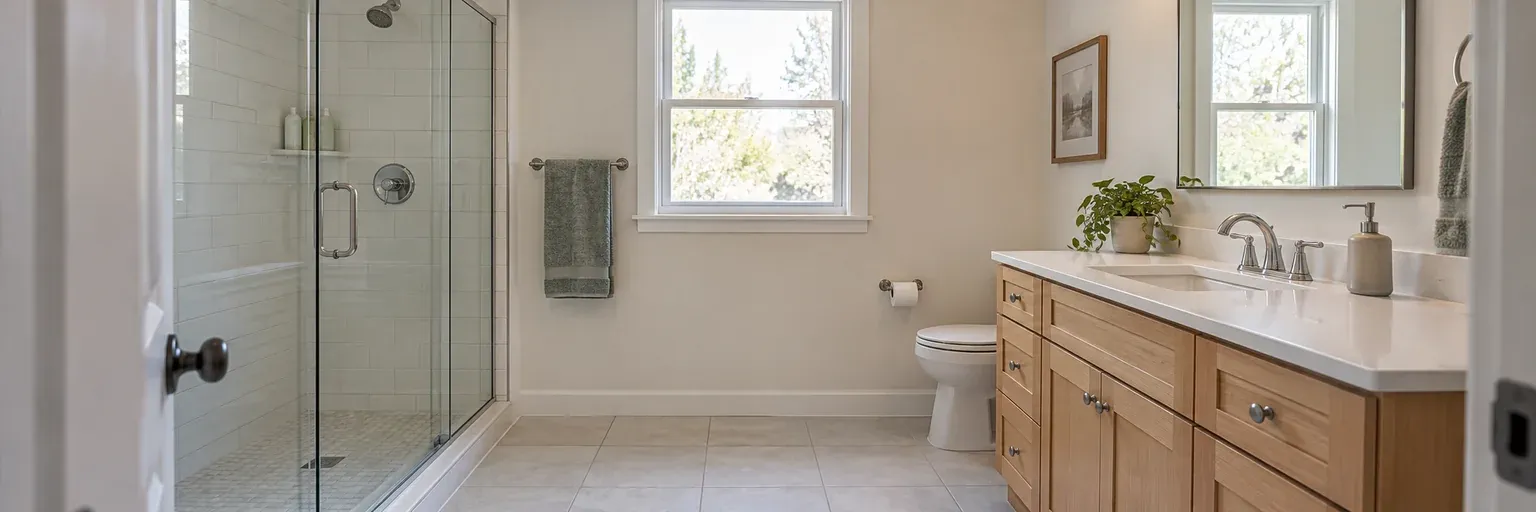
Plan a bathroom remodel by deciding what must work better every day, documenting the room without opening anything, and getting written scopes that cover the same work. Start with the problem—not a fixture finish or an online price. A clear brief helps a remodeler evaluate your room and makes it easier to see when one proposal leaves out waterproofing, ventilation, repairs, or cleanup.
This guide is for a homeowner considering a bathroom update, replacement, or layout change. It is not a design, plumbing, electrical, or permit plan. Use it to prepare safely, then ask qualified local professionals to assess work that needs trade expertise.
1. Define what needs to improve
Write down the practical outcome you need. It might be a shower that is easier to enter, enough storage for a household, a room that dries out reliably, finishes that are worn out, or a layout that makes daily use difficult. Separate must-have changes from preferences. Keeping fixture locations may be a preference; a repeatedly wet area may need investigation before cosmetic choices are made.
Also note who uses the room and what makes it hard to use now. A household with young children, a person planning to age in place, or a guest bathroom that is rarely used can have different priorities. This is decision context, not a promise that any particular product or layout is right for every home.
2. Measure and photograph what you can safely see
From the floor, record approximate wall lengths, ceiling height, door swing, window location, and the position of the toilet, sink, tub, or shower. Photograph visible finishes, fixtures, staining, peeling paint, cracked caulk, loose flooring, or damaged trim. Label photos by wall or fixture so you can give the same information to each bidder.
Do not remove trim, open walls, disconnect a fixture, probe soft material, or use a ladder to inspect exterior details. Those actions can create damage or expose a hazard. If water is actively leaking near electrical equipment, avoid the affected area when safe and seek qualified help promptly.
3. Record conditions without trying to diagnose them
List observations and how often they occur: a fan that does not seem to clear moisture, a shower area that stays wet, a musty odor, recurring peeling paint, or a floor that feels soft. The Environmental Protection Agency advises controlling moisture and addressing water problems promptly to help prevent mold growth. These signs do not identify a cause, so ask what inspection or investigation is included before new finishes conceal the area.
For any wet area, ask how the proposal handles materials behind the visible surface. Tile and grout are finish materials; do not assume they alone describe the water-management approach. Ask the remodeler to explain wall and floor preparation, the waterproofing system, drain detail, and manufacturer instructions that apply to the proposed shower or tub surround.
4. Decide where layout changes are worth exploring
Mark what can stay and what you want changed: fixture locations, door swing, storage, lighting, shower entry, or tub use. Moving plumbing, electrical equipment, or ventilation can change the scope, access needs, and local review path. Keeping a layout can reduce work that must be evaluated, but it does not guarantee that concealed conditions will not affect the proposal.
Do not use a national article to decide whether work needs a permit or inspection. The International Code Council publishes model codes, while local authorities decide what applies and how work is reviewed. Ask each bidder who will confirm local requirements, obtain permits when needed, and schedule inspections.
5. Set budget boundaries without treating them as a quote
Choose a comfortable planning limit and a separate amount you could reserve for conditions discovered after removal. Then describe fixture and finish priorities in broad terms, such as basic, mid-range, or a specific product you have already selected. An allowance is a placeholder amount for a product selection; ask how the total changes if the final selection costs more or less.
There is no safe national bathroom-remodel price that can replace a local written scope. Room size, access, existing conditions, selected products, local labor, permits, and work behind finishes can all move a proposal. Read how much a bathroom remodel should cost for a scope-first way to compare local estimates without false precision.
6. Build one brief for every bidder
Give each remodeler the same one-page summary, room measurements, labeled photos, and priority list. Ask for a written scope that identifies:
- design and layout assumptions;
- demolition, protection, and debris removal;
- plumbing, electrical, and ventilation work;
- wet-area preparation and waterproofing;
- fixtures, finishes, product selections, and allowances;
- permits, inspections, cleanup, schedule assumptions, and warranty responsibility; and
- the process for documenting and approving a change if removal reveals an added condition.
The Federal Trade Commission recommends getting written estimates and understanding what a contract includes before hiring a contractor. A lower total may omit work another proposal includes; a higher total may address a condition another bidder has not evaluated. Compare written inclusions, exclusions, and assumptions before comparing totals.
7. Use a safe final-planning checklist
Before choosing a proposal, confirm that you can answer these questions:
- What daily problem is this project meant to solve?
- Which fixture locations, finishes, and access needs are fixed, and which are still choices?
- What visible moisture observations need an on-site evaluation?
- What work protects wet areas and manages bathroom moisture?
- What is included, excluded, or held as an allowance?
- Who will confirm permits and inspections that apply locally?
- How will the team document and price concealed conditions before extra work proceeds?
Pause if a scope leaves a repeated moisture issue unexplained, skips an important system, or makes a claim you cannot find in writing. A useful next step is to compare the complete scope, not to rush into a product selection.
Questions to ask your bathroom remodeler
- Which visible conditions in this room need investigation before you finalize the scope, and how would a concealed condition be documented and approved?
- What preparation, waterproofing, ventilation, and finish-restoration work is included around the shower or tub area?
- Which layout, fixture, allowance, permit, cleanup, and warranty assumptions should I confirm so another written proposal covers the same work?
Sources
- Federal Trade Commission: Hiring a Contractor — written-estimate and contract guidance.
- U.S. Environmental Protection Agency: A Brief Guide to Mold, Moisture and Your Home — moisture-control guidance.
- International Code Council: Building Safety Resources — model-code context; local enforcement controls.
Be ready for the conversation
3 questions to ask your bathroom remodeler
- 1What conditions and household needs will you confirm before you finalize the scope?
- 2Which plumbing, electrical, ventilation, waterproofing, and finish tasks are included or excluded?
- 3What could change after demolition, and how will you document it before work proceeds?
Keep planning
Related bathroom guides
How much should a bathroom remodel cost?
A homeowner-first guide to comparing complete bathroom-remodel scopes without false national price precision.
Bathroom terms homeowners should know
Learn the plain-English bathroom-remodel words that help you compare written scopes and ask better questions.
How to compare bathroom remodel estimates
Compare bathroom remodel proposals by matching their written scope, allowances, and change process before comparing totals.