
Homeowner guide
What to do in the first 24 hours after water damage
A safety-first checklist for homeowners after water enters a home, from immediate hazards through documentation and a qualified restoration review.
Published October 2, 2026
By the HomeFAQ Editorial Team · Reviewed for accuracy.
https://homefaq.com/restoration/what-to-do-in-the-first-24-hours-after-water-damage/
Printing is unavailable. Use your browser’s Print command.
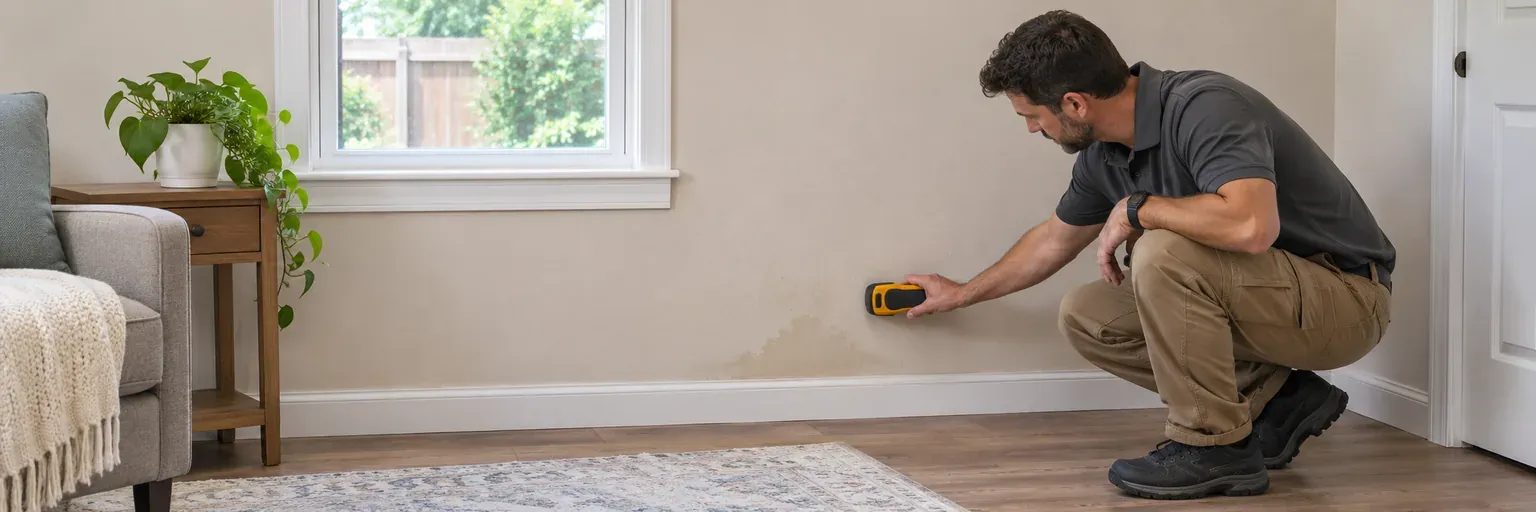
What to do in the first 24 hours after water damage
In the first 24 hours after water enters your home, protect people before possessions. Do not enter standing water or touch wet electrical equipment when the power status, water source, or structure is uncertain. Call 911 or the appropriate emergency service for an immediate life-safety danger; contact the electric utility or a qualified electrician for a possible electrical hazard. If the area is safe to observe from a dry location, document what you can see, stop the source only when you can do so safely, and arrange qualified help for contaminated water, extensive wet materials, or conditions you cannot assess. This is general preparation, not a diagnosis, cleanup clearance, or insurance advice.
The right next step depends on the water source, how long materials have been wet, and whether electricity, sewage, floodwater, fire damage, or structural damage may be involved. The Environmental Protection Agency (EPA) advises prompt moisture control to limit mold growth, but prompt does not mean taking unsafe cleanup actions.
1. Stay out when the area may be unsafe
Keep children and pets away. Do not walk through water to inspect a room, move appliances, or reach a breaker panel. Water near outlets, cords, appliances, wiring, fuel-burning equipment, or an unknown electrical source can create a serious shock hazard. Do not use a household vacuum, fan, extension cord, pump, or other plug-in equipment in or near water unless a qualified person has confirmed the area and equipment are safe.
Leave the area and seek urgent help if there is a fire, a gas smell, a downed power line, a collapsed or sagging ceiling, a bowed wall, falling material, or another immediate structural concern. Follow local emergency instructions after a flood or storm. Floodwater, sewage, and water from an unknown source should not be treated as an ordinary clean-water spill; avoid contact and do not guess whether it is safe.
2. Stop ongoing water only within a safe boundary
If you can reach a known, dry shutoff without entering a wet area or handling damaged equipment, stopping a plumbing leak may limit further damage. For example, that can mean closing an accessible fixture valve or the main water valve from a dry location. Do not search for a shutoff through water, open walls, disconnect appliances, climb onto a wet roof, or make a repair that could create a new hazard.
For rain, groundwater, or an unknown source, do not assume a visible crack, drain, roof area, or appliance is the cause. A qualified assessment may need to separate emergency mitigation—work that limits further harm—from the later repair of the source and finishes.
3. Make a safe record before conditions change
From a dry, safe location, take wide photos and short video of the room, visible water line, affected belongings, and any apparent water path. Note the date and time discovered, recent weather, which rooms are affected, and whether a plumbing fixture, appliance, roof leak, or outdoor flooding may be involved. Save receipts for emergency measures and keep a simple timeline of calls, visits, and changes you observe.
These records help you explain the event consistently to an insurer or qualified professional; they do not prove the cause or coverage. The National Association of Insurance Commissioners recommends documenting damage and contacting an insurer promptly after a loss, but only your insurer can explain your policy, reporting process, and what documents it needs. Do not delay urgent safety action while waiting for a coverage answer.
4. Protect belongings only when it is clearly safe
If the water source is known, there is no electrical or contamination concern, and you can work from a dry area, move dry, lightweight belongings away from the edge of the affected space. Photograph items before moving them when practical. Do not carry heavy furniture, wet appliances, or saturated belongings through water. Do not remove drywall, flooring, insulation, or cabinets just because they look wet; hidden moisture, contamination, wiring, and structural conditions can change what is safe and necessary.
Avoid mixing cleaning products or using disinfectants as a substitute for determining the water source and affected materials. EPA guidance notes that moisture problems need to be addressed promptly and thoroughly; it does not turn a contaminated or electrically unsafe area into a do-it-yourself cleanup project.
5. Prepare a qualified restoration conversation
Ask a qualified professional to explain what they observed, which water source or condition their scope assumes, what immediate work is proposed, and what remains unknown. A useful early record separates rooms and materials affected; moisture or condition documentation; containment, drying equipment, and duration assumptions; removal or cleaning; and repair handoff. Ask which work is included, excluded, or dependent on later findings.
Do not compare a drying-only proposal with one that includes demolition and reconstruction as though they were the same job. For a scope-first way to approach cost conversations, read How much should water damage restoration cost?. When you have multiple written proposals, compare the stated conditions, phases, exclusions, and change-authorization process before comparing totals.
Questions to ask your restoration professional
- What water source or condition are you assuming, and what observations or measurements support that assumption?
- Which rooms, materials, containment steps, drying equipment, cleaning, removal, and repair-handoff items are included or excluded from this first scope?
- If you find hidden moisture, contamination, or damaged materials, what written documentation and approval will you provide before the work or cost changes?
Sources
- Ready.gov, Floods — flood-safety and emergency-preparedness guidance.
- U.S. Environmental Protection Agency, A Brief Guide to Mold, Moisture, and Your Home — moisture-control and mold-prevention context.
- National Association of Insurance Commissioners, What to Do After a Disaster — general documentation and insurer-contact preparation.
Be ready for the conversation
3 questions to ask your restoration professional
- 1What source, affected areas, moisture, contamination, or material condition did you document, and what remains uncertain?
- 2Which emergency actions, containment, drying, removal, cleaning, monitoring, and repair-handoff tasks are included or excluded?
- 3If you find hidden moisture, contamination, or damaged material, how will you document it and obtain approval before the scope changes?
Keep planning
Related restoration guides
How much should water damage restoration cost?
Learn how to compare water damage restoration scopes, from emergency mitigation and drying to repairs, testing, and written change approvals.
Damage restoration terms homeowners should know
Plain-English damage-restoration terms to help homeowners read a water, fire, smoke, or storm recovery scope before agreeing to work.
How to compare water damage restoration estimates
Compare water-damage restoration proposals by documented conditions, scope, exclusions, and change approval—not the total alone.