
Homeowner guide
What to do when you find a plumbing leak
Take calm, practical steps to reduce damage, document what happened, and decide what information a plumbing assessment needs.
Published September 30, 2026
By the HomeFAQ Editorial Team · Reviewed for accuracy.
https://homefaq.com/plumbing/what-to-do-when-you-find-a-plumbing-leak/
Printing is unavailable. Use your browser’s Print command.
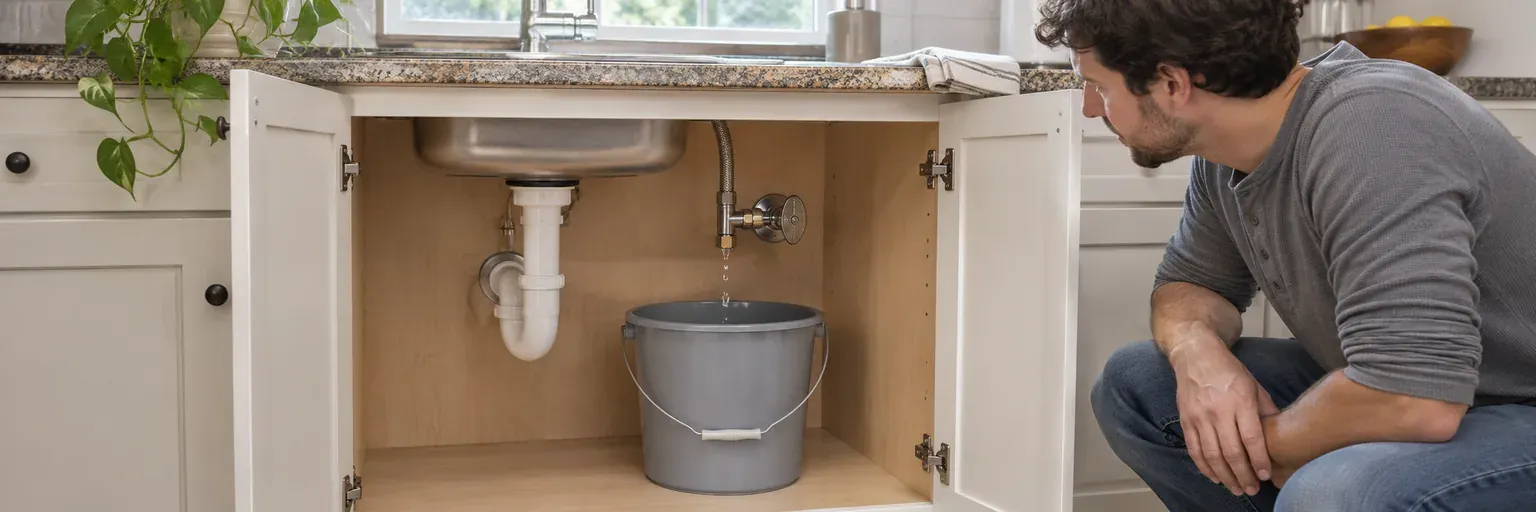
If you find a plumbing leak, keep people away from any water near electrical equipment, stop the water only if you can reach a known shutoff safely, and get prompt help when water is spreading, a ceiling is sagging, or the water may be contaminated. Do not search inside walls, ceilings, appliances, or electrical equipment for the cause. A small drip under a sink and water coming through a ceiling need different responses, but the first goal is the same: avoid injury and limit further damage while preserving useful information for the people who assess the problem.
This is not a repair guide or a diagnosis. A visible wet spot does not prove where water started. If you see sparks, hear buzzing, smell burning, have a gas odor, or cannot safely keep people away from the hazard, leave the area and contact emergency or qualified help. The U.S. Consumer Product Safety Commission warns that water and electricity are a dangerous combination.
1. Keep people out of a wet electrical area
Do not stand in water to unplug an appliance, touch an outlet, open an electrical panel, or reach a switch. Keep children and pets away from the area. Avoid a room or lower level where water is near outlets, extension cords, appliances, a panel, or damaged wiring. If it is safe to do so from a dry location, turn off the fixture or water supply; do not handle electrical equipment unless you know it is safe.
Water from a drain, toilet, or unknown source can also be contaminated. Do not let anyone use a fixture that seems connected to a backup, and do not clean up sewage-contaminated water yourself as though it were a clean supply-water spill. Tell the person you call what you observed so they can advise on the correct response.
2. Stop the water only when the route is safe
If the leak is from a sink, toilet, appliance supply line, or other fixture and you already know its shutoff, close that valve only when it is dry, accessible, and safe to reach. If that is not practical, use the home’s main water shutoff only if you already know where it is and can get to it without entering a wet electrical area.
Do not force a valve that will not move, climb into a wet crawl space, or remove an access panel to find a shutoff. Do not turn a valve on and off repeatedly to test the leak. Note whether the water slowed or stopped after a safe shutoff; that observation can help a plumber, but it is not proof of the cause.
3. Protect the area without destructive investigation
From a safe, dry location, move portable belongings, rugs, and small furniture away from the water path. Put down towels or a shallow container only where doing so does not put you near electrical hazards or under a damaged ceiling. If water is dripping from a ceiling, keep clear of the area below it. A ceiling that is bulging, sagging, cracked, or releasing a large amount of water needs prompt professional assessment; do not puncture it, cut it open, or pull down wet material.
Avoid opening walls, ceilings, cabinets, appliance panels, or flooring to trace the leak. Do not use a fan, heater, or shop vacuum near wet electrical equipment. Do not add drain chemicals, bleach, sealant, or other products to see whether the problem changes. Those actions can increase risk, make later assessment harder, or create a different problem.
4. Record what you can safely see
Before cleanup changes the scene, take photos or a short video of accessible conditions: the visible water, stain, dripping point, affected fixture, floor, ceiling, and belongings. Write down when you first noticed it, whether water is continuous or tied to using a specific fixture, and whether another sink, toilet, shower, washer, or dishwasher was running. Note changes in water pressure, drainage, odor, noise, or staining.
Keep the record factual. “Water appeared below the upstairs bathroom after the shower ran” is more useful than guessing that a pipe has failed. Save receipts for urgent protective steps and keep prior plumbing invoices, warranty records, or inspection reports available. An insurer, if you choose to contact one, may have its own documentation and mitigation requirements; a plumbing diagnosis and an insurance decision are separate matters.
5. Know when prompt help is appropriate
Call a qualified plumber promptly for an active leak you cannot safely stop, recurring leaks, a leak around a water heater or appliance connection, water coming through a ceiling or wall, or a problem that affects multiple fixtures. Ask whether the situation also calls for a qualified electrical or water-damage/restoration assessment. Water near electrical equipment, a suspected sewage backup, a major or fast-spreading leak, or structural-looking ceiling damage can require urgent response rather than a routine appointment.
When you call, describe the location, active or stopped status, any safe shutoff you used, visible damage, and whether people can safely stay out of the area. Do not promise that the source is a particular pipe or authorize broad work based only on a symptom. A plumber may need diagnostic work before a repair recommendation is reliable.
6. Prepare for a clear written scope
Ask the plumber to separate the observed condition, diagnostic work, proposed repair, testing, access work, cleanup, and exclusions. A repair that stops visible water may not include drying, wall or ceiling repair, flooring, or electrical work. If a hidden condition changes the scope, ask to see the finding and approve the added work before it proceeds when circumstances allow.
Questions to ask your plumber
- Based on the location and timing I recorded, what diagnostic work is needed before you recommend a repair?
- If you stop the leak, what testing will confirm the repair, and what water-damage, electrical, or finish work is outside your scope?
- If you find a hidden source or damaged material, how will you document it and get approval before the repair scope or cost changes?
Next step
After the immediate hazard is controlled, use How to prepare for a plumbing visit to organize observations, access details, and records for an assessment.
Sources
- U.S. Consumer Product Safety Commission, “Water and Electricity Don’t Mix”
- U.S. Environmental Protection Agency, “What to Do After a Flood”
Be ready for the conversation
3 questions to ask your plumber
- 1What is the likely source of the problem, and what evidence supports that?
- 2Does this scope solve the symptom, the underlying condition, or both?
- 3What access, repair, and finish-restoration work is included?
Keep planning
Related plumbing guides
How to prepare for a plumbing visit
Document a plumbing problem, provide clear access, and ask useful scope questions before a repair or replacement begins.
How much should plumbing repair cost?
A U.S. planning guide to comparing plumbing repair scopes when no single national price can replace a local written quote.
How to compare plumbing repair estimates
Compare plumbing estimates by diagnosis, access, repair method, restoration, testing, and what could change after work begins.