
Homeowner guide
How to use a drain snake safely
Know when a small hand-crank drain auger is a reasonable first step for an accessible sink drain, and when a clog needs a plumber instead.
Published October 22, 2026
By the HomeFAQ Editorial Team · Reviewed for accuracy.
https://homefaq.com/plumbing/use-a-drain-snake-safely/
Printing is unavailable. Use your browser’s Print command.
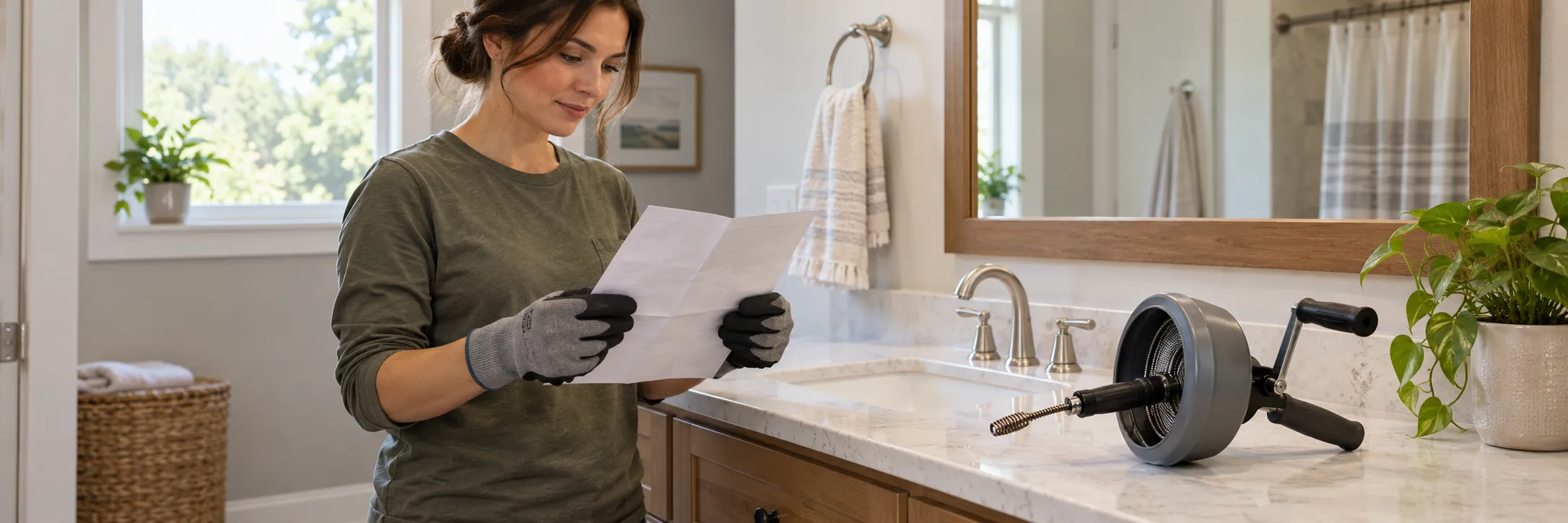
A small hand-crank drain snake, also called a drain auger, can be a reasonable first step for a slow or stopped accessible sink drain when there is no standing sewage, no chemical cleaner in the drain, and no sign that multiple fixtures are backing up. The decision is not whether you can force a tool through a pipe; it is whether the clog appears limited and the work can stay low-risk. Stop and call a plumber for sewage, repeated backups, leaks, a toilet or main-drain problem, or a clog that does not clear with gentle use.
Check the situation before using a tool
Do not use a drain snake after pouring chemical drain cleaner into the fixture. The product can splash or remain in the trap and create an injury risk. Follow the cleaner label and contact the manufacturer or a professional for safe next steps. Also stop if the water is near electrical equipment, the sink cabinet is wet, pipes are visibly damaged, or the problem affects more than one fixture; those observations can point beyond a simple accessible drain blockage.
Use only a small manual auger intended for the fixture and follow its manufacturer instructions. Wear gloves and keep towels nearby. Do not use a powered cable machine, remove piping, force the cable, or combine tools with chemicals. A snake does not diagnose the pipe condition or prove that a larger drain problem is gone.
Use a gentle, limited approach
- Clear the cabinet area and place a towel under the accessible drain area. Keep cleaners, children, and pets away.
- Remove only an easily accessible stopper as its instructions allow. Do not disassemble a trap or wall connection.
- Feed the cable slowly into the drain opening. Turn the hand crank gently only when the cable meets resistance; do not push hard or twist aggressively.
- If the cable binds, will not advance, or comes back damaged, stop. Forcing it can damage a fixture, cable, or pipe.
- Withdraw the cable slowly, keeping it over the towel. Clean the tool according to its instructions and wash hands afterward.
- Test the drain with a small amount of water. If it drains normally, watch for a return of the symptom. If it remains slow, leaks, gurgles, or backs up, stop repeated attempts and arrange a plumbing assessment.
Bring useful observations to a plumber
Write down which fixture is affected, when it started, whether another fixture causes the symptom, and whether you saw an odor, leak, or backup. Those facts are more useful than guessing where a clog is located. For a recurring or multi-fixture problem, a professional may need to decide what inspection or clearing method fits the actual piping and conditions.
Read drain clog questions to ask before a visit, and use how to compare plumbing estimates when a repair scope is proposed.
Questions to ask your plumber
- Based on the affected fixtures and my observations, what part of the drain system needs evaluation?
- What clearing, inspection, and testing are included in your scope, and what could change after you inspect the line?
- What signs after the visit would mean I should stop using the fixture and contact you again?
Sources
- U.S. Consumer Product Safety Commission, CPSC Warns Consumers About Chemical Drain Cleaners
- EPA, Safer Choice: Cleaning Products
Be ready for the conversation
3 questions to ask your plumber
- 1What is the likely source of the problem, and what evidence supports that?
- 2Does this scope solve the symptom, the underlying condition, or both?
- 3What access, repair, and finish-restoration work is included?
Keep planning
Related plumbing guides
Drain clogs: questions to ask before choosing a repair
Understand recurring or widespread drain-clog symptoms, document what is happening, and ask for a clear assessment before authorizing work.
How to compare plumbing repair estimates
Compare plumbing estimates by diagnosis, access, repair method, restoration, testing, and what could change after work begins.
How much should plumbing repair cost?
A U.S. planning guide to comparing plumbing repair scopes when no single national price can replace a local written quote.