
Homeowner guide
When does mold need professional remediation?
A homeowner decision guide for knowing when a moisture or mold condition should move beyond safe observation and basic cleanup.
Published October 4, 2026
By the HomeFAQ Editorial Team · Reviewed for accuracy.
https://homefaq.com/mold-environmental/when-mold-needs-professional-remediation/
Printing is unavailable. Use your browser’s Print command.
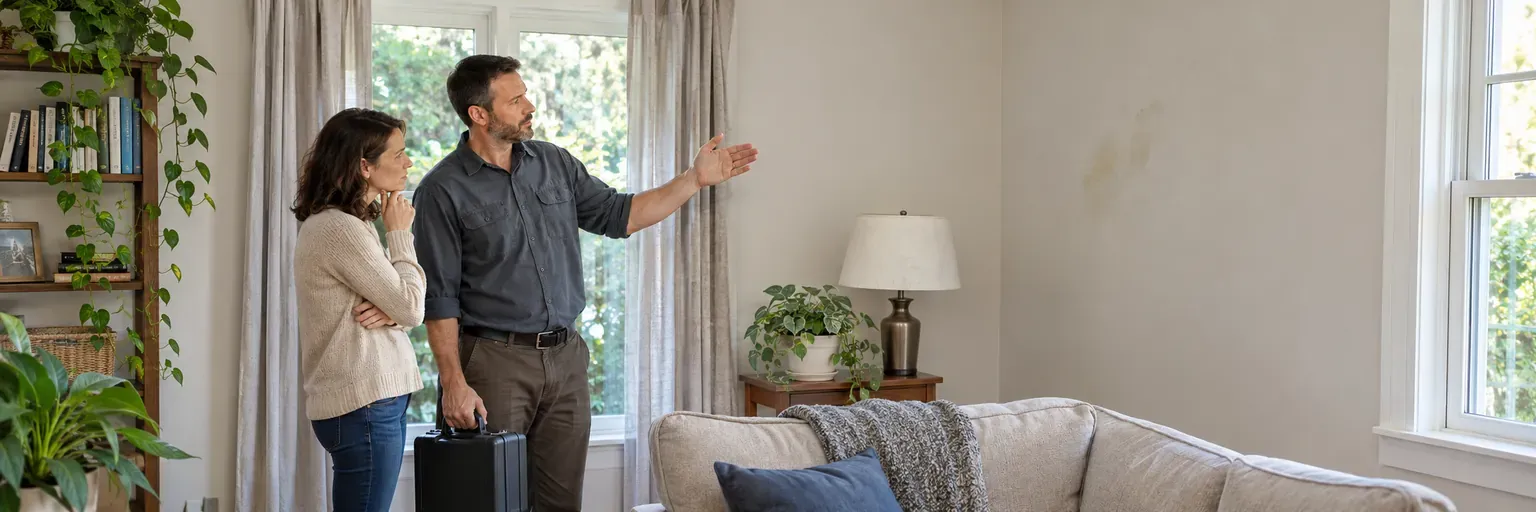
When does mold need professional remediation?
If you can safely see a small, accessible area with a known and corrected moisture cause, the U.S. Environmental Protection Agency (EPA) says cleanup may sometimes be manageable without a remediation company. Stop and seek qualified assessment or remediation when the moisture source is unknown or ongoing, the affected area is extensive or hidden, water may be contaminated, access is unsafe, or the proposed work would require disturbing building materials. Appearance alone cannot tell you the cause, extent, or appropriate scope. Start by controlling immediate hazards and documenting what you can safely observe; then ask for a written assessment and scope that connects the recommended work to the moisture condition.
This guide does not identify mold types, diagnose health effects, or set a universal legal threshold. Local requirements and professional roles vary, and a homeowner with health concerns should use appropriate medical guidance.
Use the condition—not the color—as the decision point
Mold can grow where moisture problems persist. The EPA’s homeowner guidance emphasizes moisture control and explains that cleanup decisions depend on the size of the affected area, the materials involved, and the source of water. A dark spot, a musty odor, or a home-test result does not by itself tell you what is behind a wall, whether materials can be cleaned, or whether a particular company’s scope is necessary.
Begin with a plain record: the room and materials affected, when you noticed the condition, whether it followed rain, plumbing use, an appliance event, or flooding, and any safe photos or prior repair records. Do not scrape, sample, cut open finishes, pull back flooring, or move damaged materials to make the record more complete. Those actions can increase exposure, create a larger repair, or remove information a qualified professional needs.
A practical escalation path
| What you can safely observe | Best fit now | Why this path fits |
|---|---|---|
| A small, reachable area on a hard surface; the moisture source is known, stopped, and the area can be dried safely | Follow EPA homeowner cleanup guidance and keep watching for recurrence | This may be a limited cleanup situation, not proof that concealed materials are unaffected. |
| Recurrent dampness, staining, or odor; a leak or condensation pattern is not resolved | Request a qualified moisture-source assessment before accepting a cleanup-only scope | Cleaning without correcting moisture can leave the underlying condition in place. |
| Damaged drywall, insulation, carpeting, ceiling materials, or a concealed area; uncertain extent; a larger affected area | Ask for a written assessment and remediation scope | Porous or hidden materials can require a different approach than a small accessible hard surface. |
| Flooding, sewage, electrical risk, structural concerns, or unsafe crawl-space/roof access | Keep clear of the hazard and use appropriate emergency or qualified local help | This is not a routine homeowner cleanup decision. |
The first row does not fit when the source continues, the area grows or returns, the material cannot be safely reached, or you would need to dismantle part of the home. Do not use a dehumidifier, fan, or surface wipe as proof that a wall, ceiling, or floor cavity is dry.
Situations that call for professional judgment
Pause DIY activity when you do not know where moisture is entering or when normal observation cannot show the full condition. A bathroom stain might relate to plumbing, ventilation, roof leakage, or another path; a professional may need to define what can be observed without opening finishes and what requires a separate investigation.
Also seek qualified help when materials are visibly damaged beyond a small accessible area, the condition is inside a wall, ceiling, HVAC component, crawl space, or other difficult location, or the home experienced a flood or sewage event. The EPA advises consulting a health professional if there are health concerns and notes that flooding or extensive water damage can call for additional caution. This is not a diagnosis of the home or its occupants; it is a boundary for a safer scope conversation.
Do not accept a vague promise to “remove all mold.” A useful professional explanation distinguishes the moisture-source repair, any containment or protection of nearby rooms, the materials to be removed or cleaned, debris handling, closeout documentation, and finish repairs. One company may appropriately handle only part of that sequence. For example, a plumber may correct a leak while a remediation company handles affected materials and another contractor restores drywall or flooring.
Gather information without investigating the damage yourself
Before requesting help, collect only information that is safe to obtain:
- photos from a dry, stable location, plus the date and room for each image;
- a short timeline of rain, plumbing use, appliance use, leaks, flooding, or recurring condensation;
- prior inspection reports, repair invoices, or water-loss records you already have;
- a list of affected and nearby rooms, including areas you could not safely access; and
- questions about household routines that may matter, such as whether an exhaust fan vents outdoors or a leak returns after a fixture is used.
Avoid assigning a cause in the record. “Stain below upstairs bathroom after shower” is more useful than “mold from a bad pipe.” Give the same record to each professional so their scopes can be compared fairly.
Ask for a written assessment and scope
The Federal Trade Commission recommends getting written estimates and understanding the contract before hiring a contractor. For mold-related work, the written document should identify what was observed, the assumptions behind the recommendation, areas that were not inspected, and the moisture-source responsibility. It should make containment, removal or cleaning, disposal, testing or clearance if proposed, repairs, exclusions, and change authorization visible.
Testing, sampling, or clearance is not automatically needed for every situation, and this guide cannot tell you when it is. If it appears in a proposal, ask what decision it will inform, who performs it, what the result can and cannot establish, and whether it is independent from the remediation scope. Keep local licensing, permit, and disclosure questions local; a written scope should not imply a universal requirement.
Next step: compare scope before price
Once the moisture condition and work boundaries are documented, use HomeFAQ’s mold-remediation cost guide to compare scopes without relying on a misleading national average. If you are still at the safe-observation stage, review how to check home moisture and prevent mold safely. Neither guide replaces local assessment when the condition is hidden, extensive, contaminated, or unsafe.
Questions to ask your mold-remediation professional
- What moisture source and affected materials did you observe, and which areas remain uninspected or uncertain?
- What work will stop the moisture source, and which parts of containment, removal or cleaning, disposal, and finish repair are included or excluded from your scope?
- If concealed conditions appear after work begins, how will you document them, explain options, and obtain my written approval before changing the scope or cost?
Sources
- U.S. Environmental Protection Agency, A Brief Guide to Mold, Moisture and Your Home — moisture control, cleanup context, and larger-area guidance.
- U.S. Environmental Protection Agency, Mold Cleanup in Your Home — homeowner cleanup boundaries and water-damage context.
- Centers for Disease Control and Prevention, Mold — general health-information and moisture-control context.
- Federal Trade Commission, Hiring a Contractor — written estimates and contract-review guidance.
Be ready for the conversation
3 questions to ask your mold or environmental professional
- 1What condition are you assessing, which areas will you inspect or sample, and what can the result confirm or not confirm?
- 2Which containment, removal, cleaning, testing, documentation, and clearance tasks are included or excluded?
- 3Which moisture source, structural repair, or health concern needs a separate qualified professional before work continues?
Keep planning
Related mold environmental guides
How much should mold remediation cost?
A scope-first U.S. planning guide for comparing mold-remediation proposals without relying on a misleading national price range.
How to check home moisture and prevent mold safely
A safe homeowner checklist for noticing moisture, limiting dampness, and knowing when qualified help is needed.
How to compare mold remediation estimates
Compare mold-remediation proposals by moisture correction, containment, cleaning, verification, exclusions, and written change approval—not the total alone.