
Homeowner guide
How to compare landscaping estimates
Compare landscaping proposals by written scope, site assumptions, plant details, drainage limits, and the change process—not just the total.
Published October 4, 2026
By the HomeFAQ Editorial Team · Reviewed for accuracy.
https://homefaq.com/landscaping-tree-care/how-to-compare-landscaping-estimates/
Printing is unavailable. Use your browser’s Print command.
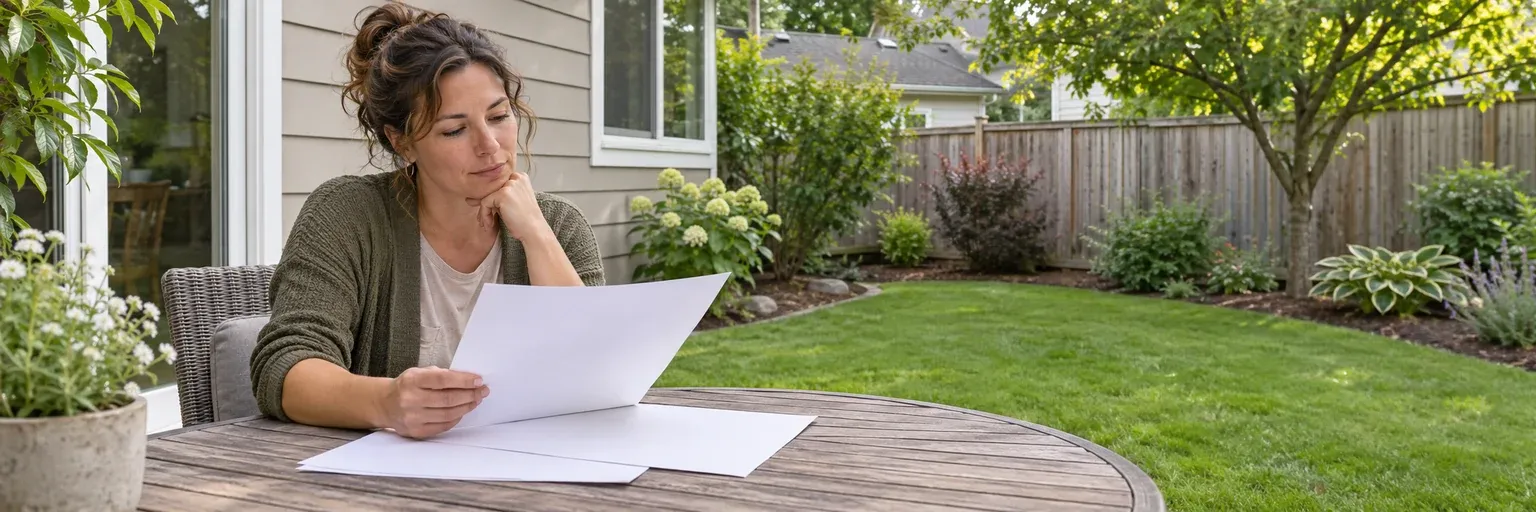
The best landscaping estimate is usually the one that makes the work for your yard easiest to understand and compare. Give every bidder the same brief, then compare preparation, drainage assumptions, plants, materials, access, cleanup, and changes in writing. A lower total can be a good value when it intentionally includes less work. It is not a useful comparison when another proposal includes tasks or materials that the lower proposal never names.
This guide is for a homeowner with two or more landscape proposals. Your next action is to put the actual proposals into one comparison sheet and request written clarification before you choose. It does not provide a grading, drainage, structural, tree-risk, or permit decision for your property.
Start with one shared project brief
Give each professional the same starting information: the outdoor problem you want solved, a simple sketch, ground-level photos, approximate accessible dimensions, preferred materials or plant types, and any rain or access observations. Name the areas that must stay usable, such as a gate, path, driveway, pet area, or outdoor equipment.
Your brief is not a landscape design or site assessment. It helps prevent one proposal from pricing a small planting refresh while another prices removal, soil preparation, a path, and restoration. Ask each bidder to state the assumptions behind the price. An assumption can be reasonable; it becomes hard to compare when it is vague, hidden, or treated as permission for open-ended charges.
Compare the written scope, not only the total
Put each proposal in a table. If a proposal does not name an item, write “not stated” instead of assuming it is included.
| Scope field | What the proposal should clarify | Why it changes the comparison |
|---|---|---|
| Design and layout | Drawing, plant locations, finished appearance, revisions, and material selections | A concept sketch is different from a defined installation plan. |
| Site preparation | Removal, demolition, excavation, soil preparation, disposal, and protection | Preparation changes both disruption and cost before new work is visible. |
| Drainage assumptions | Existing water observations, intended work, exclusions, and referral triggers | A planting bed or patio does not automatically solve water near a house or wall. |
| Plants and materials | Plant names or alternatives, installed sizes and counts, mulch, soil, edging, and hardscape details | “Shrubs included” does not mean the proposals use comparable quantities or sizes. |
| Access and protection | Equipment route, gate or fence needs, parking, surface protection, and restoration | Limited access can change equipment, labor, and what gets disturbed. |
| Closeout and changes | Cleanup, debris removal, warranty terms, permits where applicable, allowances, and approval steps | It makes the handoff and unknown-cost process visible before work starts. |
Hardscape means built features such as paths, patios, steps, or retaining walls. Softscape means living or loose elements such as soil, mulch, lawn, shrubs, and trees. Ask bidders to label which kind of work is included. “Landscape the backyard” is not enough to tell whether the totals cover the same job.
Make site conditions visible
Tell every bidder where water collects or moves after ordinary rain and whether it is near a house, basement, crawl space, retaining wall, septic component, utility feature, or electrical equipment. Ask what the proposal assumes about the existing site and what is excluded for drainage, grading, walls, or utilities.
The U.S. Environmental Protection Agency explains that stormwater runoff can carry pollutants and that landscape practices can help manage it. That general context does not turn a puddle, photo, or online diagram into a drainage design. If water reaches a building, soil is moving, a retaining wall shifts or bulges, a tree or utility concern is present, or major grading is proposed, seek the appropriate qualified site-specific assessment rather than asking a general landscape estimate to settle the issue.
Do not dig or move soil to test an assumption. If excavation is part of the final scope, the responsible professional should address local utility-location requirements and safe work planning. In the United States, 811 is a planning step before digging; it is not a substitute for a site-specific safety process.
Compare plant and hardscape details
For plants, request the common or botanical name when available, installed size, count, location or bed, and any substitution process. Ask what soil preparation, mulch, irrigation adjustment, staking, early care, and replacement terms are included. A plant that looks small on installation day can have different space and maintenance needs as it matures, so do not compare a count alone.
For a path, patio, edging, wall, or other hardscape feature, request the material product or grade, dimensions, base or preparation described in the scope, transitions to nearby surfaces, and cleanup. Do not assume that a new surface includes drainage work, structural wall work, or restoration outside the listed area. If a proposal uses an allowance, ask what quantity, product level, and labor it covers and what would change it.
Ask for a written change process
Removal, excavation, seasonal availability, and hidden conditions can create real uncertainty. A useful proposal identifies that uncertainty without making the homeowner accept a blank check. Ask for a process that describes the newly found condition, documents it when practical, explains options, states the added cost or pricing method, and obtains your written approval before extra work proceeds.
The Federal Trade Commission advises homeowners to get written estimates and understand what a home-improvement contract includes, including materials, timing, payments, and warranty information. Use that guidance to request clarification when a proposal relies on “as needed,” “allowance,” or “additional work may be required” without a stated trigger or approval step.
Choose the clearest like-for-like proposal
Proposals are not yet comparable when they assume different plant sizes, preparation, drainage limits, hardscape materials, access, cleanup, warranty, or change procedures. Ask each bidder to revise or clarify the written scope rather than trying to calculate a correction from the totals yourself. A professional may reasonably decline work outside their expertise; that is useful information when a drainage, wall, tree, electrical, or structural concern needs a separate assessment.
Once the scope fields match, compare price alongside assumptions, exclusions, schedule, maintenance expectations, and the written change process. The best fit is generally the proposal that clearly describes the work and limits for your site—not automatically the lowest total. For a stronger request package, start with How to plan a landscaping project and use How much should landscaping cost? to keep a planning discussion separate from a local quote.
Questions to ask your landscaping professional
- Which design, preparation, drainage assumptions, plant sizes and counts, hardscape materials, access protection, cleanup, and maintenance tasks are included or excluded in this written price?
- If the site visit or installation reveals a drainage, soil, wall, utility, tree, or access condition outside this scope, which qualified assessment is needed and how will you document options before work changes?
- What allowance, substitution, warranty, and change-order terms apply, and what written approval will you obtain before the price or scope changes?
Sources
- Federal Trade Commission, Choosing a Contractor for Home Improvements — written-estimate and contract-scope guidance.
- U.S. Environmental Protection Agency, Soak Up the Rain: What You Can Do — stormwater-runoff and landscape-practice context.
- Call 811, Before You Dig — national one-call planning information for excavation.
Be ready for the conversation
3 questions to ask your landscape or tree-care professional
- 1What site, tree, soil, drainage, utility, or access condition did you observe, and what remains outside your scope?
- 2Which pruning, removal, planting, drainage, protection, hauling, restoration, and permit tasks are included or excluded?
- 3How will you coordinate utility location, protect the site, and obtain approval if the scope changes?
Keep planning
Related landscaping tree care guides
How much should landscaping cost?
A scope-first way to compare landscaping proposals when a national price range would hide important site, drainage, plant, and access differences.
Landscaping terms homeowners should know
Plain-English landscaping and tree-care terms for reading a site plan, comparing a written scope, and preparing for a consultation.
How to plan a landscaping project: a homeowner's first steps
Turn a broad yard idea into a clear, site-aware project brief before you compare landscaping proposals.