
Homeowner guide
When attic insulation needs professional help
Know the attic insulation warning signs that call for a qualified inspection, from active moisture and pests to unsafe wiring and damaged materials.
Published October 4, 2026
By the HomeFAQ Editorial Team · Reviewed for accuracy.
https://homefaq.com/insulation/when-attic-insulation-needs-professional-help/
Printing is unavailable. Use your browser’s Print command.
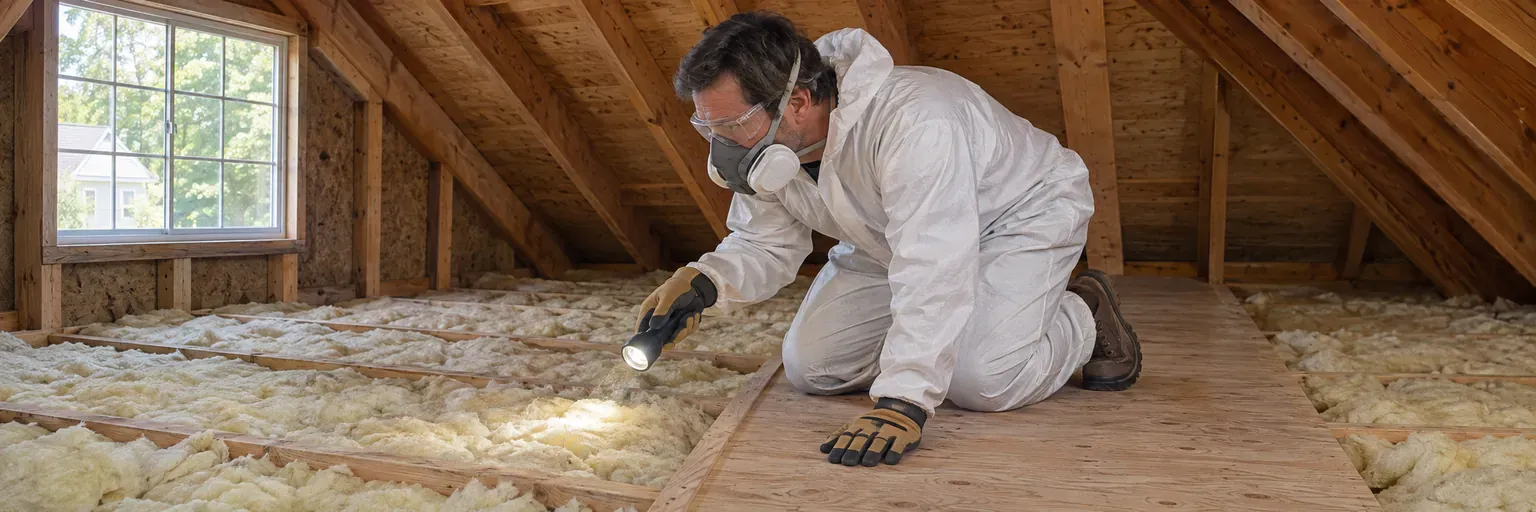
If attic insulation is wet, smells musty, has pest contamination, sits near unsafe electrical or heat-producing equipment, or you see a roof leak or damaged framing, pause the project and arrange qualified help. Insulation is not a cover for an active problem. A professional can identify what needs to be inspected and whether another trade must correct the cause before insulation work begins. Do not pull back material, walk on exposed ceiling drywall, or try to diagnose mold, asbestos, wiring, or a roof leak yourself.
This guide is for a homeowner who has noticed a warning sign from a safe attic access point and needs a clear next decision. It is not a diagnosis, a remediation plan, or a guarantee that every attic condition is visible. If there is an immediate electrical, fire, gas, or structural hazard, leave the area and contact the appropriate emergency or qualified service.
Warning signs that are not an insulation-only job
Moisture, staining, or mold-like growth
Wet, matted, or stained insulation can lose performance and may signal a roof leak, plumbing leak, condensation, or indoor air reaching a cold surface. Water marks on framing or roof sheathing, rusted fasteners, peeling surfaces, or a musty smell are reasons to stop adding insulation until the source is assessed. The Environmental Protection Agency explains that controlling moisture is the key to controlling mold; seeing discoloration does not tell a homeowner what it is or how extensive it may be.1
Take a photo only from a stable, accessible position. Note the location and whether it followed rain, a plumbing event, or a bathroom-fan problem. Do not scrape, spray, or disturb growth or wet material. A roofing, plumbing, or moisture-qualified professional may need to identify the source before an insulation contractor can give a meaningful scope.
Blocked ventilation or an unvented fan discharge
Insulation near the eaves can sometimes cover the air path from soffit vents into the attic. A bathroom or kitchen fan that ends in the attic can also add moisture where it does not belong. These are observations to report, not proof that ventilation is the cause of a comfort or moisture problem. Do not clear, relocate, or add vents from an unsafe position. Ask a qualified professional to explain the attic assembly, the observed air path, and whether a roof, duct, or ventilation correction is needed before insulating.
Pests, droppings, or nesting material
Rodent droppings, nests, or a strong animal odor need a pause before material is moved or removed. The Centers for Disease Control and Prevention advises against dry sweeping or vacuuming rodent droppings because that can stir contaminated material into the air.2 Keep people and pets out of the affected area where practical, avoid disturbing the material, and ask a pest-control or cleanup professional what work must be completed before insulation work resumes.
Electrical, heat, and combustion concerns
Do not cover exposed or damaged wiring, an open junction box, scorch marks, a recessed light with unknown clearance requirements, a flue, chimney, or combustion-appliance vent. These conditions can involve electrical or fire safety, and the required clearances and materials depend on the equipment and installation. An electrician, chimney professional, or other qualified local professional should assess the relevant condition. Insulation installers should be able to describe the boundaries of their work, but they should not be asked to guess at an electrical or combustion-safety correction.
Vermiculite or damaged, unfamiliar material
If you see loose, pebble-like vermiculite insulation or material you cannot identify, do not disturb it. EPA advises homeowners to assume vermiculite insulation may contain asbestos and to leave it undisturbed until qualified advice is available.3 The same pause is sensible for badly damaged material, debris, or an attic where safe access is not possible. A visual observation and a photograph from the hatch are enough for the first conversation.
What you can safely document
From a normal access point or a properly floored storage area, write down the date, room below the attic area, visible symptom, and any recent weather or plumbing event. Photograph from a distance if it can be done without climbing, stepping between joists, or touching material. Note which questions remain unanswered: where water came from, whether an exhaust duct reaches outdoors, whether wiring is damaged, or whether pests are active.
Do not enter a hot, cramped, dark, wet, or obstructed attic. Do not move insulation to trace a leak, test wiring, clean droppings, or clear a vent. The useful boundary is simple: a homeowner can report a visible condition; the qualified professional determines its cause, safe correction, and whether insulation work can proceed.
Choose the right next professional
The best first contact depends on the visible issue. An active roof leak or wet roof sheathing may call for a roofing assessment; a plumbing leak needs a plumber; damaged wiring or scorch marks need an electrician; pests need pest-control or cleanup guidance. For a broader moisture, ventilation, or insulation-scope question, request an assessment that states what was observed, what the professional can and cannot evaluate, and which trade should resolve any underlying condition.
After the cause is addressed, compare insulation proposals that separately identify air sealing, material, target R-value, access, cleanup, and excluded repairs. A proposal should not turn an unknown attic condition into an open-ended add-on.
Next step
Start with a safe attic insulation and air-sealing check to organize observations you can make without disturbing materials. Once the attic is ready for insulation work, use the insulation estimate comparison guide to compare written scopes.
Questions to ask your insulation professional
- What visible moisture, pest, ventilation, electrical, or material conditions must be evaluated or corrected before you insulate this area?
- Which part of the observed condition is within your scope, and which qualified professional should inspect or repair the underlying cause?
- If you uncover wet, contaminated, unsafe, or unfamiliar material after work begins, how will you document it and obtain my approval before changing the work or price?
Sources
Footnotes
-
U.S. Environmental Protection Agency, “A Brief Guide to Mold, Moisture and Your Home” — moisture-control context, accessed October 4, 2026. ↩
-
Centers for Disease Control and Prevention, “How to Clean Up After Rodents” — safe rodent-droppings cleanup context, accessed October 4, 2026. ↩
-
U.S. Environmental Protection Agency, “Protect Your Family from Asbestos-Contaminated Vermiculite Insulation” — vermiculite safety context, accessed October 4, 2026. ↩
Be ready for the conversation
3 questions to ask your insulation professional
- 1What area, material, target level, and installation detail does this scope cover?
- 2Which air sealing, moisture, ventilation, and clearance details are included or excluded?
- 3What condition would require a separate qualified professional before insulation work continues?
Keep planning
Related insulation guides
How to Check Attic Insulation and Air Sealing Safely
Learn what you can safely observe in an accessible attic, how insulation and air leaks affect comfort, and when to call a qualified professional.
How to compare insulation estimates
Compare attic-insulation proposals by measured area, R-value, air sealing, access, safety details, and change approval—not just the total price.
How much should attic insulation cost?
A U.S. planning guide to attic-insulation costs, scope, and written proposals that a homeowner can compare.