
Homeowner guide
Fiberglass vs. cellulose vs. spray-foam insulation
Compare fiberglass, cellulose, and spray foam by the area, air-leak plan, moisture conditions, and written scope your home needs.
Published October 3, 2026
By the HomeFAQ Editorial Team · Reviewed for accuracy.
https://homefaq.com/insulation/fiberglass-vs-cellulose-vs-spray-foam-insulation/
Printing is unavailable. Use your browser’s Print command.
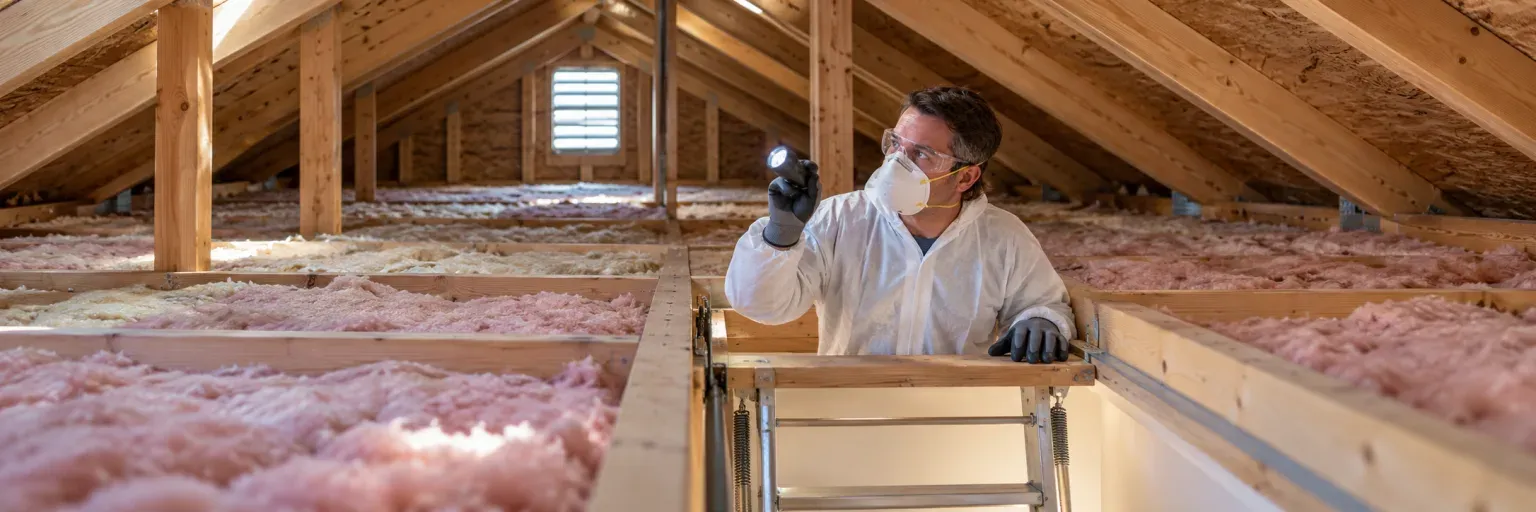
Fiberglass vs. cellulose vs. spray-foam insulation
For a dry, accessible attic where the goal is adding coverage over the ceiling, fiberglass or cellulose may be practical materials to compare after a contractor identifies air leaks and required clearances. Spray foam can be worth discussing where a professional has a specific air-control or hard-to-reach detail to solve, but it is not automatically the best upgrade for every attic. The right choice depends on where the insulation goes, whether moisture or roof problems are present, and what the complete written scope includes.
Insulation slows heat flow. Air sealing closes unintended openings that let air move through the home’s outer shell. They are related but not interchangeable: adding insulation over an unsealed gap does not establish whether the gap, moisture path, electrical detail, or ventilation issue was handled. This guide helps compare common materials; it does not set an R-value, diagnose moisture, or replace local requirements.
Start with the area and condition
Ask where the material will be installed: on an attic floor, in an accessible wall cavity, around a rim joist, or at a roofline. Location changes access, safety details, and the product a contractor may propose. Before material is selected, a qualified professional should identify active roof leaks, wet or damaged insulation, pest contamination, unsafe wiring, combustion or flue clearances, and ventilation details that need separate attention.
The U.S. Department of Energy recommends addressing air leaks before insulating and notes that recommended insulation levels vary by climate and location in the home.1 A bidder should explain the existing condition, proposed R-value or product thickness where applicable, and exclusions. If an attic contains vermiculite insulation, do not disturb it; EPA advises treating it as potentially asbestos-containing until a qualified professional can advise.2
Compare the likely fit
| Material | Often a better fit if… | Pause or compare another option if… | Get this in writing |
|---|---|---|---|
| Fiberglass batts or loose fill | The area is dry, accessible, and the scope addresses coverage, gaps, and fixture or heat-source clearances. | Batts would be compressed, cut around many obstructions, or placed over unresolved moisture, contamination, or air leaks. | Product form, target coverage or R-value, preparation, air-sealing work, clearances, access, and cleanup. |
| Cellulose loose fill or dense-pack | The installer can explain the exact area, coverage method, and how openings and moisture concerns are handled. | The proposal treats added material as a substitute for correcting a leak, wet conditions, blocked ventilation, or unsafe access. | Product, installation method, target coverage, air-sealing scope, protection of openings, and documentation. |
| Spray foam | A qualified installer has identified a specific air-control, irregular-cavity, or roofline detail and can explain the complete assembly. | The scope is vague about product type, moisture implications, protective coverings, ventilation during installation, or occupants’ re-entry. | Exact product and type, location and thickness, substrate preparation, ventilation and re-entry instructions, protective coverings, and warranty documents. |
This is a planning table, not a performance ranking. Actual thermal performance depends on the installed product, thickness or density, continuity, air movement, moisture, and the building detail around it. A material can fit one location and be poorly suited to another.
Fiberglass: common, but not a shortcut
Fiberglass is available in batts, rolls, and loose-fill forms. It can be a sensible attic-floor choice when access is safe and the installer can create continuous coverage without crushing batts or leaving gaps. It is not a shortcut for an unaddressed attic hatch, plumbing penetration, duct issue, or wet roof deck. Ask how the scope handles obstacles, attic access, recessed-light or other heat-source clearances, and the perimeter transition. Do not cover a flue, chimney, ventilation opening, or electrical equipment unless the responsible qualified professional has identified the required safe detail.
Cellulose: compare the installation method
Cellulose is commonly installed as loose fill or dense-pack. It may fit an attic or cavity project when the contractor can explain where it will go and how finished coverage will be verified. The useful question is not whether cellulose is universally better than fiberglass; it is whether the plan addresses the accessible area, air leaks, moisture conditions, and required clearances. Do not assume loose-fill material will solve uneven room temperatures by itself: duct problems, windows, air leakage, heating and cooling equipment, and moisture can produce similar comfort complaints.
Spray foam: require a complete assembly explanation
Spray foam is applied on site and can be proposed for particular air-control or irregular-shape details. Its suitability depends on the exact product, location, substrate condition, thickness, and relation to roof, wall, and moisture-control details. EPA’s indoor-air guidance says occupants should follow manufacturer instructions and vacate during certain building-product activities when recommended.3 Before work begins, ask for product documentation, a jobsite ventilation plan, re-entry instructions, and any required protective covering. If the proposal changes existing roof ventilation, ask the installer to explain the design basis and have applicable local requirements checked.
Put air sealing and moisture in the same conversation
An estimate should separately state air sealing, insulation installation, ventilation or moisture findings, and repairs outside the insulation scope. A contractor may reasonably exclude roof repair, electrical work, pest cleanup, duct work, asbestos-related evaluation, or structural repairs. Plain exclusions prevent a homeowner from assuming a material installation resolves every attic condition. From a safe accessible location, note visible gaps, uneven or damaged insulation, staining, odors, and room-comfort patterns. Do not move material, walk on ceiling framing, or enter a cramped, wet, contaminated, or poorly lit attic. Use How to check attic insulation and air sealing safely to prepare observations before requesting a written scope.
Questions to ask your insulation professional
- Which areas are you insulating, what air leaks or moisture conditions will you inspect first, and what work is outside this proposal?
- For the material you recommend, what installed coverage, thickness, or density will you document, and how will required electrical, heat-source, and ventilation clearances be protected?
- If spray foam is proposed, what exact product, ventilation and re-entry instructions, protective-covering details, and roof or wall assembly assumptions are included in the written scope?
Sources
Footnotes
-
U.S. Department of Energy, “Insulation”, accessed October 3, 2026. ↩
-
U.S. Environmental Protection Agency, “Protect Your Family from Exposures to Asbestos”, accessed October 3, 2026. ↩
-
U.S. Environmental Protection Agency, “Care for Your Air: A Guide to Indoor Air Quality”, accessed October 3, 2026. ↩
Be ready for the conversation
3 questions to ask your insulation professional
- 1What area, material, target level, and installation detail does this scope cover?
- 2Which air sealing, moisture, ventilation, and clearance details are included or excluded?
- 3What condition would require a separate qualified professional before insulation work continues?
Keep planning
Related insulation guides
How to Check Attic Insulation and Air Sealing Safely
Learn what you can safely observe in an accessible attic, how insulation and air leaks affect comfort, and when to call a qualified professional.
How much should attic insulation cost?
A U.S. planning guide to attic-insulation costs, scope, and written proposals that a homeowner can compare.
How to compare insulation estimates
Compare attic-insulation proposals by measured area, R-value, air sealing, access, safety details, and change approval—not just the total price.