
Homeowner guide
How to check common outlet and circuit problems safely
A safety-first checklist for homeowners with a dead outlet, a tripped breaker, flickering lights, or other electrical symptoms—and clear signs to call an electrician.
Published October 11, 2026
By the HomeFAQ Editorial Team · Reviewed for accuracy.
https://homefaq.com/electrical-services/how-to-check-common-outlet-and-circuit-problems-safely/
Printing is unavailable. Use your browser’s Print command.
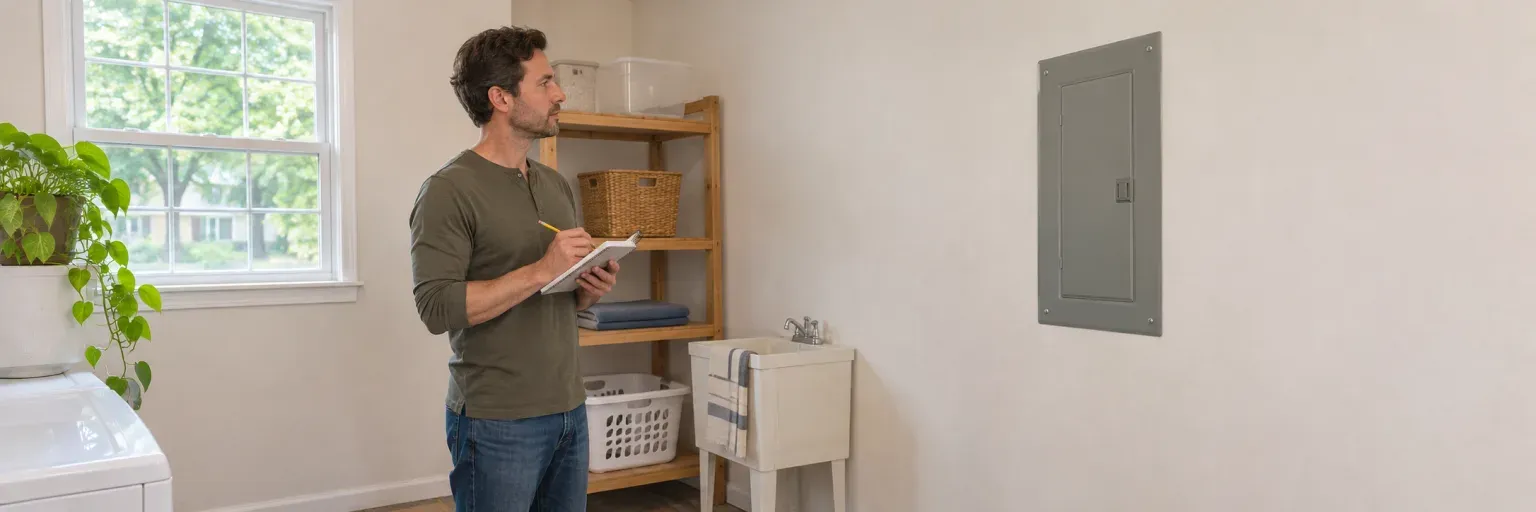
If an outlet is dead, a breaker trips, or lights flicker, start by deciding whether it is safe to observe or time to stop. Heat, a burning smell, smoke, visible damage, sparking, a shock, water near electrical equipment, or a breaker that trips again are reasons to leave the area alone and arrange prompt qualified electrical help. For a symptom without those warning signs, you can make a few non-contact observations and try one normal reset. Do not open an outlet, remove a panel cover, test live wires, or keep resetting a protective device to force power back on.
This guide is for a homeowner trying to decide whether a simple, safe observation will make an electrician visit more productive or whether the symptom needs prompt attention. The answer is to stop at the first danger sign or repeated trip, and otherwise record what you can see before requesting a written diagnosis. Your next action is to bring that record to an electrician and compare the proposed scope, testing, and exclusions.
Start with the stop-now signs
Move away from the equipment and do not use the affected outlet or circuit if you notice any of the following:
- a hot, discolored, cracked, loose, buzzing, or damaged outlet, switch, cord, plug, or cover plate;
- smoke, a burning or melting-plastic odor, visible sparks, or a shock or tingle;
- water on, in, or near electrical equipment; or
- a breaker that trips again immediately or repeatedly after a normal reset.
The U.S. Consumer Product Safety Commission (CPSC) advises consumers to replace damaged cords or plugs, avoid overloading outlets, and have worn or damaged outlets repaired by a qualified electrician. A homeowner should not try to find the cause behind a hot outlet, recurring trip, or water-related electrical concern. If an immediate hazard creates a fire or emergency risk, use the emergency response appropriate to your location rather than troubleshooting it yourself.
Know the names you may see
An outlet, also called a receptacle, is where a plug connects. A circuit is the path that supplies power to outlets, lights, or fixed equipment. A breaker is a protective switch in the electrical panel that can turn off when it detects a problem or too much demand.
You may also see a GFCI (ground-fault circuit interrupter) or AFCI (arc-fault circuit interrupter). A GFCI is designed to respond to certain ground-fault conditions; an AFCI is designed to respond to certain arcing conditions. They serve different protective purposes. Either can appear as a receptacle with test and reset buttons or as a breaker, depending on the system. A tripping device is not a diagnosis, and replacing or bypassing it is not a safe homeowner fix. Read GFCI, AFCI, and outlet planning before a planned outlet or circuit project.
Make safe, non-contact observations
Only if there are no danger signs, make a short record from a safe distance. Do not touch damaged equipment, insert anything into an outlet, or remove covers.
- Identify the symptom. Is one outlet dead, are several outlets or lights affected, or does the problem happen when a particular appliance runs? Note when it started and whether it is intermittent.
- Look at accessible plugs and cords. Without handling a damaged item, look for fraying, crushing, discoloration, loose plugs, or a cord pinched by furniture. Stop using a damaged cord or plug and replace it rather than trying to repair it.
- Check for an obvious, safely accessible reset point. A nearby GFCI receptacle may have a reset button. Press it once only if the receptacle is dry, undamaged, and there are no warning signs. Do not repeatedly reset it, and do not assume the closest bathroom or kitchen outlet controls the affected location.
- Check the panel only from the outside. With dry hands and a clear, dry floor, you may look for a breaker that is visibly between ON and OFF. Do not remove the panel cover or touch anything inside. A breaker that appears tripped can be moved fully to OFF and then to ON once, only when there is no heat, odor, damage, water, or other warning sign.
- Stop if power does not return or the device trips again. Leave the circuit off when possible without approaching damaged equipment, and call a qualified electrician. Repeated resetting can obscure a condition that needs diagnosis.
Do not use extension cords as a permanent replacement for a failed outlet or circuit. CPSC warns against running cords under rugs or overloading outlets and extension cords. A temporary arrangement can create a second problem while the original symptom remains unknown.
Give the electrician a useful starting record
Write down the room, the affected outlet, lights, or appliance, and what happened before the symptom. Note whether a normal reset held, but do not keep experimenting. Safe-distance photos of the front of an outlet, a plugged-in appliance, or panel labels can be useful when they do not require moving equipment or opening anything.
Tell the electrician about recent remodeling, water entry, a new appliance, frequent breaker trips, flickering, or a lost circuit. Ask the electrician to identify what they will inspect, what the diagnostic visit includes, and whether the proposed work concerns the appliance, branch circuit, protective device, panel, or service equipment. These are different scopes. A panel upgrade, for example, is not automatically the answer to every tripping breaker; see electrical panel upgrades for the questions that separate panel, service, and circuit work.
What not to do while you wait
Do not remove an outlet cover, pull a receptacle from a wall, open an electrical panel, use a voltage tester on exposed parts, replace a breaker, or alter wiring. Do not use a damaged outlet, cord, plug, or appliance to see whether it “works this time.” These actions can increase shock or fire risk and make it harder for a qualified professional to identify the original condition.
A safe observation is useful because it helps an electrician begin with a clear symptom. It is not a substitute for diagnosis. A qualified electrician can determine whether the problem is in connected equipment, an outlet, a branch circuit, a protective device, the panel, or another part of the electrical system.
Questions to ask your electrician
- Based on the symptom and your inspection, what part of the system do you believe is involved, and what tests support that conclusion?
- Does the proposed work address the outlet or appliance only, the branch circuit, a GFCI or AFCI device, the panel, or more than one of those items?
- What safety testing, labeling, and written record will you provide when the diagnostic or repair work is complete?
Sources
- U.S. Consumer Product Safety Commission, “Electrical Safety”
- U.S. Consumer Product Safety Commission, “Extension Cords Fact Sheet”
Be ready for the conversation
3 questions to ask your electrician
- 1What safety or capacity issue does this work address?
- 2What circuits, equipment, and installation work are included?
- 3Will this require permits, utility coordination, or panel changes?
Keep planning
Related electrical services guides
Electrical panel upgrades: a homeowner planning guide
Understand the questions, scope items, and safety considerations involved in an electrical-panel upgrade discussion.
GFCI, AFCI, and outlet planning: what to ask an electrician
Learn what GFCI and AFCI protection are intended to do, when an outlet project may involve circuit changes, and how to compare a safe written scope.
How much should an electrical project cost?
Learn why a national electrical-project price can mislead, how to define the scope before comparing bids, and when a diagnostic visit is the useful first cost.