
Homeowner guide
Electrical work cost: a scope-first planning guide
Learn why electrical work does not have one safe national price, what a written scope should include, and how to compare estimates without guessing at unsafe repairs.
Published October 11, 2026
By the HomeFAQ Editorial Team · Reviewed for accuracy.
https://homefaq.com/electrical-services/how-much-should-electrical-work-cost/
Printing is unavailable. Use your browser’s Print command.
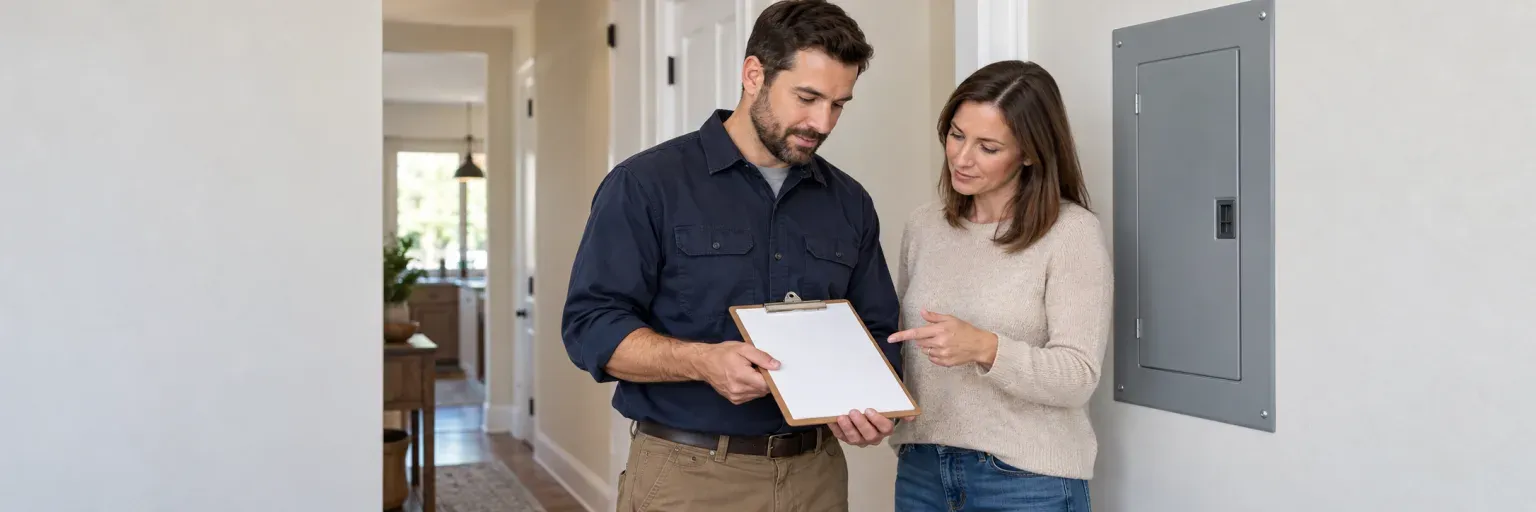
This guide is for a homeowner who needs electrical work and wants to know what a fair price should cover before calling an electrician. The useful answer is not one nationwide number: electrical work should be priced from a written scope that identifies the problem or planned use, the circuit or equipment involved, access, permits, testing, and repair to finished surfaces. As of October 11, 2026, HomeFAQ could not identify a public, authoritative national installed-price dataset that can safely turn those variables into a reliable quote for an individual home. Your next action is to give each qualified electrician the same short brief and compare complete written scopes.
That approach can feel less satisfying than an online average, but it protects a homeowner from comparing unlike jobs. Replacing an accessible switch, finding a breaker that trips, adding a circuit for an appliance, and changing a panel or utility service are different projects. A single advertised price, device price, or hourly rate does not show which of those jobs it covers.
Start with the work you actually need
Write down the room, the symptom or planned equipment, when the problem happens, and any recent remodeling or appliance changes. For a planned project, say what will be added: for example, an EV charger, electric range, heat-pump equipment, or new lighting. For a problem, note what you can safely observe, such as a breaker that trips or lights that flicker. Do not remove a panel cover, touch exposed wiring, or test energized equipment to make the description more detailed.
An unexplained symptom may require a diagnostic visit before anyone can responsibly quote a repair. Ask what that visit includes, what findings will be documented, and whether the diagnostic charge is separate from later work. A diagnosis is not a failure to provide a price; it can be the honest first step when the cause is unknown.
Why national averages can mislead
The U.S. Consumer Product Safety Commission warns about hazards involving damaged wiring, overloaded circuits, water, and improper repairs. Its guidance explains why electrical safety matters, but it does not publish an installed-price table for the condition inside a particular home. Wage data, permit fees, and retail equipment prices also leave out routing, troubleshooting, material selection, access through finished areas, restoration, and the responsibilities accepted by the contractor.
Use a broad online price only as a prompt to ask better questions, not as proof that a local proposal is high or low. A lower proposal can be appropriate when the scope is smaller and accessible. It is not comparable to one that also includes a new circuit, permit, inspection, testing, labeling, wall repair, or utility coordination.
What a written electrical scope should say
Ask every bidder to identify the same core items. If an item is unknown, the proposal should say how it will be investigated and how a change will be approved.
| Scope item | Why it matters to the price |
|---|---|
| Problem or planned use | It establishes whether the work is diagnosis, repair, a dedicated circuit, capacity planning, or another project. |
| Circuit, equipment, and route | Distance, access, finished walls, and the equipment selected can change labor and restoration. |
| Panel or service work | A panel change, a dedicated circuit, and utility-service work are separate scopes that should not be bundled vaguely. |
| Permit and inspection | Local requirements, fees, scheduling, and responsibility vary by jurisdiction. |
| Testing and finish work | Verification, labeling, cleanup, patching, and paint touch-up may be included, excluded, or handled separately. |
For a panel-related recommendation, read Electrical panel upgrades: a homeowner planning guide before treating a larger panel as the automatic answer. A tripping breaker or a new appliance does not by itself establish that a panel upgrade is needed.
Compare estimates line by line
Give each electrician the same facts, then put the written proposals into one checklist. Compare diagnosis, circuits and equipment, routing and access, permits, inspection, testing, restoration, exclusions, and the approval process for concealed conditions. Ask each bidder to clarify the same missing item rather than assuming it is included.
Local code, permit rules, access, service capacity, and concealed conditions can all change a legitimate scope. The key question is whether the proposal makes those uncertainties visible before work begins. The Federal Trade Commission recommends getting written estimates and understanding the terms before hiring a contractor; that is especially useful when electrical work will affect safety systems or finished parts of the home.
If you notice smoke, sparking, a burning odor, heat from electrical equipment, or water near electrical equipment, prioritize prompt qualified help over collecting routine estimates. Keep clear of the affected area and describe what you observed.
Questions to ask your electrician
- What condition or planned use does this scope address, and what finding supports that recommendation?
- Which circuits, permits, inspection steps, testing, labeling, and wall or ceiling restoration are included or excluded?
- If you find inaccessible wiring, damage, or a capacity issue, how will you document it and obtain approval before the scope or price changes?
Next step
Use How to compare electrician estimates once each bidder has the same project brief. For a deeper explanation of the variables that make scopes different, see Electrical project cost drivers.
Sources
- U.S. Consumer Product Safety Commission: Electrical Safety (accessed October 11, 2026)
- Federal Trade Commission: Hiring a Contractor (accessed October 11, 2026)
Be ready for the conversation
3 questions to ask your electrician
- 1What safety or capacity issue does this work address?
- 2What circuits, equipment, and installation work are included?
- 3Will this require permits, utility coordination, or panel changes?
Keep planning
Related electrical services guides
How much should an electrical project cost?
Learn why a national electrical-project price can mislead, how to define the scope before comparing bids, and when a diagnostic visit is the useful first cost.
How to compare electrician estimates
Compare electrician estimates by the safety issue, circuits, permit work, access, testing, and restoration—not by a single device price.
Electrical terms homeowners should know
Understand the basic electrical words that appear in a home project conversation, without attempting electrical diagnosis or repairs yourself.