
Homeowner guide
How to check basement moisture and plan drainage
Use safe, ground-level observations to document basement moisture, check visible drainage clues, and prepare useful questions before requesting a professional assessment.
Published October 1, 2026
By the HomeFAQ Editorial Team · Reviewed for accuracy.
https://homefaq.com/basement-waterproofing/how-to-check-basement-moisture-and-plan-drainage/
Printing is unavailable. Use your browser’s Print command.
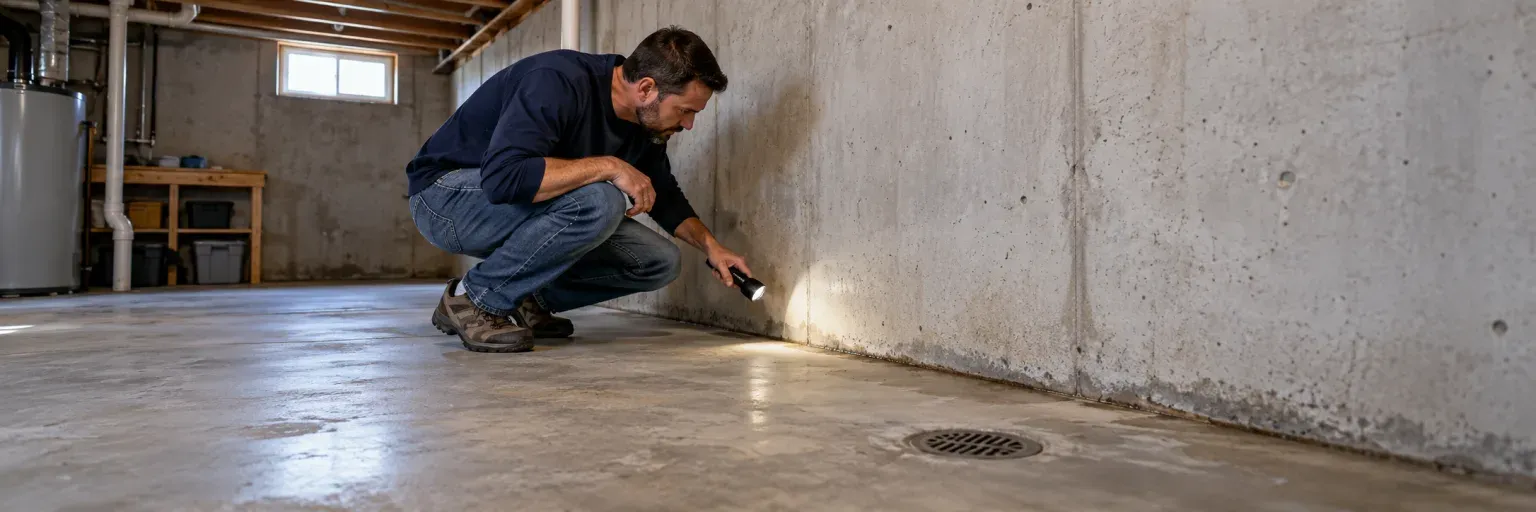
If your basement feels damp or shows water marks, begin with safe observations and a simple record—not a repair guess. Note where and when moisture appears, then look from dry ground at roof runoff and the visible slope of the ground near the house. Drainage is the planned path that moves water away from the home. It is worth checking because rainwater, snowmelt, plumbing, groundwater, and several conditions together can produce similar symptoms. Do not enter standing water, touch electrical equipment, dig beside the foundation, or decide that a crack proves the cause. A qualified professional can use your notes to assess the water path and recommend a written scope.
1. Start with safety and timing
Do the indoor part only when the area is dry enough to enter safely and there is no electrical, flood, or structural concern. If water is standing, the source is unknown, or electrical equipment could be affected, stay out and contact emergency services, a utility, or qualified help as appropriate. Do not move appliances, open a panel, use extension cords, or walk through water to investigate.
For a non-emergency pattern, make a note soon after you notice it. Record the date, recent weather, whether snow was melting, and whether a plumbing fixture, appliance, or pipe leak may be involved. A condition that follows a normal rain may call for different questions than one that appears without rain. Your notes are observations, not a diagnosis.
2. Map where moisture appears
From a safe, dry location, write down the room, wall, corner, floor area, or window area where you see dampness, staining, peeling paint, a musty odor, or water marks. Include whether the area is finished or unfinished and whether stored belongings were affected. Take wide photos to show the location and close photos to show the condition; do not move wet materials or reach into a damaged area just to get a better image.
Look for efflorescence—a white, powdery mineral deposit that can appear when moisture moves through masonry or concrete and leaves minerals behind. It can be a useful clue to report, but it does not identify the water source or prove how serious a condition is. Note it without scraping, probing, or applying a cleaner.
3. Check roof runoff from the ground
When conditions are calm and the ground is safe to walk on, look at gutters and downspouts from the ground. Note obvious overflow, loose sections you can see, or downspouts that discharge beside the foundation. During or after a normal rain, observe whether water appears to collect near the house. Do not climb a ladder, lean into a gutter, or stand under unstable ice or wet roofing.
4. Observe visible grading without changing it
Grading is the slope of the ground around a building. From ground level, note places where the surface appears to slope toward the house, has settled, or holds water after rain. Include nearby patios, driveways, landscaping edges, or hard surfaces only as location markers. Do not excavate, add soil against the house, alter a drain, or make a channel as a test. Those changes can affect drainage, utilities, and the foundation area.
If you see a repeated puddle or runoff path, photograph it from a safe distance and include the weather and time since rain. A professional can decide whether a surface-drainage condition needs a closer look and whether local rules, property lines, utilities, or discharge limits affect the options.
5. Record cracks, but do not test them
Note visible cracks in a basement wall, floor, or around an opening by location, direction, approximate length, and whether moisture is nearby. Take a photo with a simple reference such as a ruler placed beside it only if the area is dry, stable, and easy to reach. Do not insert a tool, chip concrete, inject material, seal over a wet crack, or assume a crack is the water path. A crack can need a waterproofing, structural, plumbing, or other professional evaluation depending on the full condition.
If you notice movement, a bowed wall, a sudden change, or a condition that makes the space feel unsafe, stop documenting and seek qualified help promptly. A photo cannot determine structural safety.
6. Prepare one packet for every assessment
Bring the same facts to each professional so their recommendations begin with the same record:
- visible gutter, downspout, pooling, and grading observations from ground level;
- prior inspection reports, repair records, warranties, and known drainage work; and
- questions about the suspected water path, recommended scope, discharge destination, exclusions, and how added work would be approved.
Ask each professional to separate what they observed from what they infer and to explain what the proposed work will and will not address. That makes a later written estimate easier to compare without treating a sales description as a diagnosis.
Next step
Use your notes to read how much basement waterproofing should cost as a scope-first planning guide, then compare whether interior or exterior basement waterproofing fits the documented water path.
Questions to ask your waterproofing professional
- Which of my observations point to roof runoff, surface drainage, plumbing, groundwater, or another possible water path, and what remains unconfirmed?
- Before recommending drainage or excavation, what will you inspect and what safety, utility, permit, or property constraints could change the scope?
- How will you document the proposed discharge route, exclusions, and any added condition that needs my approval before work begins?
Sources
- U.S. Environmental Protection Agency: A Brief Guide to Mold, Moisture and Your Home — moisture-control and mold-prevention context.
- Federal Emergency Management Agency: Mitigation Measures for Flood-Prone Homes — site-specific flood-mitigation context.
Be ready for the conversation
3 questions to ask your basement waterproofing professional
- 1What observations support the water path you are addressing, and which possible causes remain outside your scope?
- 2Which drainage, excavation, discharge, restoration, permit, and cleanup tasks are included or excluded in writing?
- 3If removal or excavation reveals another condition, how will you document it and obtain approval before the price or scope changes?
Keep planning
Related basement waterproofing guides
How much should basement waterproofing cost?
A scope-first guide to planning basement waterproofing work when no safe national installed-price range can replace an on-site assessment.
Interior vs. exterior basement waterproofing: how to choose
Choose an interior water-management system or exterior drainage work based on the documented water path, access, and limits of each scope.
Basement waterproofing terms homeowners should know
Understand drainage, moisture, sump, and repair terms found in basement waterproofing inspections and written proposals.