
Homeowner guide
Appliance maintenance and safety checklist for homeowners
Use simple, low-risk checks for kitchen and laundry appliances, document symptoms clearly, and know when to stop and call qualified help.
Published October 1, 2026
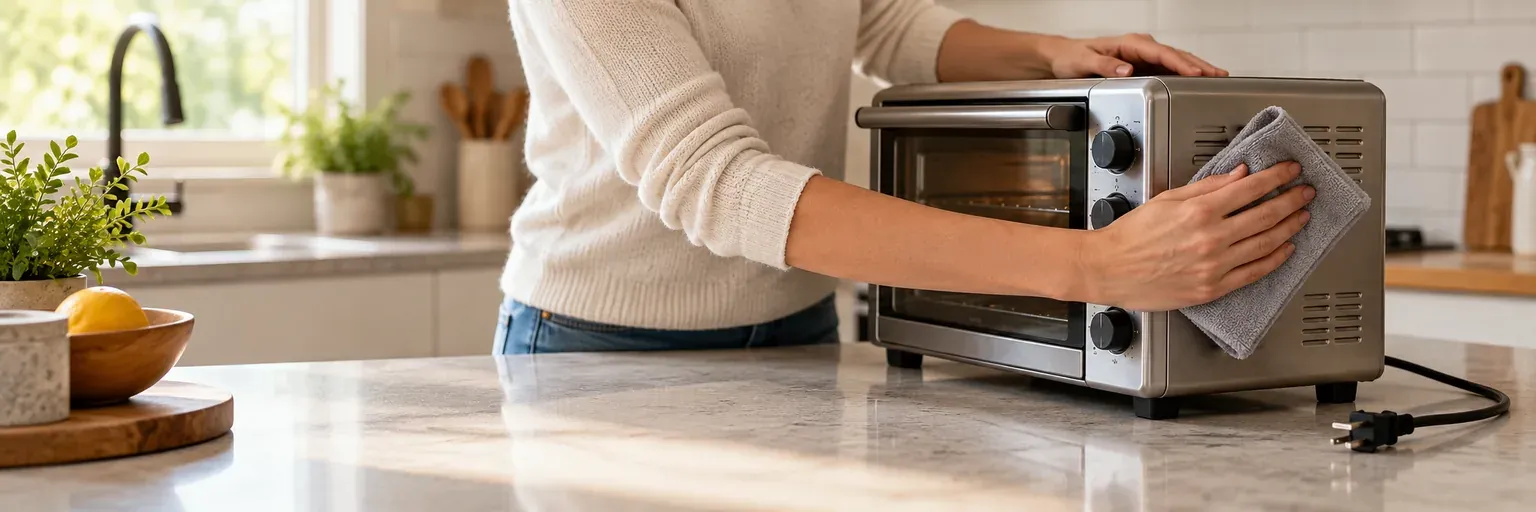
A safe appliance check is mostly about observation, cleaning, and knowing when to stop. You can keep manuals, clean only the areas the manufacturer says are user-serviceable, and record what changed before calling for help. Do not remove panels, bypass a safety device, work on gas, refrigerant, high-voltage wiring, concealed plumbing, or dryer-vent systems. Stop using an appliance and arrange qualified help when you smell gas or burning, see smoke or sparks, find a damaged cord or water near electrical parts, or receive a recall notice that says to stop use.
Start with a safe record
From a dry, well-lit area, note the appliance type, model and serial number if the label is visible without moving equipment or removing a panel, and the date the problem started. Photograph an error display, a leak location, or visible damage from a safe distance. Keep a short record of noises, odors, cycles that stop early, and prior repairs. This gives a technician useful facts without asking you to diagnose the appliance.
Check recalls before arranging ordinary repair. The U.S. Consumer Product Safety Commission (CPSC) publishes recalls and can identify the corrective action, which may be a repair, replacement, refund, or instruction to stop using a product. Follow the recall notice and manufacturer instructions rather than testing the appliance to see whether it is affected.
Kitchen appliances: observe; do not open or alter
For a refrigerator, keep food at safe temperatures, make sure exterior ventilation areas are not blocked as the manual allows, and wipe up water outside the appliance. A persistent puddle, damaged cord, repeated tripped circuit, burning smell, or unusual heat calls for service rather than deeper investigation. Do not puncture or handle refrigerant tubing. The Environmental Protection Agency requires certified technicians to handle refrigerants in covered appliances.
For a dishwasher, use only the detergent and routine care described in its manual. Look for water at the floor, a loose-looking door seal, or a cycle that does not drain, but do not disconnect plumbing, pull the unit out, or reach into an energized appliance. Turn off use and seek prompt help if water is near an outlet, cord, or other electrical equipment.
For a range, oven, or cooktop, keep combustibles away and clean only as the manufacturer directs. If you smell gas, do not operate switches, light a flame, or try to find the leak. Leave the area and follow your gas utility’s emergency instructions or call emergency services as appropriate. Never adjust a gas connection, igniter, or internal electrical component yourself.
Laundry appliances: treat heat, water, and venting seriously
Clean a dryer’s lint screen before or after each load as its manufacturer directs. The CPSC advises cleaning the lint filter after every load and having the exhaust duct cleaned periodically by a qualified service person. Stop using the dryer if clothes take much longer to dry, it smells hot or burning, the vent hood does not open normally, or lint is collecting outside the expected screen area. Do not take apart or reroute a dryer duct yourself; routing, materials, and termination requirements vary by appliance and location.
For a washer, look for a leaking supply hose, puddle, unusual vibration, or a door that will not latch. Turn off use if water is escaping or electrical parts may get wet. Do not repair hoses, valves, internal wiring, or a stacked appliance’s supports while it is connected. A qualified professional can determine whether a repair is limited to the appliance or whether plumbing, flooring, or electrical work also needs attention.
Use a stop-work checklist
Stop using the appliance and seek the right help when you notice:
- A gas smell, smoke, sparks, a burning odor, or a repeatedly tripped breaker.
- Water near an outlet, cord, electrical panel, or other energized equipment.
- A damaged power cord, plug, gas connector, refrigerant line, or dryer vent.
- An appliance that is unstable, heavily vibrating, or moving unexpectedly.
- A recall notice that directs owners to stop using the product or take a specific safety step.
For an immediate gas, fire, or electrical hazard, move to safety and contact the utility or emergency service appropriate to the situation. A repair appointment is not a substitute for emergency guidance.
Turn notes into a better service visit
Share the model number, symptom record, photos, recall status, and prior invoices with the technician. Ask them to explain what they observed, whether the proposed work addresses the cause or only a symptom, and what should remain off-limits until repaired. Your next action is to use the Appliance Repair and Installation hub to keep your notes organized before you request a written diagnosis or scope.
Sources
- U.S. Consumer Product Safety Commission, Recalls — appliance recall lookup and corrective-action guidance.
- U.S. Consumer Product Safety Commission, Clothes Dryer Safety — lint-screen and exhaust-duct safety guidance.
- U.S. Environmental Protection Agency, Section 608 — refrigerant handling requirements.
- American Gas Association, Natural Gas Safety — gas-odor emergency precautions; follow local utility instructions.
Be ready for the conversation
3 questions to ask your appliance repair professional
- 1Which symptom or visible condition tells you this appliance should stay off until it is repaired?
- 2What can I safely clean or observe between visits, and which gas, electrical, water, refrigerant, or vent tasks must I leave alone?
- 3Does the proposed work address the appliance only, or should a plumber, electrician, gas professional, or dryer-vent specialist assess a related condition?
Keep planning
Related appliance repair guides
Appliance repair terms homeowners should know
Understand the common repair and installation terms in appliance estimates so you can compare scope, safety work, and warranty coverage.
How much should appliance repair cost?
A U.S. planning guide to comparing appliance-repair scopes when a generic national price cannot replace a diagnosis and written local quote.
How to compare appliance repair and installation estimates
Compare appliance repair and replacement-installation estimates by diagnosis, parts, connections, delivery, and exclusions—not a starting price alone.