
Homeowner guide
Home accessibility fall-prevention checklist
Use a calm room-by-room checklist to spot trip hazards, lighting gaps, handrail concerns, bathroom support needs, and entrance barriers before seeking qualified help.
Published October 1, 2026
By the HomeFAQ Editorial Team · Reviewed for accuracy.
https://homefaq.com/accessibility-aging-in-place/home-accessibility-fall-prevention-checklist/
Printing is unavailable. Use your browser’s Print command.
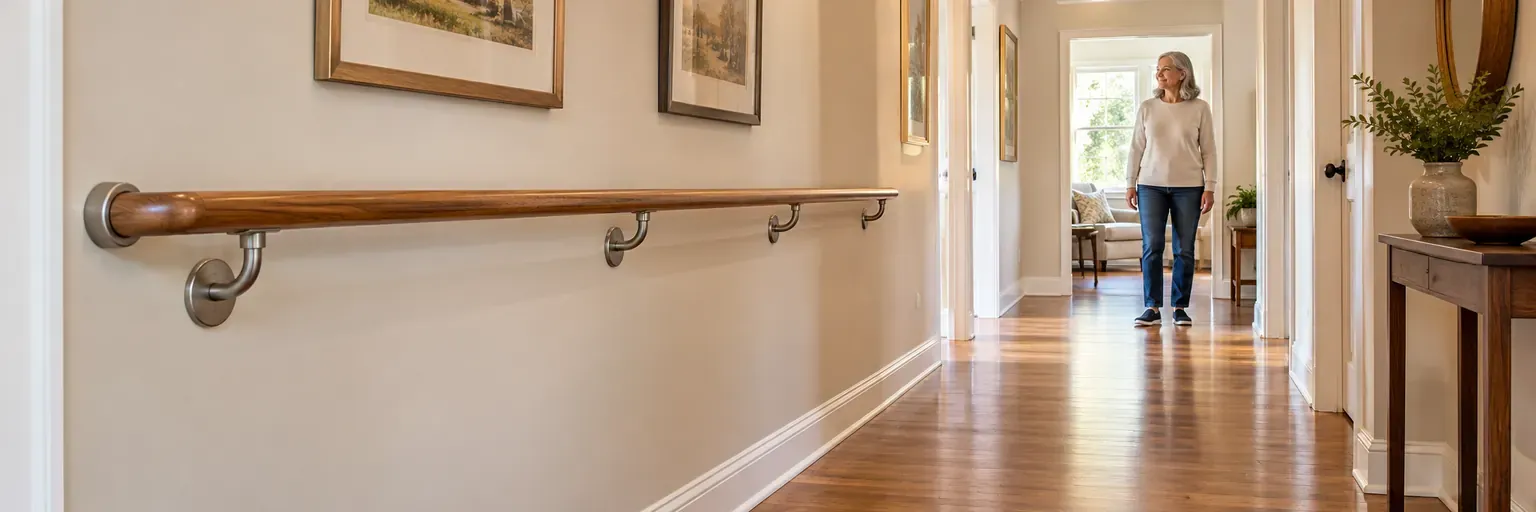
A home fall-prevention check is most useful when you focus on one everyday route at a time: getting in from outside, using the bathroom at night, reaching the bedroom, or carrying laundry. Look for hazards you can safely see, such as loose floor coverings, poor lighting, clutter, uneven thresholds, or a handrail that needs professional attention. Keep simple upkeep separate from changes that need a qualified assessment. If someone has fallen, is injured, suddenly cannot move safely, or has new symptoms, seek appropriate medical or emergency help instead of treating a home project as urgent care.
This checklist is general home-planning education, not medical advice, a code inspection, or an installation plan. Your next action is to write down the specific task or route that feels difficult and use those observations to plan an assessment or a written home-modification scope.
Start with a safe walk-through
Choose daylight when possible and wear stable shoes. Walk only on surfaces that appear sound. Keep a phone nearby if you are checking an area alone, but do not climb, carry bulky objects, move furniture, remove covers, test wiring, or pull on a questionable rail. Take notes or wide photos from a stable position so a professional can understand the location later.
The Centers for Disease Control and Prevention (CDC) recommends discussing fall concerns with a health care provider and reviewing home hazards as part of a broader prevention plan. A home observation does not tell you why a person falls or which modification fits them. It can, however, make a professional conversation more specific.
Use this sequence for each route: note the task, look for a visible barrier, identify a safe short-term housekeeping action if one exists, and record what requires a qualified opinion. A clear note such as “the hall light switch is hard to reach from the bedroom door” is more useful than a general request to “make the house safer.”
Check walking surfaces and everyday clutter
Look at the path between commonly used rooms, especially from the bed to the bathroom, the entrance to the kitchen, and the route to laundry or mail. Watch for:
- loose rugs, curled edges, cords, small furniture, pet items, or stored boxes in a travel path;
- changes in floor height, uneven transitions, worn stair tread coverings, or a threshold that catches a shoe, walker, or mobility device;
- wet floors, leaks, or recurring water near an entrance, bathroom, kitchen, or laundry area; and
- glare, deep shadows, or a route that is difficult to see after dark.
A homeowner may be able to clear a walkway, secure a loose cord away from traffic, replace a burned-out bulb, or keep frequently used items within easier reach. Do not tape down a damaged floor, stack books as a step, use a loose bath mat as a permanent solution, or make a slope, threshold, or stair change without appropriate evaluation. Those conditions can involve flooring, drainage, structure, or a person’s mobility needs.
Check lighting, switches, and visibility
Look at whether a person can see each change in level, doorway, and bathroom route without searching for a switch. Note burned-out bulbs, fixtures that leave stairs or landings in shadow, and switches that are hard to reach from the usual entrance to a room. Night lighting can be helpful when it makes the route easier to see without creating glare.
Do not open a light fixture, add wiring, replace a switch, or use extension cords as permanent lighting. Ask a licensed electrical professional about work involving wiring, fixtures, outlets, switches, or a circuit. If a light flickers, an outlet is warm, a breaker trips, or there is a burning smell, stop using the affected equipment and seek prompt qualified help; call emergency services or the utility when there is an immediate electrical hazard.
Look at stairs, handrails, and entrances without testing them
From the ground or a stable landing, observe whether each stair route has clear treads, adequate lighting, and a handrail that appears continuous and securely attached. Note loose-looking hardware, missing sections, worn or slippery surfaces, clutter on steps, or a landing that is hard to see. Do not shake a rail to test it, lean over a stairwell, or attempt to repair its attachment yourself.
At entrances, look for uneven steps, a high threshold, standing water, damaged paving, poor lighting, and the distance from parking or the sidewalk. A temporary clear path may be appropriate; a ramp, rail, landing, drainage change, or doorway change needs a site-specific assessment. Local requirements and the safe design depend on the house, terrain, and the person using the route.
Review bathroom support and transfer areas carefully
Bathrooms combine water, hard surfaces, tight turns, and daily transfers. Observe the door swing, clear floor area, lighting, visible slippery surfaces, toilet and bathing locations, and whether a person or helper has enough room to move. Keep floors dry, repair an obvious leak promptly, and keep towels and daily supplies within a reachable location when that can be done safely.
Do not assume a towel bar, shower door, vanity, or wall will safely support body weight. A grab bar needs appropriate placement and secure installation based on the wall and the user’s needs. Changes to a shower, tub, toilet area, floor, or doorway can involve waterproofing, plumbing, electrical work, or structural backing. An occupational therapist can help assess a person’s daily activities; a licensed and qualified trade professional should evaluate the home work.
Know when to pause and get help
Arrange a qualified assessment before making a major change when a route depends on balance, transfers, vision, memory, use of a mobility device, or a caregiver’s assistance. The Administration for Community Living’s Aging and Disability Resource Centers can help people locate local aging and disability resources. A Certified Aging-in-Place Specialist (CAPS) has relevant remodeling education, but the designation does not replace any license required for the work.
Seek prompt professional help for a loose or damaged handrail, a stair or floor that appears unstable, repeated water near a walking route, an unsafe entry, or a bathroom feature that no longer provides reliable support. For a fall with injury, a possible emergency, or a sudden change in a person’s ability to walk or transfer, contact the appropriate emergency or health professional rather than waiting for a contractor.
Turn notes into a useful next step
Choose one priority route and write a short goal in everyday language: “use the hall bathroom at night with a clearer path,” or “enter from the driveway with fewer barriers.” Include only safe observations, photos if useful, and questions about what the professional should evaluate. Then read How to plan aging-in-place home modifications to turn that goal into a clear assessment or estimate request.
Questions to ask your accessibility-modification professional
- Which visible conditions on this route need a site assessment before you recommend a rail, threshold, bathroom-support feature, or other modification?
- What can I safely maintain now, and which lighting, flooring, drainage, attachment, plumbing, electrical, or structural items belong in a qualified scope?
- If this change is meant to support a transfer or mobility device, should an occupational therapist or other functional assessment inform the final placement and layout?
Sources
- Centers for Disease Control and Prevention: Older Adult Fall Prevention — fall-prevention planning and health-care discussion context.
- Administration for Community Living: Aging and Disability Resource Centers — local aging and disability resource context.
- American Occupational Therapy Association: Home Modifications — occupational-therapy role in home-modification planning.
- U.S. Consumer Product Safety Commission: Home Safety Checklist — household hazard observation context.
Be ready for the conversation
3 questions to ask your accessibility or aging-in-place professional
- 1Which daily-use, mobility, reach, lighting, or fall-risk concern does this recommendation address, and what did you observe?
- 2Which measurements, clearances, structural support, electrical work, permits, and finish work are included or excluded?
- 3How will the proposed work preserve safe use during installation and accommodate changing needs over time?
Keep planning
Related accessibility aging in place guides
How to plan aging-in-place home modifications
Plan aging-in-place changes by identifying daily tasks, safely observing home barriers, and comparing written scopes with the right qualified professionals.
Aging-in-place home accessibility terms
Learn the plain-English home-modification terms that can appear in an accessibility assessment, estimate, or planning conversation.
How much should aging-in-place home modifications cost?
Plan aging-in-place modifications by defining the daily task, home conditions, and written scope instead of relying on a misleading national price.